
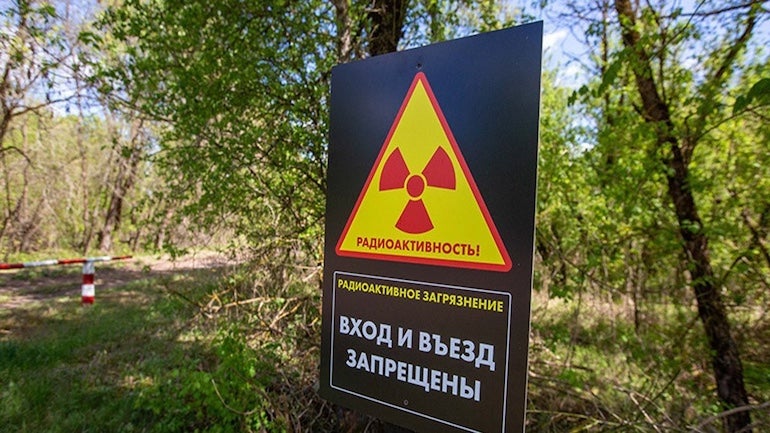
The government of Belarus has removed 177 settlements and 16 facilities from the list of those located in areas affected by radioactive contamination resulting from the 1986 accident at the Chornobyl NPP. The decree was signed by Prime Minister Alexander Turchin.
“An analysis of the results of work carried out in 2021-2025 by the Ministry of Natural Resources and the Ministry of Health to survey contaminated areas with soil sampling and assess dose loads on the population showed a significant improvement in the situation in individual settlements located in areas contaminated with radionuclides,” the decree noted.
According to the list, approved by a resolution of the Council of Ministers in February 2021, there were 2,022 settlements in radioactive contamination zones, with a population of 930,600 and 49 facilities. The new resolution lists 1,845 settlements (-177) with a population of 364,200 (-566,400), and 33 facilities (-16). The current list excludes the city of Gomel, the city of Luninets, the urban village of Lelchitsy and the city of Ivye.
The resolution comes into force on 1 January 2027 but benefits for free meals will continue until June 2027 for children living and studying in educational institutions located in territories no longer listed as contaminated.
The Chornobyl accident contaminated an estimated 150,000 square kilometres of land in Belarus, Russia, and Ukraine with high levels of caesium-137. Across wider Europe, trace radioactive fallout impacted in excess of 200,000 square kilometres. The most polluted areas were the northern regions of the Kyiv and Zhytomyr regions in Ukraine, the Gomel region in Belorus and the Bryansk region in Russia.


