
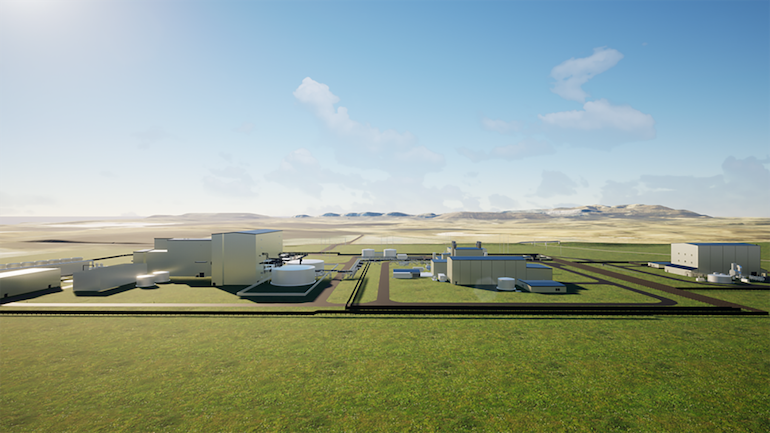
US-based TerraPower is replacing Bechtel as the lead engineering, procurement, and construction (EPC) contractor for its $4bn Natrium advanced nuclear reactor project near Kemmerer, Wyoming. TerraPower and Bechtel were unable to reach an agreement on the terms and pricing for the next major phase of the project.
The Kemmerer project, heavily backed by Microsoft co-founder Bill Gates and co-funded by a Department of Energy (DOE) commitment, is promoted as a milestone for next-generation nuclear energy. Natrium comprises a 345 MWe sodium-cooled fast reactor with an integrated molten salt-based energy storage system that can ramp up the plant’s output to 500 MWe for over five hours to meet peak grid demand.
TerraPower named Bechtel as its plant design, licensing, procurement, and construction partner in 2020. Bechtel was integrated directly into TerraPower’s federal grant application for the DOE Advanced Reactor Demonstration Program. The project was awarded $2bn in federal funding, which TerraPower matched.
From 2021 Bechtel worked side-by-side with TerraPower during the early design stages. The goal was to build a nuclear island separate from an energy storage island using modular construction methods and Bechtel’s digital suite of tools to lower costs. In August 2025: Bechtel and TerraPower began constructing the Kemmerer Training Centre (KTC) to prepare operator teams.
In June 2024, the partners celebrated the groundbreaking ceremony at the Kemmerer, Wyoming site. Bechtel began executing early infrastructure work. In late 2025, Bechtel supported TerraPower through massive regulatory hurdles, helping secure approval for the Environmental Impact Statement (EIS) in October and the Final Safety Evaluation from the Nuclear Regulatory Commission (NRC) in December.
NRC issued the formal construction permit in April 2026 – the first ever issued for a commercial non-light-water reactor in the US. Bechtel mobilised construction crews and transitioned into full field execution on Kemmerer Unit 1.
After working together for several years, negotiations stalled when trying to lock down the exact financial and structural scope of the full, long-term EPC contract. While Bechtel is stepping away as the overall lead contractor, they are not abandoning the site instantly. They are staying on-site to finish building the exterior enclosure of the Sodium Test & Fill Facility to guarantee an orderly handover.
Bechtel has issued a Worker Adjustment & Retraining Notification (WARN) indicating that up to 200 positions could be affected at its nuclear engineering headquarters in Reston, Virginia, beginning in November. However, the firm expects to redeploy all of those employees to other global nuclear projects.
Kemmerer Mayor Robert Bowen stated that the city was given advance notice by TerraPower to thwart rumours. He noted that changing contractors between project phases is a normal “numbers game” for a build of this scale and does not foresee it becoming a major issue for the town.
The split between TerraPower and Bechtel stems from an inability to reach an agreement on commercial terms and pricing for the next major phase of the Natrium Demonstration Project. While initial development milestones were completed under a limited early scope, the two companies reached an impasse when attempting to contractually lock in risk allocations and pricing for the heavy nuclear construction phases.
Large-scale, first-of-its-kind nuclear infrastructure projects carry massive financial and execution risks. The split suggests that Bechtel wanted to price those risks into the contract to protect itself from cost overruns, while TerraPower wanted a lower price or a different distribution of liability.
Because the project is being bid out in separate phases, Bechtel likely submitted a price for the heavy nuclear construction phase that reflected the immense complexity of building a sodium-cooled fast reactor. TerraPower, having found a mismatch in those commercial numbers, then opted to rebid the contract rather than accept Bechtel’s risk-adjusted pricing.
TerraPower stated that Bechtel’s departure will not impact the construction schedule. The plant is still on track for construction completion by 2030 and commercial operations by 2031. However, the timeline is a serious concern. Historically, the nuclear industry is plagued by massive delays and cost overruns when debuting new technology. Navigating a completely new supply chain and construction technique for a sodium-cooled fast reactor without hitting unexpected bottlenecks is unlikely.
The project has already slipped. The original operational target was 2028. It was delayed by at least two years after the Ukraine conflict resulted in the US cutting off the commercial supply of high-assay low-enriched uranium (HALEU) fuel, forcing TerraPower to wait for domestic fuel infrastructure to catch up.
There are also concerns about rushed regulating. In late 2025, the NRC expedited its technical safety review of the plant, cutting the timeline down from the projected August 2026 completion to December 2025. The Union of Concerned Scientists fiercely criticised the move, warning that an abbreviated schedule risks pushing unresolved safety issues down the line to the operating licence phase.
Ultimately, the company has roughly 36 months from its first nuclear concrete pour to get ready for fuel loading. If rebidding the Bechtel contract hits a multi-month standstill, keeping the 2031 grid deadline will quickly shift from “tight” to “impossible.
While TerraPower has not announced a shortlist for replacing Bechtel, there are several possible candidates based on their existing strategic alliances with TerraPower, massive nuclear footprints, or active involvement in the advanced nuclear sector.
TerraPower already has established global relationships with heavy-hitting EPC firms intended to deploy subsequent Natrium plants.: In August 2026, TerraPower signed a comprehensive framework agreement naming South Korea’s Hyundai Engineering & Construction as the lead EPC contractor to build up to eight future Natrium reactors. Given that Hyundai already holds the keys to the repeatable contracting framework and price/performance guarantees for the technology, they are the most likely option.
In March 2025, TerraPower formed a strategic alliance with KBR (Kellogg Brown & Root) specifically to provide project management, design, engineering, and commissioning services for Natrium rollouts. KBR is heavily embedded in the project’s administrative architecture and could easily scale up its role.
TerraPower could also look to Bechtel’s traditional American rivals who possess the rare capability to handle huge, regulated nuclear projects. Fluor Corporation is one of the few with a dedicated, robust nuclear power division. They have extensive experience working on large-scale federal nuclear projects (such as managing the Department of Energy’s Hanford and Savannah River sites) and have previously partnered with other SMR developers such as NuScale.
While BWXT typically manufactures reactor components (and is already highly active in advanced nuclear supply chains), a joint venture involving heavy industrial builders like Aecon, with extensive experience with nuclear refurbishments and new builds in North America, is a standard approach for projects of this scale.
Sargent & Lundy is a powerhouse in power plant engineering and construction management. They have been involved in a significant percentage of the operating nuclear fleet in the US and routinely provide the exact type of EPC support services TerraPower is looking to replace.
However, construction will not stop while a replacement is found. TerraPower is temporarily using commercial-grade support firms and its existing subcontractor teams that were already working on-site under Bechtel to try to meet the 2030 timeline while a new lead contract is negotiated.


