
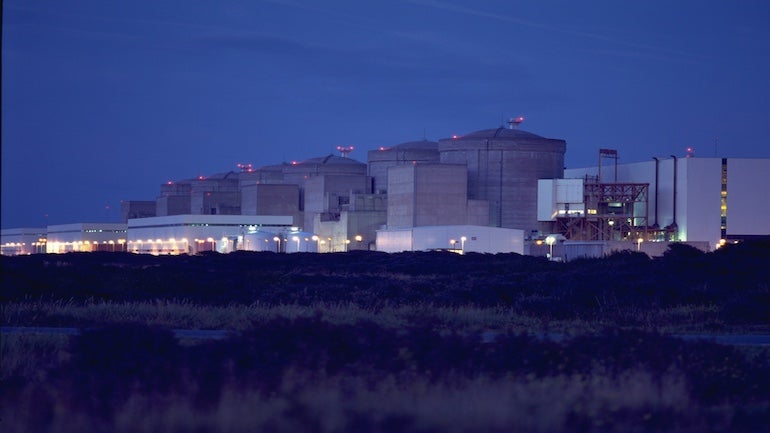
EDF’s site at Gravelines, on the coast of northern France, currently has six nuclear units in operation. Last year, EDF announced that the site would be among the first in a new programme of nuclear construction based around the EPR, with two units planned for the site.
The Gravelines site is just 20 miles (36 km) from one of France’s largest ports, Dunkirk, which makes claims to being a leading energy hub, thanks to “a unique combination of low-carbon electricity production, distribution and security capabilities, supporting the region’s energy transition and economic development”. Dunkirk Port celebrates its 60th anniversary in 2026, with a plan for the port and the surrounding area that could see large areas transformed into clean energy assets. The plans will draw on the existing Gravelines reactors, which will see their lives extended, and the two new EPRs.
Dunkirk has always been a busy port, not least because it offers one of the shortest sea routes across to England – the sea between the two is only around 20 miles (36 km) wide at this point – making it a busy route for vehicle ferries and cargo, but it also has other ferry routes, to Ireland, and cruise ship users, as well as cargo vessels. It is the largest port in France for non-containerised cargo and it is described as a vital link for bulk cargo trade.
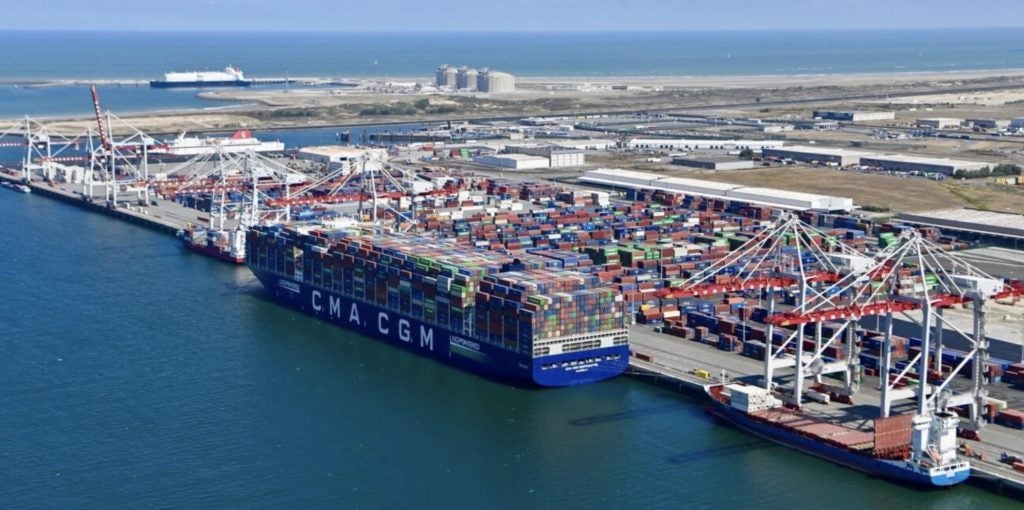
In an introduction to its transformation project, the Port of Dunkirk said it had to adapt its infrastructure and model to respond to “changes in maritime trade, industrial and energy transitions, and societal expectations”. The 2025–2029 strategic project “is driven by a need to diversify activities at and around the port, value-added logistics and industrial solutions, and rising sectors such as mobility, sustainable maritime transport and low-carbon energies”. That may include long-term changes in gas markets: the Dunkirk liquified natural gas (LNG) terminal transmitted a total volume exceeding 10Mt in 2025, surpassing its previous record set in 2022 (9.7Mt), but the long-term trajectory of gas use is downwards.
The year also saw cargo volumes and tourist cruise ship traffic increase, with more expansion planned.
Further growth ahead
The 2025-2029 strategic project is part of a clear vision, based on seven ambitions that Dunkerque-Port has set itself for 2050:
- A key port in the Northern Range, particularly in the container and ‘roll-on, roll-off’ (RoRo) sectors.
- A major digitalised logistics hub in Northern Europe, open to Eastern Europe.
- An internationally recognised area of industrial and commercial attractiveness
- A net-zero port, a hub for renewable energies
- A proactive port in terms of biodiversity and the preservation of natural resources
- An innovative, attractive and resilient economic and social model
- A safe, civic-minded port, open to its local area and bringing together local players.
Dunkirk said its planned expansion projects “reflect the port’s desire to support the region’s maritime and logistics growth in a sustainable manner”.
Those projects in the immediate port area or its hinterland – several of which areas have a ‘Zone Grande Industrie’ designation – include:
- The D’Artagnan project, to create a pipeline network and a terminal, operated by Dunkerque LNG, for reception, liquefaction, storage and export of CO₂. It is expected to come on stream between late 2028 and early 2029.
- New ‘gigafactories’ to manufacture batteries for electric vehicles. The first operational Gigafactory in the Dunkirk area and the third in the region was inaugurated in December. Mid-2026 is expected to see work begin on a gigafactory for Taiwanese group ProLogium, which specialises in solid-state batteries. In addition, Orano and XTC Energy are formalising a joint investment in the NEOMAT project, which aims to gradually develop an industrial complex dedicated to battery materials.
- Plans for carbon nanotube production in the Dunkerque area by Korean group ENCHEM, which specialises in the production of electrolytic materials.
- A SUEZ Group project for an industrial site in the port area dedicated to the recycling and recovery of critical metals from electric batteries
- A CrystALRod project for a smelter to produce recycled aluminium wire, intended in particular for the manufacture of cables for electrical networks .
The Port of Dunkirk itself is launching a call for expressions of interest for a 21 Ha site for the installation of a 400-700 MW data centre. It said, “This power is subject to a fast-track procedure, which has already been authorised by the Ministry for the Economy, Finance and industrial, energy and digital Sovereignty”.
Electrical demand rising
None of these opportunities can be realised without a substantial increase in power supply. Increasing power demand comes not only from new developments but also from changed expectations in existing industries. For example, the port has begun construction of a second RoRo ferry berth. By 2028, both RoRo berths will be equipped with shore-side electrical connections. The port also reports strong growth in agri-food flows, a sector of excellence for the port, but one which requires chilled freight facilities and access to recharging of batteries.
These new aspects of transport electrification raise a key question: will the vessels and vehicles using the port eventually be all-electric?
The port highlights its mobility infrastructure, which it describes as a ‘strategic lever’.
Full electrification of the transport fleets moving through the port are a gap in the port’s strategy – and could represent a huge additional increase in power demand, if HGVs and vessels as well as smaller vehicles move to full electrification.
An indication of the likely impact came from Megan Turner, environment and sustainability manager at the UK’s Port of Dover – just across the Channel from Dunkirk – in a session at LogisticsUK’s ‘Delivering Decarbonisation’ meeting. Turner explained that Dover port currently has a peak use of 7 MW across its estate. But it is anticipating it will need a 160 MW connection, if it is to serve electric vessels using its cruise, cargo and ferry terminals and other electric vehicles using the site. That includes thousands of HGVs passing through, as well as site-based vehicles used by its contractors and logistics operators, who are already beginning to move to electric vehicles.
Dover currently hosts two hybrid ferries, but the batteries are charged by diesel engines because there is currently no opportunity to charge either at Dover or Calais.
Turner said that to meet its future demand the port of Dover had considered solutions as diverse as a small modular nuclear reactor, or a link to France. In practice, she thought it would use a variety of local supplies – solar, wind etc – linked via private wire. That distributed supply would also be more resilient, she said. But upgrading the connections that would allow it to hike its input from 7 MW to 160 MW would require network upgrades across the southeast as far as London.
Linking up
In France, the Port of Dunkirk has taken steps to address the lack of network capacity, as well as ensuring a power supply from Gravelines.
It said that in 2024, the Gravelines nuclear power plant was France’s leading producer of low-carbon electricity, with output covering the equivalent of 70% of consumption in the Hauts-de- France region. This will be reinforced in the coming years thanks to the extension of the lifespan of the six existing reactors, the optimisation of the facilities and the installation of the two new EPR2 reactors.
The French government officially launched the Grand Chantier EPR2 Gravelines project on 18 June 2025. It followed the National Commission for Public Debate’s acknowledgement on 20 May 2025 of the decision by project owners EDF and RTE to proceed, following public debate, with the project to build a pair of EPR2 reactors at Gravelines. A Major Project Charter between institutional and regional partners now sets out the framework for coordinating this large operation.
Dunkirk port expects that at Gravelines “2026 will mark the start of preparatory work”, including implementation of environmental measures and preliminary site development.
Meanwhile, the Port of Dunkirk players involved in the transport and distribution of electricity are investing heavily to restructure the network and serve customers.
On 28 April 2025, RTE laid the foundation stone for the Flandre Maritime electrical substation in Saint-Georges-sur-l’Aa, which is set to become one of the most powerful in France. It will be a major power supply point for the region, with two 400 kV overhead lines serving the eastern part of the port and the Dunkirk conurbation in particular. Partial commissioning is scheduled for July 2026 and full commissioning at the end of 2030.
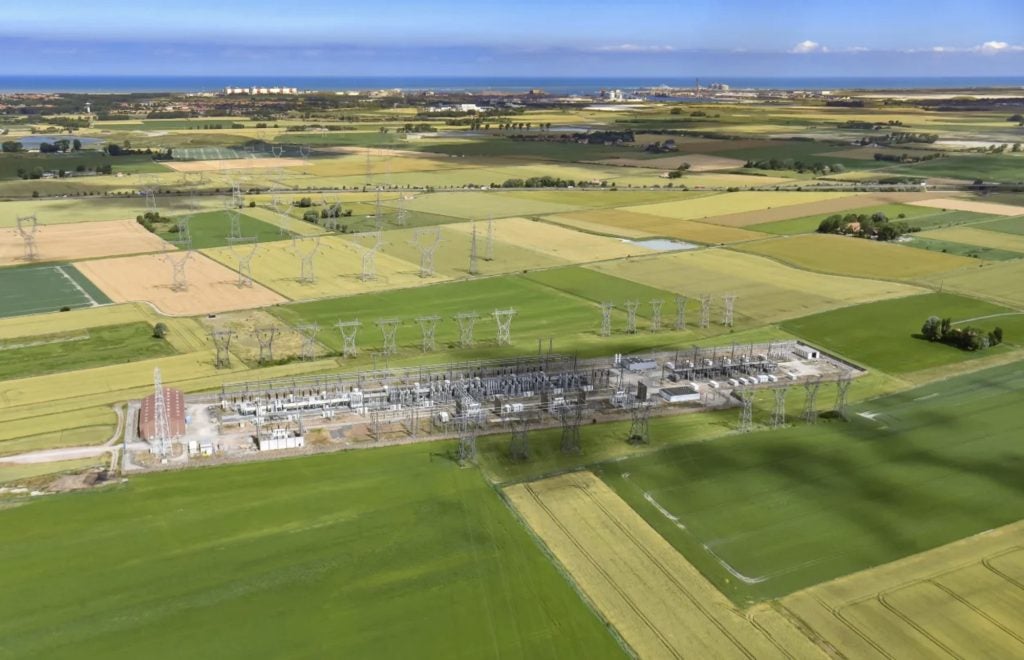
A new substation in the Dunkerque Logistique Internationale (DLI) zone will be subject to public consultation in 2026. Work could begin in 2028, with commissioning scheduled for 2030.
With the necessary infrastructure development underway and more nuclear power capacity anticipated, the future of Dunkirk port could be driven by nuclear. Should that come to pass the rise of nuclear-powered shipping might be achieved in a rather unexpected way.


