
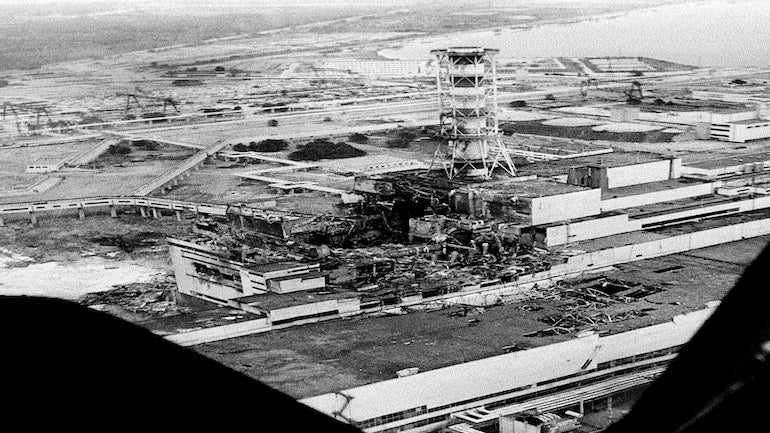
On 26 April 1986 the explosion of unit 4 at the Chornobyl nuclear power plant changed the world. Some 30 people died in the immediate aftermath of the blast, but its aftershocks were felt around the world. Today the events of Chornobyl 40 years ago continue to reverberate and it will remain a monument to nuclear risk for generations. But beyond the headlines, the legacy of Chornobyl is far more complex.
The origins of disaster: Birth of the RBMK
The origins of the ‘Reactor of High-Power, Channelled 1000 Megawatt’ or RBMK-1000 units, four of which were eventually built at Chornobyl, was a bulky reactor design having inherited its main features from Soviet military reactors. Development of these reactors began in the mid-1960s. In contrast RBMK reactors were intended to be the power reactors of the future with no military applications. The RBMK used graphite as a moderator and water as both a coolant and partly a moderator and the first design solutions were tested on the AMB experimental power reactors located at the Beloyarsk NPP. The first unit with an RBMK-1000 reactor was unit 1 at the Leningrad NPP which began operations in 1973. Leningrad 2, Kursk 1 & 2, and Chornobyl 1 & 2 followed using the same design, six units in total. These were the first generation of RBMK plants, which featured separate reactor buildings.
The second generation had improved safety systems and was of a double unit design. This design was used for eight units: Kursk 3 & 4, Chornobyl 3 & 4, Smolensk-1, 2 & 3, and Leningrad 3 & 4. In total, 17 RBMK reactors were commissioned including the RBMK units at Ignalina in Lithuania. Here units 1 & 2 were RBMK-1500 reactors with the core power, and consequently the power of the units, increased by 1.5 times. The reactor’s overall dimensions and design remained unchanged though. However, highly uneven power density led to cracking of the fuel rod cladding and the operating power was reduced to 1300 MWe. In the early 2000s, Ignalina’s RBMKs, which generated over 80% of Lithuania’s electricity, were shut down as part of the country’s accession to the European Union.
The core of the RBMK is a cylinder 7 metres high and about 12 metres in diameter. It is thus almost 30 times larger in volume than the VVER/PWR reactor core of the same power. Channels containing assemblies and water pass through columns constructed from square-section graphite bricks – a total of 1661 channels, with monitoring and controlling of flow rates and thermal parameters in each one. An RBMK reactor operator continuously modifies the power density field in different parts of the enormous reactor, despite (and sometimes due to) the assistance of the local power controller. A fuel reloading in one of channels required additional significant effort from the operator. Nevertheless, the RBMK reactor design remained operational until the end of its planned service life and was even extended in some cases.
Due to the common design features of these reactors the core could be significantly enlarged, so the RBMK-2000 designs, including those with a parallel piped-shaped core, seemed feasible leading to the RBMK-2000, RBMK-3600, RBMKP-2400 and RBMKP-4800 designs.
Advantages and deficiencies
From a modern perspective, RBMK reactors seem like the embodiment of technological imperfection, if not devilish invention. However, for their time, they possessed a number of significant advantages. These included the ability to reload fuel without a shutdown, reduced primary circuit parameters, the absence of expensive and structurally complex reactor vessels and steam generators, no restrictions on the core size or shape, high maintainability, a less severe accident response caused by leaks in the circulation circuit, low uranium enrichment, and others.
Of course, the reactor’s main deficiencies were well known before 1986. The RBMK reactor operates on a direct cycle scheme which led to radioactivity in the turbine hall. Most of the personnel therefore worked in ‘especially harmful conditions’ which in the Soviet Union meant higher wages, free meals during work hours, extended vacations, and a retirement age of 50.
An additional problem with aging RBMK reactors is graphite stack distortion, caused by irradiation-induced swelling and subsequent cracking of the graphite. Technological solutions reduced the distortion and allowed for continued operation. However, due to the accumulation of defects, this labour-intensive maintenance had become an annual procedure.
Other issues included the enormous number of channels, pipelines, and valves, and therefore personnel, the challenge of flow rate regulation in each channel, the large volume of radioactive structural materials, graphite swelling and the lack of a technology for its disposal. But the USSR faced numerous other problems and the RBMK reactor’s deficiencies were not particularly noticeable. Moreover, these nuclear power plants operated successfully with normal capacity factors and even paid off within a few years. One could compare a Ford model A and a modern car with the same methodological success.
A day of disaster
The RBMK reactor’s critical deficiency fully manifested itself in April 1986, in Ukraine, but in some respects this was not a stand-alone event. In 1975, unit 1 of the Leningrad NPP experienced conditions very similar to those which would ultimately lead to the destruction of unit 4 at Chornobyl. At low power, with the steam turbine shutdown, and with unacceptable withdrawal of the control rods from the core, the reactor saw a thermal power surge of 100 MW. This resulted in the rupture of one channel and a release of radioactive substances into the environment. The unit was in an outage for several months. This mini-Chornobyl, while serving as a pre-cursor to the future catastrophic events in Ukraine, did not lead to the meaningful responses from the authorities that could have prevented the subsequent disaster. There were also other accidents caused by the destruction of reactor channels at other RBMK plants, but that were unrelated to the physics of the reactor.
It subsequently emerged that in certain modes – and with the number of control rods in the core below the permissible limit – the reactor could reach prompt criticality and explode. The designers seemed to be aware of this deficiency and ‘solved’ the problem by prohibiting such modes in the operating procedures. The operating personnel were unaware that such a mode could have irreparable consequences and thus sometimes, when it was necessary to raise or decrease power, they would operate the reactor in unstable and potentially dangerous configurations. For the most part nothing happened – until 26 April 1986. The beginning of a new sad chapter in the history of nuclear power took place when the accident at the Chornobyl NPP destroyed the core of a brand new unit that had only been in operation for two years and contaminated a vast area.
The immediate aftermath
In the first days following the explosion, the primary focus was on reducing radioactive emissions from the destroyed reactor. The satellite town of Pripyat and residents of settlements within a 10 km zone were evacuated one day after the accident. In the following days, settlements within a 30 km zone were evacuated. But in the typical Soviet atmosphere of secrecy at the time, most people had no idea of the scale of the disaster. TV news reported that “an accident had occurred, a government commission was working, and the consequences were being successfully dealt with”.
The main objective in the months that followed was to enclose the damaged reactor with a reinforced concrete structure – a ‘sarcophagus’. This was achieved by November, just six months later. Units 1 and 2 at the plant were reconnected to the grid in October and November of the same year. In December 1987, unit 3, separated from its damaged twin unit by a mounted wall, was also restarted. In the autumn of 1986, construction of a new town for workers at the nuclear plant began. This town, Slavutych, some 45 km from the NPP in a straight line, saw staff begin to move into the new housing a year and a half later.
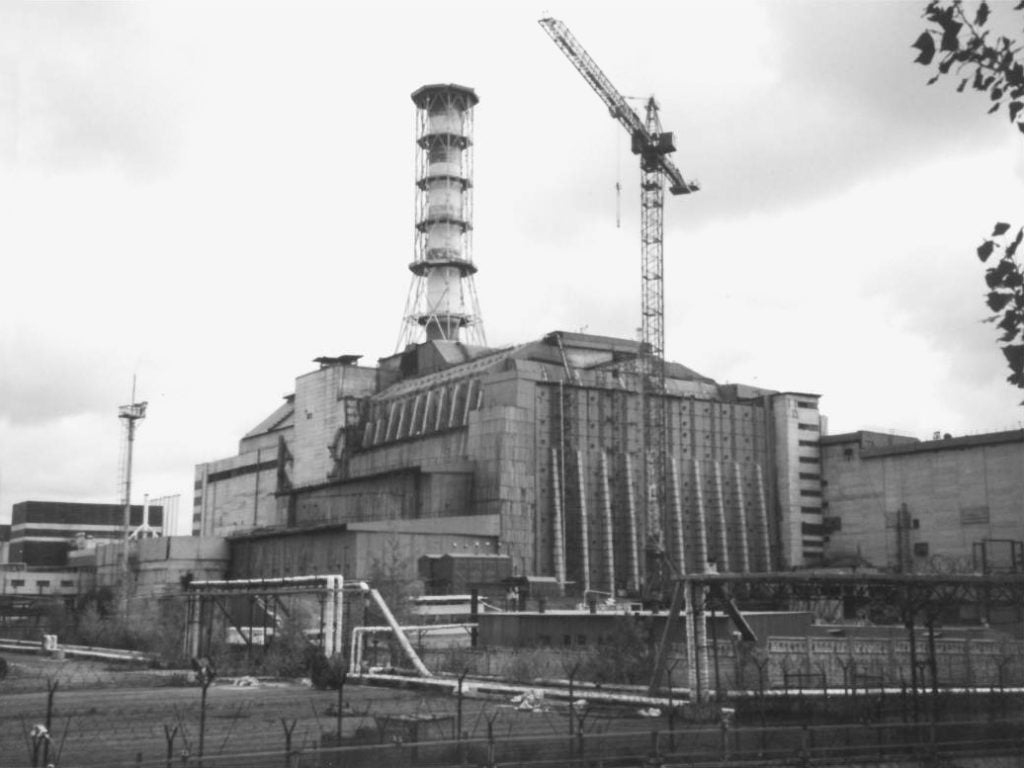
Approximately 600,000 people participated in the ‘liquidation’ of the accident. A huge sum was spent – approximately 20 billion Soviet roubles. This sum is difficult to estimate reliably today due to the rouble’s inconvertibility and the distribution of costs among various ministries. Nevertheless, it represents approximately 5% of the Soviet Union’s annual budget. The main expenses were social payments, resettlement, and land decontamination. The total damage, including long-term economic and health consequences, is estimated at hundreds of billions of dollars.
Today about 50,000 km2 of land has been withdrawn from agricultural use, a 30 km exclusion zone was created around the plant and remains in place and dozens of small settlements have been destroyed and buried. Approximately 200,000 people have been evacuated and are displaced to this day. While living in the surrounding areas was unacceptable, it was possible to work there. Despite the tragedy, it seemed life at the Chornobyl NPP continued. But in October 1991, while reducing the speed of turbine generator #4 in unit 2 for shutdown and repair of turbine hall equipment, a false signal in the control circuits caused the generator, which had been practically stopped, to be re-connected to the grid. Significant vibration, resulted in damage to the bearings and the sealing system of the generator, and the release of hydrogen and oil with subsequent ignition. A massive fire caused the turbine hall roof to collapse. The accident burned 180 tonnes of turbine oil and 500 m2 of hydrogen. Many of those involved were convinced that it was a repeat of the accident of 1986. However, personnel radiation exposure did not exceed established control levels. Unit 2 couldn’t withstand the impact of this event and the decision was made to decommission it.
A 25-year timeline
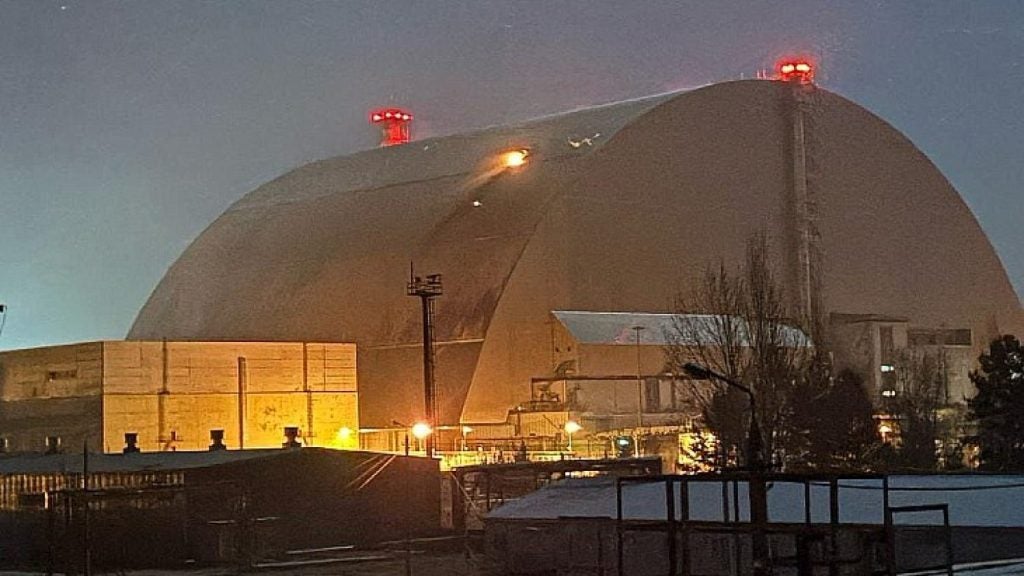
A quarter of a century has passed since the plant’s shutdown and 40 years since the accident. By 2016, all spent nuclear fuel had been removed from units 1-3 to a storage facility. The units were no longer considered nuclear installations and were reclassified as radioactive waste management facilities. The nuclear fuel of the destroyed unit 4 (in the form of fuel-containing masses) remains under the sarcophagus and the New Safe Confinement (NSC) which was installed in 2016. It completely encloses the 1986 sarcophagus which had been hurriedly installed in the immediate aftermath of the disaster and was starting to deteriorate. Commissioned in 2019, the NSC is the world’s largest movable land structure standing over 100 metres tall and more than 260 metres long. The project cost over €2bn.
These are among the main achievements of the NPP on its path to full decommissioning. The plant is largely financed by the Ukrainian state budget. Annual expenditures amount to approximately UAH1.5bn (approximately €30m), which is half the budget request for all the planned activities at the plant. The station consequently operates in austerity mode with the largest proportion of its expenses going toward the salaries of its 2200 employees.
Part of the work is financed from the International Chornobyl Cooperation Account administrated by the European Bank for Reconstruction and Development. This could amount to several million euros per year.
The state manages Chornobyl through the State Agency of Ukraine for Exclusion Zone Management headquartered in Kyiv. Its responsibilities include radiation safety, radiation monitoring of facilities, individual dosimetric monitoring, civil defence, fire safety, work permits, capital construction, property management, and protection of nature reserves. It also includes cultural heritage protection, scientific research, international cooperation, rulemaking, public relations, and even the issuance of commemorative coins and stamps.
Completely decommissioning any NPP is an expensive and lengthy undertaking. Decommissioning a plant after a nuclear accident makes this task far more challenging difficult and for RBMK reactors all but impossible. Despite this, Ukraine moves ahead with its own approaches, plans, and tasks.
Generally, decommissioning of a nuclear facility is carried out with the goal of achieving full or limited release of the nuclear site from regulatory control. Due to the NPP’s location within the contaminated Exclusion Zone and the presence of the destroyed unit 4, the ultimate goal of decommissioning the Chornobyl NPP is to achieve a condition conventionally defined as a brownfield site. This is the condition of a site where technological systems, equipment, and some auxiliary buildings and structures have been dismantled, and the activity of the main buildings and structures has been reduced to levels of limited release from regulatory control. Complete dismantling of the structures is currently economically impractical due to its location within the most contaminated 10 km Exclusion Zone, as well as the presence of numerous other buildings and structures nearby, for example, the city of Pripyat. This task should be addressed as part of the rehabilitation of the entire Exclusion Zone. Only auxiliary buildings and structures – those no longer needed for decommissioning process or deemed hazardous – will be dismantled as part of the decommissioning programme.
Future activity
Within the framework of the national programme, two separate areas of activity at the Chornobyl NPP are being implemented: ‘Decommissioning of the Chornobyl NPP’ and ‘Transformation of the Shelter into an environmentally safe system’.
The first area concerns the plant units 1-3. This includes dismantling and fragmenting equipment and metal structures in the turbine hall, packaging contaminated equipment and materials, and moving them to temporary storage sites, as well as preparing the premises for conservation. The second area, following covering the unit 4 by the NSC, appears to have received significant acceleration. However, the plant’s reports only cover the following activities: safe operation of the NSC-Shelter complex and its scientific and technical support, monitoring of fuel-containing materials, scientific and engineering support for drilling radioecological monitoring wells, development of pre-design documentation for future dismantling and reconstruction of unstable structures. Clearly, actual dismantling at the unit 4 is still a long way off.
Spent nuclear fuel handling is a separate area of plant activity. Currently, the plant has two storage facilities: the old wet storage facility (SNFS-1 – operating since 1986) and the new dry container-type storage facility (SNFS-2 – operating since 2020). The spent fuel is gradually being transferred from the old storage facility to the new one, and approximately 25% of the total accumulated fuel assemblies (more than 21,000) have already been moved. Related to these activities is the ‘Safety and Security’ area – radiation safety, nuclear safety of spent fuel and the NSC/Shelter, physical protection and compliance with IAEA safeguards.
The ‘Radioactive Waste Management’ area involves processing accumulated liquid radioactive waste and ensuring the safe storage of radioactive waste partly derived from decommissioning activities. Even being an enterprise not producing any products, the plant has significant infrastructure that requires support, maintenance, and repair. This includes, in particular, major repairs to high-voltage circuit breakers and substation renovations, construction of a radiation monitoring system and replacement of SNFS-1 power equipment, lighting and communications systems, instrumentation and automation systems, construction of a physical security system for the transport of spent nuclear fuel, and so on. Furthermore, the plant holds 17 state licenses for certain types of nuclear power activities.
The plant also actively collaborates with international institutions and partners – the IAEA, the US Department of Energy, and others – to implement projects to maintain safety and infrastructure.
The next chapter
In February 2022, a new chapter in the plant’s history began: the Russian invasion and capture of the plant. The personnel were held hostage and were only able to leave the plant after 25 days. In late March of that year, Russian troops withdrew from the plant. Before the war, personnel travelled approximately 45 minutes from Slavutych to the station by commuter train through Belarus. After the destruction of the railway tracks and the bridge over the Pripyat River in 2022 and the impossibility of crossing the border with Belarus, travelling along the old route was impossible. Personnel are now transported by buses via Kyiv, which takes about 6 hours. A rotational method, with personnel staying at the station for 10 days, has become the new norm.
The war is a constant presence and in February 2025 a drone crashed into the NSC and exploded. This damaged the NSC, as well as the main crane system. Fire fighting and damping down efforts continued for nearly three weeks, periodically being suspended due to air raid alerts. Experts from French companies – participants in the Novarka consortium, which designed and built the NSC – were brought in to inspect the damage and the scope of necessary restoration work. Despite this damage to the NSC, there were no radiation effects although the integrity of the structure was compromised. The plant director stated that, as a result of the risks of the conflict, dismantling of the unstable structures within the NSC had been postponed indefinitely.
The end of the Chornobyl era?
There’s a popular belief that the USSR collapsed because of the Chornobyl disaster. However, until 1991, nothing but the slowly deteriorating economic situation foreshadowed the radical changes in the country’s life that would emerge. It is true that only two months passed between the second Chornobyl accident and the signing of the Belovezh agreements on 8 December 1991 which signalled the end of the USSR. Proponents of simple causes for complex processes can confidently claim this was the trigger for the collapse of the empire, but that is an argument that is not really supported by the facts.
Nonetheless, the scale of the Chornobyl accident is so vast and paradoxical that the part proved greater than the whole. Until 1986, nuclear power plants in the USSR were a reliable source of energy, and failures and accidents were considered unlikely. Every citizen knew this. Extensive plans existed for the construction of such reactors. After the accident, this optimistic concept had to be revised and plans to build RBMK power units at new sites were abandoned. Construction of units at various stages of completion was halted – Chornobyl 5 & 6, Kursk 5 & 6, and Smolensk 4 were all abandoned. After 1986, only two RBMK reactors were commissioned: Ignalina 2 in 1987 and Smolensk 2 in 1990.
At the plant life continued, but it was a different plant and a different life. After the collapse of the USSR European pressure for a complete shutdown of the plant began. Unit 1 operated until 1996. In December 2000, the last operating unit, number 3, was shut down. The country entered a new century and a new millennium without any operating RBMK reactors. The active phase of the Chornobyl NPP’s life was over. Europe breathed a sigh of relief. This was an economically difficult decision for the country but economic assistance was conditional on the plant’s shutdown. Except in Russia, this marked the end of the RBMK era in the post-Soviet space but not the end of the Chornobyl legacy. In the absence of humans, today Chornobyl is a haven for wildlife. According to the UN Environment Programme (UNEP) the exclusion zone now represents the third-largest nature reserve in mainland Europe and is a case study in the resilience of nature and its ability to bounce back under the most extreme circumstances. The Chornobyl legacy is also one of improved safety standards worldwide that benefitted the industry as a whole.
With the perspective of decades of hindsight, the RBMK reactor might be compared to the Soviet Union itself – both were huge, poorly managed, closely associated with the military, and, most importantly, both collapsed with serious consequences. Russia, as the heir and legal successor to the USSR, continues to operate its RBMK reactors. Three nuclear power plants – Leningrad, Kursk, and Smolensk – operate seven RBMK reactors today. Their service life has been extended to 50 years, and each one has several more years of operation remaining. Of course, all of them have been modernised and positive reactivity coefficients are considered a thing of the past. In the intervening years several Russian RBMK reactors were shut down after 45 years of operation and replacement nuclear units of a different design have been commissioned or are under construction at the same sites. It seems that in time, when all these units are shut down – well over 60 years after Leningrad 1 was commissioned – the era of the RBMK will be over. But such reactors cannot be completely decommissioned – the RBMKs are huge and radioactive, full of elements with half-lives of thousands of years. There is nowhere to move them. For generations they will tower over the world as grim colossi where they were built. The age of the RBMK will finally end in the far distant future.
A minute to disaster
01:23:04: Turbine emergency power test begins with turbine stop valve closure
01:23:40: Reactor SCRAM button pressed
01:23:43: The power excursion rate emergency protection system signals come on
01:24:00: Reactor Control Engineer log reads: “Severe shocks; the RCPS rods stopped moving before they reached the lower stop switches; power switch of clutch mechanisms is off.”
Two explosions were reported, the first a steam explosion, followed two or three seconds later by a second, possibly from a hydrogen build-up.


