

Accurate radioactivity measurements are required for activities ranging from environmental monitoring and nuclear decommissioning to industrial operations and research. Gamma spectrometry is one of the most widely used techniques for identifying and quantifying gamma-emitting radionuclides, helping laboratories to generate the data needed to meet safety and compliance targets, as well as make operational decisions. Achieving reliable results depends on effective calibration, helping to ensure that measurements remain accurate and comparable across instruments and laboratories. Mixed radionuclide solutions play an important role in this process, providing multiple calibration reference points within a single standard and helping laboratories to establish traceable calibration across a broad range of gamma-ray energies. As demand for accurate and reproducible measurements continues to grow, these solutions remain an important part of the infrastructure that underpins gamma spectrometry measurement programmes.
Calibration is key
Calibration offers assurance that measurement systems are producing accurate and reproducible results. Without it, detector response can drift over time, affecting data quality and comparability between instruments and laboratories. For gamma spectrometry users, calibration is not simply a routine requirement, but the process that links measurement results to recognised standards, delivering the foundation for reliable radionuclide identification and activity determination.
Effective calibration also helps to ensure that measurements remain traceable and comparable over time and between organisations. This is particularly important in regulated environments, where measurement results may inform operational, environmental or compliance-related decisions.
Calibration standards can contain either a single radionuclide or a mixture of radionuclides, and both approaches have an important role to play in gamma spectrometry. Single radionuclide standards provide a well-characterised reference point at a specific gamma-ray energy. They can be useful when a particular radionuclide is of interest or when users need to investigate specific aspects of detector performance. However, since each standard only offers information at a limited number of energies, multiple sources may be required to establish calibration across the wider energy range encountered during routine measurements.
Mixed radionuclide solutions take a different approach by combining several radionuclides within a single source. By delivering a practical means of establishing calibration across various gamma-ray energies, mixed radionuclide solutions allow multiple calibration reference points to be measured from a single reading. This gives sufficient coverage across a wide energy range while reducing the number of necessary individual standards.
Tailored emission peaks
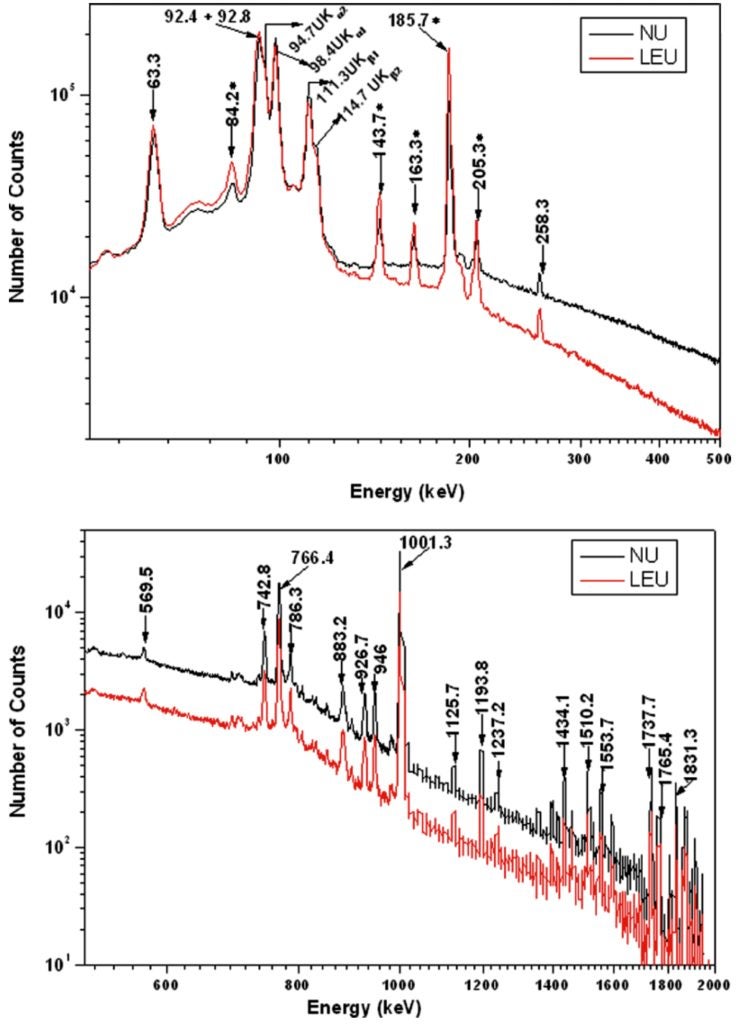
Carefully formulated mixtures of radionuclides can provide emission lines spanning much of the energy range typically encountered during routine measurements. By selecting radionuclides with suitable characteristics and activity levels, the resulting spectrum contains multiple peaks that can be used to assess detector performance and establish calibration curves.
An important consideration is the relative intensity of these peaks. Mixed radionuclide solutions are typically prepared so that individual emission lines produce peaks of comparable intensity at a defined reference date. This helps to create spectra that are easier to interpret and enables more effective calibration across the full energy range of interest, as shown in Figure 1 (below right).
For laboratories carrying out regular measurements, this approach offers both practical and technical advantages. Rather than relying on a series of individual standards, users can assess detector performance using one carefully prepared source. This can make calibration activities more efficient while helping to maintain consistency between measurements and over time. By providing multiple reference points across a broad energy range within a single standard, mixed radionuclide solutions deliver a practical and reproducible means of calibrating gamma spectrometry.
The usefulness of a mixed radionuclide solution depends on the confidence users can place in its assigned activity values. This is why traceability is such an important part of the production process.
Traceability links measurements back to recognised standards through a documented chain of comparisons. For users, this means calibration activities can be connected to nationally recognised measurement capabilities, again helping to ensure consistency between laboratories and over time.
Combined with robust quality processes, traceable mixed radionuclide solutions provide a reliable basis for calibration and trust in the measurements that follow. For organisations operating in regulated sectors, traceability is also a frequent compliance and accreditation requirement. Demonstrating that measurements are connected to recognised standards helps to assure regulators, customers and other stakeholders that results are reliable and defensible.
Critical measurement applications
The value of mixed radionuclide solutions extends beyond the calibration process itself. They help laboratories to establish and maintain reliable gamma spectrometry performance for a wide range of activities where accurate radioactivity measurements are essential. From monitoring the environment and characterising radioactive waste to research and analytical services, these solutions provide the traceable measurement foundation needed for informed decision making.
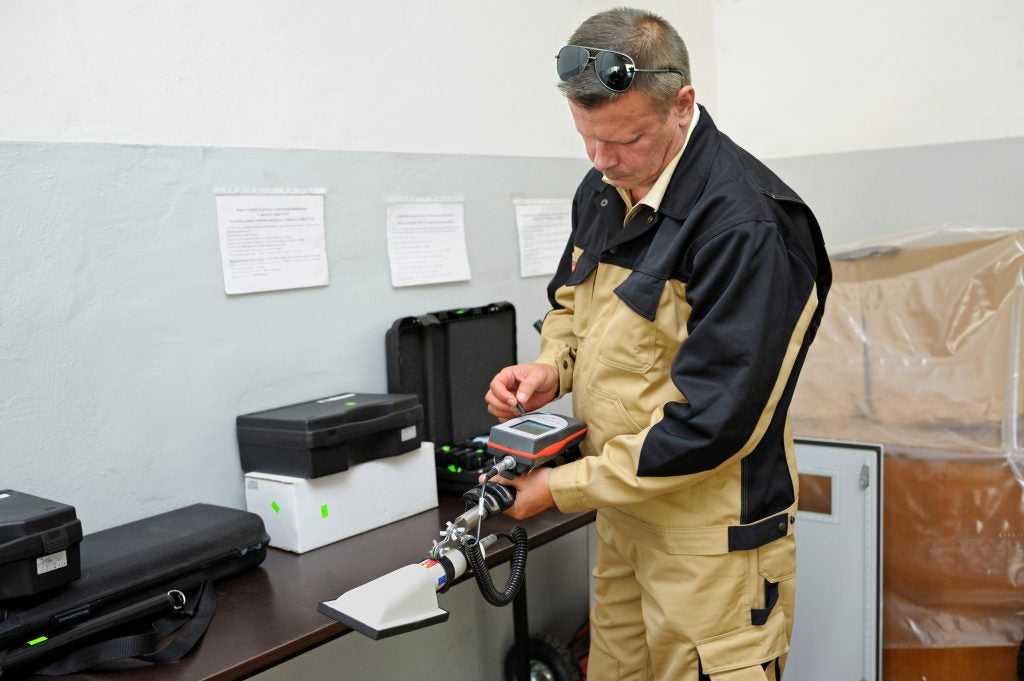
One example of this practice in action is in environmental monitoring programmes that depend on highly sensitive instruments that can detect low levels of radioactivity in both marine and terrestrial ecosystems. These measurements help to identify potential hazards and form the backbone of regulatory reporting, giving teams the reassurance that environmental controls are functioning as intended. Gamma spectrometry plays an important role in this work because it allows laboratories to identify and quantify specific radionuclides within complex environmental samples. However, achieving reliable results at low activity levels requires careful calibration and ongoing verification of instrument performance. Mixed radionuclide solutions support these activities by supplying traceable reference materials that laboratories can use to maintain confidence in their measurements. This helps to ensure that results remain accurate and comparable over time, allowing organisations to make informed decisions based on reliable data.
Unsurprisingly, the nuclear sector places particularly demanding requirements on measurement accuracy. During decommissioning and waste management activities, organisations must characterise materials accurately to determine how they should be handled, stored or disposed of. These measurements have implications for not only environmental protection but also for operational efficiency and cost. Waste classification decisions are often based on measured activity levels, meaning confidence in measurement results is essential. Gamma spectrometry is widely used in these applications because it provides a practical method for identifying and quantifying radionuclides present in waste streams and other materials. Effective calibration is therefore fundamental to ensuring that measurement data can be trusted when making classification decisions. Reliable calibration across a broad energy range using mixed radionuclide solutions helps laboratories to maintain the assurance they need to accurately characterise waste, as well as other similar decommissioning-related activities.

Research and analytical laboratories also depend on accurate radioactivity measurements. Whether they are carrying out routine analytical services or developing new measurement techniques, these organisations need confidence that instrument performance is stable and measurement results are reproducible. Reliable calibration means that the experimental data they generate is of a high level of quality, and is comparable over time. Mixed radionuclide solutions provide a practical way to maintain calibration across multiple measurement campaigns, contributing to the overall quality and consistency of laboratory work.
Planning for the long term
Producing mixed radionuclide solutions requires specialist expertise, suitable starting materials and rigorous quality controls; it involves far more than simply combining radionuclides within a solution. Some radionuclides can be difficult or costly to source while others require specialised preparation to account for stability or decay characteristics. Activity values must be established and verified by appropriate traceability routes before mixtures can be released for use, which requires careful measurement and validation to ensure that users can rely on the resulting calibration data.
Due to these requirements, production is often planned well in advance. Laboratories that rely on mixed radionuclide standards may therefore benefit from taking a similarly long-term view of their calibration activities. Maintaining access to suitable reference materials helps to ensure continuity in measurement programmes and the reliable ongoing performance of gamma spectrometry systems. Forward planning can help organisations to avoid disruption while ensuring that calibration activities remain aligned with operational requirements.
As demand for accurate and traceable radioactivity measurements continues to rise, laboratories face increasing expectations around data quality, consistency and regulatory compliance. Meeting these requirements depends on maintaining confidence in the measurement systems that underpin gamma spectrometry. Mixed radionuclide solutions play an important role in this process. By providing multiple calibration points within a single standard, they offer a practical and reproducible basis for calibration across a broad energy range while maintaining traceability to recognised standards. With a wide field of applications that include environmental monitoring, decommissioning, waste management and research activities, access to well-characterised mixed radionuclide standards helps laboratories to generate reliable measurement data and maintain confidence in their results. As measurement requirements continue to evolve, these standards will remain an important part of the infrastructure that ensures accurate radioactivity measurement.


