

This year marks a half-century since the UK started up the first of its fleet of advanced gas-cooled reactors (AGRs), which have been owned and operated since 1999 by EDF Energy (EDFE). Three of the stations have already closed – Hinkley Point B, Hunterston B and Dungeness – while the remainder are in their final years. Now they will move into the storage and decommissioning phase, which will eventually mean their ownership will transfer to the government-owned Nuclear Decommissioning Authority (NDA), for decommissioning. But the first stage, defueling the reactors, remains the responsibility of EDFE.
The cost of decommissioning the reactors is largely borne by the public, so the UK’s independent public spending watchdog, the National Audit Office, published its view on some of the risks in a report, ‘The decommissioning of the AGR nuclear power stations’, published in January 2022.
A key aspect of the overall cost to decommission the AGRs is the speed at which fuel – representing the vast majority of the radiological load – can be removed from the reactors.
EDFE estimated that the annual fixed costs to manage and maintain a station that is not generating electricity drops from around £140m (US$188m) per year before defueling to £25-30m (US$33-40m) once the fuel has been removed.
The costs are to be borne by the Nuclear Liabilities Fund, which meets the costs of decommissioning the AGRs. These costs are therefore very dependent on how soon defueling begins once a station ceases electricity generation and how quickly fuel can be removed. The NAO said: “Accelerated defueling will test the capacity of EDFE to remove the fuel, and then the NDA to transport and store the fuel safely at Sellafield. A bottleneck at any point in this process could have repercussions across the defueling programme”. EDFE estimated in 2021 that the cost of defueling the AGR fleet could be £3.1–£8.0bn (US$4.2-10.7bn) depending on when it begins and how quickly it is completed.
In 2015, the Department, EDFE and the NDA established the AGR Operating Programme (AGROP) and Defueling Steering Panel to provide management and oversight of the defueling of the AGR fleet. The accelerated defueling programme aimed to reduce the defueling period for each AGR station from eight years to three and a half years.
The NAO report noted that to achieve this a whole series of actions need to be taken by EDFE and the NDA across the end-to-end defueling, transport and storage process, including plant modifications required to handle the increase in volume and rate of defueling, sourcing of critical spares, removal from across the AGR fleet of sufficiently cooled fuel to reduce overall pond fuel stocks, and the NDA ensuring that it has adequate capacity for the transportation and dismantling of fuel. Successful accelerated defueling will require Sellafield to receive, dismantle and store increased rates of fuel from the AGR stations, up from 200 tonnes of fuel to 300 tonnes annually.
It said: “Experience gained from defueling the NDA-owned Magnox stations suggests that despite significant effort it was difficult to increase the rate from one to three flasks per week and it took several years to achieve the required performance.”
According to the NAO report, all the parties (EDFE, NDA and the government) agreed that, given its existing knowledge of the AGR stations and the sites, EDFE was best placed to take forward defueling. It said that: “We saw no evidence to suggest that transferring the stations prior to defueling would have been a practical option, particularly given the short time available before defueling was due to start”.
The government agreed financial incentives to encourage EDFE to accelerate defueling and transfer of the stations. These incentives are weighted towards the defueling stage; up to £86m (US$115m) was available for good performance or EDFE can incur costs of up to £100m (US$134m). “They reflect the greater certainty about the defueling requirements compared with the less developed plans for EDFE’s work to support transfer, and the greater financial significance to the Fund of EDFE’s performance in defueling the AGR fleet compared with its preparations for transferring the stations and its involvement in preliminary deconstruction work,” said the report.
From theory to practice
In fact, by the time the NAO report was published in 2022, EDFE had already been working on preparation for the defueling programme for several years. As head of AGR defueling support, Matt Exton has been involved in the defueling programme since 2017, which at that time was expected to be six years prior to the end of generation. That was the point at which he and his team began an end to end examination of the process, not only from the point of view of a single station but across the industry – including Sellafield, which as the NAO highlighted, is the destination for the fuel and therefore an integral part of the process.
Exton and his team designed a holistic collaboration programme. He says: “Six years out we judged was about the right amount of time” because it would allow time for the necessary ‘category one’ safety cases to be completed. The team expected to have three years lead time at each station before the end of generation, but were able to accelerate that when an early closure at one plant brought its overall preparation period down from six to four and a half. Exton explains that the programme had three components: “We prepared the station, we prepared the fleet and we prepared the industry”.
Preparing the station
At the station level, safety cases were first on the agenda. Defueling of the AGR fleet is subject to regulation and scrutiny by the Office for Nuclear Regulation (ONR). Exton says there were lots of safety cases, from big ones such as modifying the flask corridor to small local ones, but a key one was for the people and the process. Next came hardware modifications. The team’s analysis had confirmed that the biggest constraint was the ‘flask corridor’, where fuel that has been removed from the reactor is dismantled into its component elements. It required major redesign. The buildings and plant remain the same, but EDFE built in multipurpose platforms in the three bays that allow for multiple tasks at once. The reconfigured layout now allows three flasks to be processed at a time and the team can process five to seven flasks a week if needed. The biggest constraint now is how quickly fuel can be removed from the reactor – something that cannot be modified.
This experience has been passed on and the corridor constraint has now been removed at all AGRs, some for immediate use and some ready for when defueling begins. Replication is a major principle of the programme, and although the sites are dissimilar, with different layouts and equipment such as cranes, EDFE used the same partner companies and made the changes as replicable as possible. Exton says, “Depending on which site you are at there are different layouts, but now they all have that minimum throughput”.
One of the most important safety cases was focused on the people and the process. Exton says the process-mapping initiated a number of modifications: “But we knew we needed to resource the people differently”.
There was no longer a need to refuel the reactor, for example, or maintain the turbines. Instead, defueling required more fuel rig operators, as well as more staff on the pile caps to take the fuel out and at the pond and flask corridor area to package the fuel and send it off.
The company trained more fuel rig operators before defueling started. Approximately 30 operations staff were retrained per site to be competent to work on the fuel route plant – the new critical path process for defueling an AGR site. An additional six fuel-route-trained operators in each of the five shifts were required to optimise the process. These 30 people increased the fuel route trained operations staff by around 50%, compared to the generation phase.
The pool of people with these skills has increased and there will be an opportunity for staff to potentially use this new specialism at other sites in the fleet as they defuel.
Preparing the industry
The end-to-end process-optimisation in practice had to be a holistic industry-wide examination, encompassing everything from taking fuel from the reactor to its arrival in a pond at Sellafield.
An industry-wide AGR Operating Programme (Agrop) was set up in 2015 by the government, EDFE, the NDA and a Defueling Steering Panel to provide management and oversight of the defueling of the AGR fleet. It follows a similar pan-industry Magnox operating programme (MPO), employed when that earlier fleet was being defuelled. AGROP was praised in the NAO report, which said, “mid-programme health review of AGROP representatives from the Fund, EDFE and the NDA concluded in December 2020 that the management arrangements were appropriate and mature enough to deliver the preparation phase with good evidence of cross-industry experience being used”.
One cross-industry process that will increase rapidly is the transport of the fuel from EDFE sites to Sellafield, which is by a company called Direct Rail Services. But industrywide, the biggest issue was the waste destination at Sellafield. Defueling a plant means exporting at least three times as much fuel in a week as a generating site, so the demand on Sellafield increased dramatically – but the dismantler at that site had a ceiling to its capacity. It is a single point of vulnerability: “There are seven plants in our AGR fleet that need to send spent fuel, but there is only one plant that can receive it,” Exton says.
Exton says Sellafield changed its manning, made some modifications to the dismantler, and looked at reliability as part of AGROP.
Preparing the fleet
The third aspect of the programme was preparing the set of ‘fleet assets’ used to transport the spent fuel, for example the spent fuel flasks. EDFE had enough flasks in operation to cope with the demand during the generation phase, but not enough for the bigger throughput. However, it also had some spares that had never been used, which it had held for 30 years. EDFE spent three or four years refurbishing these to bring them up to standard and it is now using them to cope with the defueling peak.
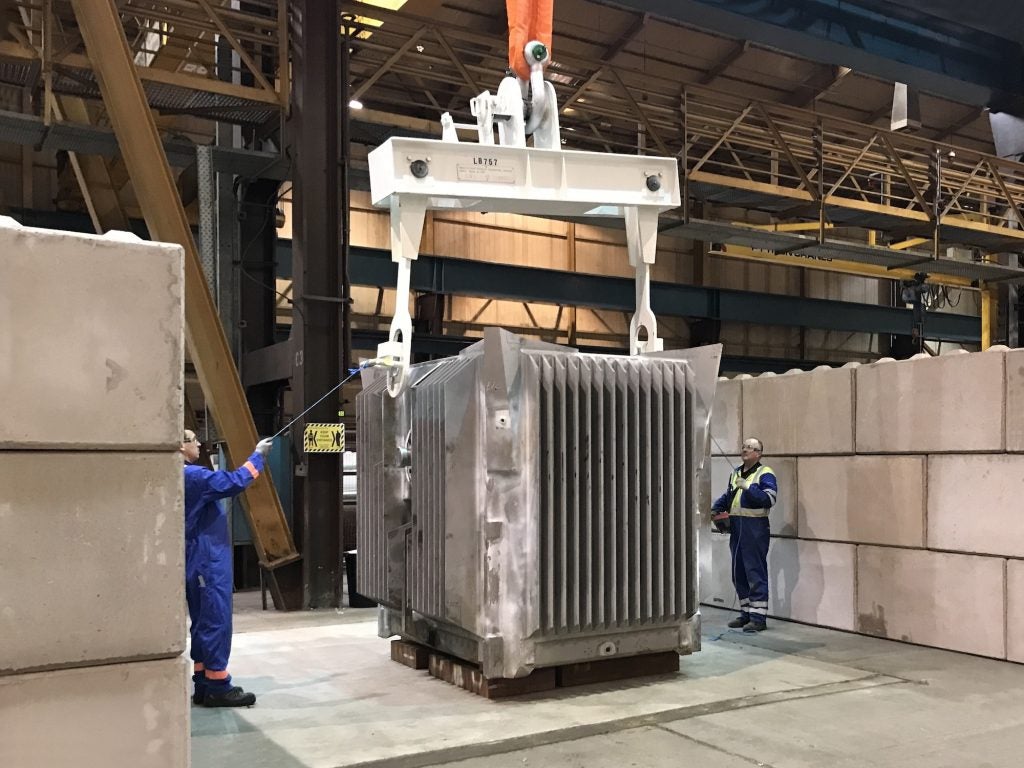
There were 31 flasks in the fleet during the generation phase. The company fully refurbished 12 of the 15 spares and of these, six have been deployed into active service to provide additional capacity. Once deployed the casks are contaminated, so the other six are stored in a controlled environment until they are needed.
A change in skip marking increased capacity by 7%. Original skip capacity was 15 compartments but only 14 were used, with the 15th compartment closed off for historic reasons. EDFE now it marks the skips in a different way, which allows it to remove the temporary ID and open the 15th compartment up. Exton says, “It wasn’t an issue during generation, because it wasn’t on the critical path, but that 7% increase in capacity has saved thousands of flask journeys” and means fewer rail journeys are required. The change is expected to save £160m (US$215m) across the AGR defueling programme.
Flask transporters (ie heavy goods vehicles) are used to transport the fuel to the rail head for the journey to Sellafield and in this case new transporters were procured that meet modern emissions standards. Although the distances to the rail head are small (for example 12 miles (20 km) at Hinkley and just 2 miles (3 km) at Dungeness) it is a logistically complicated process. They transporters have to do some longer journeys as well, as EDFE found it was necessary if the new HGVs were to operate optimally. EDFE procured four each for Hinkley Point B and Hunterston B, and they will be used in turn at future defueling sites.
A new critical process
With the clock running and an objective to reduce time and cost, defueling became the plant’s critical path activity. It had to become a ‘production line’ that would keep running on a 24-hour, seven-day basis. That is a change of mindset that “you can’t expect someone to turn on overnight,” says Exton. “The whole station organisation needs to get tuned into that new critical path activity.”
Refuelling demand during generation had resulted in an average dispatch rate of less than a flask a week. The defueling schedule required an average of three a week to meet the 3.5 year target, which often meant four or five per week to allow for a ‘ramp up’ as staff got used to the new process and for inspection and maintenance outages (a few weeks every six months).
The ‘production line’ has had breakdowns and failures, but Exton says some of his team have worked in manufacturing and the team is learning from process industries about maximising up-time. The biggest interruption so far was at Hunterston. A tie-bar end fitting has to be removed from the end of each fuel stringer to allow the fuel to be dismantled into its into elements. For some, removing the bolt required disproportionate force. During the operation phase engineers would typically want to know exactly what caused the issue, but in the process phase the important thing was to find a safe solution. “We had to stop while we figured out a way to work around it, so we engineered a solution then we wrote a safety case to justify it, we made some modifications to the irradiated fuel disposal facilities where the operation is done and it was successful,” said Exton.
The solution was passed on to Hinkley Point and to other plants, where Exton says, “we have now built in preparatory work at all those plants to look at that specific design and think about what the solution should be at that plant”.
The process mindset makes the time taken to diagnose a fault, fix it and get the process up and running again much more important. Exton explains that is all about analysis of the downtime, which requires that every delay and event is logged in and recorded so the data can be analysed and trended. EDFE makes sure that there are always engineers on shift that can diagnosis these faults, fix it and get going again within a shift, rather than waiting until the next morning. The overall numbers on each shift have not changed, but the mix of skill sets has.
The company had always planned for that shift to ‘process’, but it is ‘learning by doing’ at Hunterston and Hinkley. Other sites are now preparing to take on that process mindset. Defueling preparation teams have been on-site from all the plants that will follow, even those with a few years until shutdown. The next sites are already better set up for the change and will be able to draw on several years of experience from Hunterston, Hinkley and Dungeness. There may be more gains to be made in speeding up defueling.


