Appointed as the Deputy Director General and Head of the Department of Nuclear Energy at the International Atomic Energy Agency (IAEA) in February 2015, Mikhail Chudakov previously served as the Director of the Moscow Centre of the World Association of Nuclear Operators (WANO) since 2007.
He has also held a number of senior managerial positions in the nuclear industry including as the Deputy Director General of Russia’s Rosenergoatom and Director of Bilibino Nuclear Power Plant in April 1999. Between 1983 and 1993, he worked in a variety of roles at the Kalinin Nuclear Power Plant, including Senior Reactor Operator and has a Ph.D. in nuclear engineering.
NEI: What would you say was the most important thing that has happened in the past decade in the nuclear industry?
During my 10 years the Agency, the most important development has been the growing interest in nuclear power in many countries. Even at climate conferences, we are talking now about nuclear power. It was not like this five years ago. So, the situation is changing, and many countries are now thinking about adding nuclear power to their energy mix.
The first reason is the need for energy for many developing countries, and they would like to have clean energy. But many countries don’t have even coal and they need to start with something. Energy security is important. They need a source of energy that can supply them for many years at a predictable cost.
The second reason, if we are talking about clean energy, is the need to avoid fossil fuels such as coal and gas and oil. Fossil fuels represent two-thirds of world energy supply especially for baseload power. The only alternative is nuclear – solar and wind cannot replace this.
More than 30 countries have confirmed that they are going to triple their nuclear energy in by 2050 and have signed agreements to that effect at recent climate conferences – first in Dubai and then in Baku, and now in Belém. We see that more and more countries understand that without nuclear power, they cannot address their growing energy needs using clean sources of energy.
NEI: But for poor countries nuclear is an expensive technology.
The up-front cost is expensive, but you need to look at the cost per kilowatt hour over the whole life of the plant. New NPPs have a design life of 60 years and can extend this for another 30 years – almost a century. Over this period the cost per kilowatt hour will be comparable with hydro, one of the cheapest energy sources. Of course, the up-front investment is the biggest, but the operating cost is lower.
There are a lot of fallacies about the economics of energy sources. Solar and wind claim to be the cheapest but the cost of modernising the grid is not taken into account. These sources produce direct current, and they need inverters in order to convert direct current to alternating current. They also need storage systems. Their lifetime is very short, 14 years for solar panels, and this has created the myth that they are the cheapest. Actually, they are not the cheapest if you take into account all of these things. The decommissioning for nuclear power is already included, for the new designs and the old, in the cost per kilowatt hour. I’m not sure about renewable energy sources. We can debate this.
A couple of years ago, I participated in the energy week conference in Tashkent. A high level representative of the International Renewable Energy Agency spoke about more than 500 GW of installed green renewable capacity for the previous year and mentioned that nuclear power was only 5 GW. When he showed the slides, I saw that hydro was a small amount, wind was also not very much, and the biggest component was photovoltaic solar PV.
When it was my turn to talk, I showed that the load factor or capacity factor for nuclear power reactors is 94% reducing the 5 GW to 4.7 GW For the solar PV it was 23% – in reality, even less, but let’s assume that it was a quarter. One quarter of 500 GW is 125 GW.
Then there is a ratio used by the International Energy Agency of energy return to energy invested. For nuclear power it’s the biggest. It’s 75–80 times because of the long lifetime and other factors. For solar PV it’s one point six times without batteries. So one point six times 125 GW is around 200 GW while our 5 GW multiplied by 80 is close to 400 GW. So I showed that our 5 GW in reality creates twice as much energy as their 500 GW. This is a simple calculation when we are talking about the overall cost per kilowatt hour.
Energy security is national security. If you want a sustainable, reliable, safe source of energy with a predictable price, even for 100 years you need the nuclear power. In terms of the cost per kilowatt hour, nuclear fuel accounts for no more than only about 7% to 10%, so if the price increases, it will not be significant. For coal and gas, fuel represents about 70% and this for sure will be increasing. Nuclear has a lot of pluses including the predictable cost per kilowatt hour.
NEI: A lot of countries, including developed countries, are finding it really hard to finance nuclear power because they are trying to do it privately, using market principles.
Yes, privately, of course, it’s very difficult. If I had a private bank, probably I also would never invest a big amount to take receive revenue in 20 years, no. Nuclear power is a governmental matter. It should be supported by the government. If, in the country, the top leadership is not supportive, you cannot have nuclear power there. This is a matter not only of up-front investment, but of safety, the education of the staff, governmental control, and other things. It is very difficult for private companies to be involved in nuclear.
NEI: So what about developing countries?
Some developing countries, of course, don’t need a big source of energy because their infrastructure is not adequate. Even if they could find the money, the condition of their grid may not be suitable as well as the other areas that we have highlighted when helping countries, member states, create the necessary infrastructure. They are not prepared for a large energy source.
This is why we are talking a lot now about the small modular reactors (SMRs) that are supposed to be cheaper in terms of up-front investment, with faster modular construction, smaller emergency zones and other things. Already private companies are showing interest in creating these energy sources and there are different schemes and different formats of financing now being considered. Private banks and established banks have recently declared that they are ready to invest in nuclear power. Before that it was excluded. Private companies seeking a predictable cost of electricity for many years to come are now ready to invest.
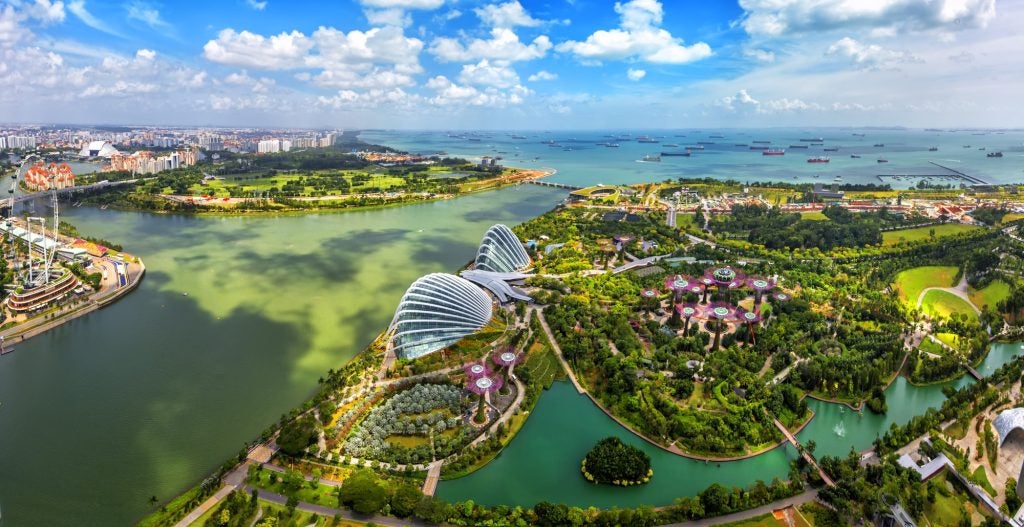
And it is not just developing countries that are interested in SMRs. For example, we have had discussions with delegations from Singapore. They are looking for different sources of energy. They currently have 13 GW of installed capacity but no territory available to expand this. There is no room for a big station or even a small station. The Ministry of Energy is very interested in SMRs and also in floating NPPs and even underground SMRs – or maybe just buying electricity from their neighbours. Malaysia and Indonesia are planning to construct nuclear stations so Singapore will be surrounded by nuclear power.
NEI: The number of SMR projects worldwide is increasing. What are the prospects for their actual deployment?
There are now many SMR designs in the world, including good designs. But governments must first construct a pilot SMR on their territory and make improvements based on this experience. So, in 10 or 15 years, of these 100 designs, maybe a dozen will be left. Only after the pilot, can they begin modular production.
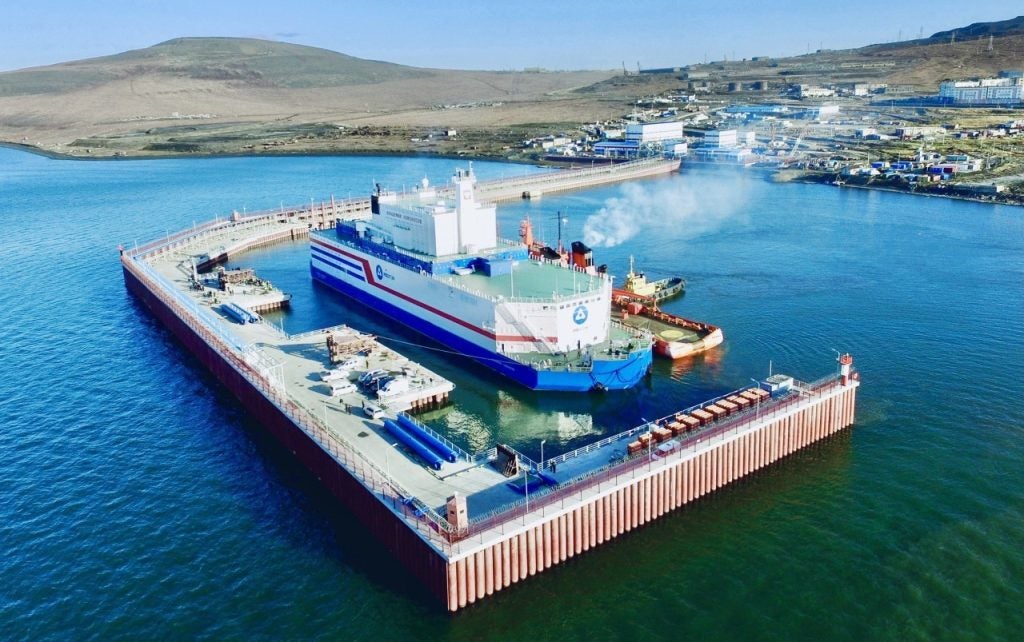
For example, that floating nuclear plant, Akademik Lomonosov, has been operating for five years in northern Russian territory of Chukotka at Pevek supplying heat and electricity. Over those five years, they made a lot of upgrades using it as a pilot and first-of-a-kind project.
NEI: What kind of upgrades?
First, they changed the steam generators because small modular reactors have a very complicated form of piping inside that is difficult to check using non-destructive testing methods in order to ensure the leak-tightness of the pipes. They replaced this using direct pipes of a smaller diameter in the heat exchanger area. They also increased the enrichment of the fuel for longer fuel campaigns. They developed new methods of checking the seam valves on the ship using underwater equipment. This means it is not necessary to bring the vessel back to the Murmansk shipyard for overhaul every 12 years as originally planned. Now the vessel will remain at its mooring for almost the entire lifetime of new designs.
They modernised the design during its first deployment. Now we have several new designs using larger RITM-200 reactors of 110 MWe and even one of 180 MWe. But such improvements would not have been possible without a first-of-a-kind or pilot reactor. This allows you to polish and modify the design. All countries developing SMRs should have a good design on paper. They need to construct a first reactor on their own territory before supplying it to the world. That’s how it works. I expect that in 15 years there may be only 10- 15 designs left that are being constructed because serial production is very different compared with the first reactor.
NEI: Which SMR technologies have the best chance of succeeding?
Mainly I think these will be pressurised water reactors. This is a century of light water reactors – either boiling water reactors (BWRs) or pressurised water reactors (PWRs). Some 70% of the world’s power reactors are PWRs and some 15% are BWRs and for the next 50 years it will continue like this.
There are some projects for high-temperature gas-cooled reactors (HTGRs) and China has put such a plant into operation. Its high temperature gas-cooled pebble bed reactor (HTR-PM) at Shidaowan in Shandong province began commercial operation in December 2023. It involves two small 250 MWt HTGRs that drive a single turbine. The HTR-PM project followed China’s HTR-10, a 10 MW experimental high-temperature gas-cooled reactor, which went online in 2000 and reached full capacity in 2003.
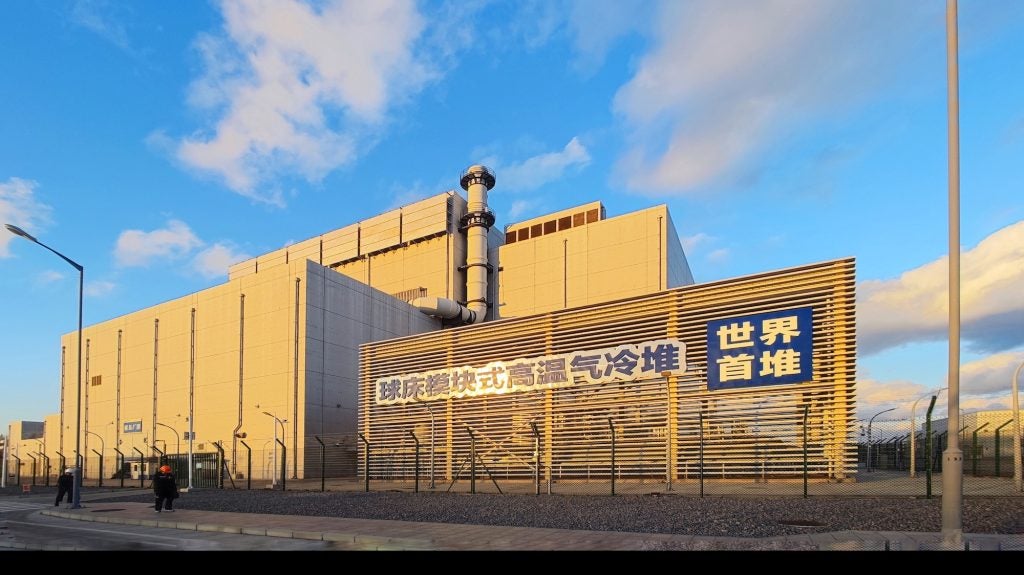
This reactor has advantages and also some disadvantages. This is a pilot, first reactor and, as I mentioned, the role of pilot reactors is to learn the lessons for future developments. It is the first of a series of reactors that China is planning. Their advantages include high efficiency and high temperature using helium gas to produce steam at 700oC which can be used for hydrogen production and for industrial purposes. The pebble bed fuel is very safe – some 436,000 balls or pebbles in each of these reactors. These are microchips of seven grams of uranium surrounded with silicon and also with carbon which will never melt even if left without gas coolant – just air is enough just to take away residual heat making it a safe reactor with high parameters.
But it raises questions about the spent fuel about how to the process it. It is very difficult while fuel assemblies for pressurised water reactors can be cut up and dissolve in acids from which you can extract fission products some of which can be re-used. For pebble fuel this is still under investigation.
And there is also a need for new materials which can withstand the high temperatures. This is one of the reasons why, still now after a couple of years, they are not at full power. They are still experiencing some issues. But all this shows the important role of pilot reactors – development, construction and then investigation to improve and eliminate all the problems before deciding how to use it. However, China has large-scale plans to use HTGRs to support their chemical industry.
But for widespread use of pebble bed HTGRs, I don’t know because the fuel is a bit complicated. You can never melt the fuel, which is one of its advantages. But on the other hand it is almost impossible or very expensive to reprocess compared with a standard fuel assembly.
NEI: What would you say is the best technology for maritime use?
I don’t know what the best technology is, but we are working on this in the Agency and are going to launch the ATLAS programme – Atomic Technology Licensed At Sea – for propulsion and for floating NPPs. There is a lot of discussion, not about specific reactors, but mainly about safety, security and non-proliferation. Around 3% of global carbon dioxide emissions is from the cargo fleet and there are proposals to use propulsion based on nuclear power. Many countries are already discussing this. There are also a lot of limitations imposed by harbours.
Many harbours restrict vessels under pressure which is why vessels with pressurised water reactors will be banned from some harbours. There are discussions about molten salt reactors because they are not under pressure. But there is no experience with molten salt reactors. China just created the first experimental molten-salt reactor and other countries are of course working on them. But there are questions about materials and about the fuel itself, as well as questions about chemicals and about construction. But there is growing interest in their future development because they operate at normal pressure.
NEI: Some SMR projects, especially in the US and Europe, are planning to use fast neutron reactors. Is this a bit too ambitious?
Yes, yes, this is really ambitious. However, fast reactors can solve two problems. First, they can develop new fuel for themselves. Uranium-238 is converted into plutonium-239 which can be reused in mixed uranium-plutonium oxide (mox) fuel. Just a few countries are currently using mox fuel. Fast reactors can use practically all uranium-238. After reprocessing the used fuel it is possible to avoid any further enrichment. You only need enriched fuel at the beginning, after which the fuel can be recycled. The Brest-OD-300 lead-cooled small fast reactor under construction in Russia under the supervision of Yevgeny Adamov is designed to operate in this way. We will see how it works because it will have a reprocessing plant available near the reactor which will recycle the used fuel for re-use. Already spent fuel from thermal reactors is being reused in fast reactors.
The second great advantage of small fast reactors is that they can transmute minor actinides. Although these constitute only 0.1% of spent fuel, they remain highly radioactive for a million years. These actinides do not occur in nature but are the result of fission processes in the reactor. They are one of the reasons why nuclear power is criticised by the Greens – they represent waste that remains radioactive for a million years.
However, in fast reactors, fast neutrons with high energy can transmute these elements to a more stable form with radioactivity that lasts only for 300-400 years, which is great progress. And there are other advantages of fast reactors. They don’t operate under pressure like PWRs. There can also be advantages of small fast reactors such as a Brest reactor under the Proryv (Breakthrough) programme in Russia, and we will see how they will work in practice. But in reality, in operation, it’s just in a few countries – Russia, China, and India – that operate fast reactors while others are thinking about it.
NEI: Overall, how do you see the contribution of nuclear energy to meting global targets for reducing CO2 emissions?
In order to fulfil the real obligations on CO2 emissions it is my understanding that we should have not just 9% of nuclear electricity in global power generation but 25-40%. And we hope it can be achieved this century.