The head of the Atomic Energy Organization of Iran (AEOI), Mohammad Eslami, addressing the 69th General Conference of the International Atomic Energy Agency (IAEA) described the June attacks by Israel and the US on Iran’s civil nuclear facilities as “a direct assault on the credibility of the Agency and the integrity of its safeguards system”.
He noted that two extraordinary meetings held by the IAEA Board of Governors and two others by the UN Security Council since the June attacks had failed to condemn those responsible as a result of US political pressure. “Therefore, one is compelled to ask: what are safeguards worth if safeguarded nuclear facilities can be bombed with impunity?” he asked.
“The International Atomic Energy Agency is at a very critical juncture in its history. The Non-Proliferation Treaty (NPT) and the integrity of international law have been exposed to serious danger as a result of acts of aggression by the Israeli regime and the United States of America,” he said.
He added: “The enemies of Iran must be aware that nuclear science and technology, know-how, and industry are long-standing and deeply rooted in Iran and cannot be obliterated with military attack, assassination, and aggression.” He noted that Israel has not joined the NPT, is preventing the realisation of a nuclear-weapon-free zone in the Middle East, and is also further expanding its nuclear weapons. “Unfortunately, these actions, contrary to international law, are being carried out with the support, or at least the silence, of certain Western countries.”
He asked: “What value does transparency hold if good faith cooperation is rewarded with assassinations of innocent scientists and their families, indiscriminate military attacks against residential areas, and safeguarded nuclear facilities?”
He said Iran’s cooperation with the Agency has been extensive and consistent. “The last report of the Director General before the aggression (GOV/2025/25) – despite our serious reservations regarding its content – does not substantiate any breach by Iran of its safeguards obligations, nor does it document any diversion of nuclear material. The Agency’s report unequivocally confirmed that there is no evidence of a nuclear weapons development programme in Iran.”
He added: “Despite our formal communications and submission of the official request that the attacks on Iran’s safeguarded nuclear facilities be strongly condemned … the Agency failed to condemn these illegal acts, failed to protect the integrity of its own safeguards system, and failed to uphold its Statutory mandate. This silence and inaction will be remembered as a stain on the history of the Agency.”
Referring to Iran’s decision to suspend IAEA inspections of its nuclear facilities in the wake of the June attacks, Eslami noted: “Iranian Majlis (Parliament) passed legislation strictly due to national security concerns and in response to a drastically altered security environment created by these acts of aggression. This does not amount to withdrawal from the NPT. Iran remains a State Party to the Treaty and stands ready to continue its cooperation once its legitimate security concerns are credibly addressed through new arrangements.”
He continued: “What happened in my country was unprecedented in the history of safeguards, and this reality must be acknowledged. Currently, no provision has been made in the Safeguards Agreement as to how to continue engagement under a very critical situation, following the aggression and continuation of threats against nuclear sites and facilities. Therefore, a new definition on how to implement the safeguards in this condition must be provided and agreed upon, in particular regarding ensuring the safety and security of the nuclear facilities and personnel.”
He stressed that the recent understanding reached between the Agency and Iran “is intended specifically to address the exceptional and unprecedented circumstances arising from the aforementioned aggressive acts”.
With respect to the 2015 the 10-year Joint Comprehensive Plan of Action (JCPOA) signed between Iran and the P5+1 group of countries (the USA, UK, France, Russia, and China plus Germany) in which Iran undertook to limit its nuclear development in return for sanctions relief, Eslami said it could have been a success story.
“For a year, even after the United States unilaterally withdrew [ in 2018] and re-imposed unlawful sanctions, Iran remained in full implementation, as confirmed in 15 consecutive reports of the Director General. The Western participants have never implemented their commitments.”
He commented: “Based on international law, the party that has not abided by its commitments cannot demand the implementation of the commitments of the other party in the same deal or treaty. Yet today, as we approach the [JCPOA] Termination Day of 18 October 2025, we face renewed attempts – including the legally baseless invocation of the so-called ‘snapback’ mechanism by the E3 [France, Germany and the UK]. This substantial and procedural abuse of multilateral mechanisms is not only illegal but a mockery of the rule of law and the very text of the … JCPOA.”
Eslami insisted: “Iran will neither bow to pressure nor relinquish its inherent and inalienable rights under the NPT and international law. We call on the international community to reject these egregious violations, to uphold the principles of sovereignty, non-use of force, and peaceful resolution of disputes, and to reaffirm that no one is above the law. In the meantime, even though Iran believes in diplomatic and political solutions, it will not surrender to any political, psychological, or military pressures.”
He continued: “The path forward is clear: condemn the attacks against Iran’s safeguarded nuclear facilities and restore respect for international law, address Iran’s legitimate security concerns, and reestablish the integrity and impartiality of this Agency. Anything less would not only betray the Charter of the UN and the IAEA Statute but also set a dangerous precedent – one that risks normalizing acts of lawlessness and eroding the very foundations upon which the international order is built.”
He noted that Iran has put forward a draft resolution which is firmly grounded in the protection of the mandate of the IAEA, in full accordance with its Statute, and in adherence to the fundamental principles of international law and the Charter of the United Nations.
He concluded: “In view of the professional and principled positions taken by many independent Member States, we express the expectation that the IAEA General Conference, representing the collective will of all Member States, will take appropriate measures in response to these unlawful attacks on nuclear facilities. It is the responsibility of the Conference to resist any efforts to normalize or even legitimize such unlawful attacks and to steadfastly uphold the shared and fundamental principles of the international community, as well as the Statutory mandate of the Agency. The recent US threats in this regard, political pressure on countries, and instrumental use of the Agency in various ways, including pressure on the Agency’s budget, should be opposed and condemned by Member States.”
The previous day, AEOI spokesperson Behrouz Kamalvandi had stated that the US had rejected Tehran’s proposed resolution to ban attacks on nuclear sites, even threatening to cut IAEA funding if it passed. Earlier, Iran’s Supreme National Security Council (SNSC) issued a statement on the recent deal between Tehran and the IAEA, warning that the agreement will be terminated in the event of renewed hostile measures against Iran and its nuclear facilities.
According to the statement, the arrangements signed in Cairo between Iranian Foreign Minister Abbas Araqchi and International Atomic Energy Agency Director General Rafael Grossi on the modalities of future interaction were reviewed and approved by the SNSC’s Nuclear Committee.
Concerning Iran’s nuclear facilities under IAEA safeguards that were attacked by the US and Israel, the SNSC clarified: First, Iran will submit its report to the IAEA only after obtaining the necessary security and safety conditions and following the approval of the Supreme National Security Council. Second, the operational methods for cooperation between Iran and the IAEA regarding the submitted report must be mutually agreed upon, and, consistent with internal procedures, any implementation requires SNSC confirmation.
The statement underscored that in case of any hostile action against Iran and its nuclear facilities – including the revival of previously terminated UN Security Council resolutions – the implementation of the recent arrangements will be halted.
Meanwhile, Iran’s Foreign Minister Abbas Araghchi told Iran’s national television channel IRIB and PressTV that Iran’s nuclear materials remain under rubble from recent attacks, stressing that any inspections by the IAEA must follow new rules and rejecting Western demands for unrestricted access amid ongoing diplomatic tensions.
“Whether these materials are accessible or not, and the status of some of them, is currently being evaluated by the Atomic Energy Organisation of Iran,” he added. Araghchi said that once this evaluation is complete, the report will be submitted to Iran’s Supreme National Security Council, which will decide on any subsequent actions considering Iran’s security concerns.
Araghchi also addressed discrepancies between his account and that of Grossi after signing the agreement in Cairo. While Grossi said the agreement “contemplates access to all facilities and installations in Iran”, Araghchi reiterated that no such access has yet been given and that future talks will determine the nature and timing of any cooperation.
“In every agreement, each side has its own narrative. Mr Grossi must report to the Board of Governors in a manner that satisfies them. He states his version, which may differ from ours, but the text of the agreement is the same,” Araqchi said. In Cairo, Araghchi had made it clear that “access is only permitted in the case of the Bushehr nuclear power plant, and only due to its fuel replacement process – a decision already approved by the Supreme National Security Council.”
Access to undamaged facilities will be “considered on a case-by-case basis by the Supreme National Security Council,” said Araghchi, adding that the situation for the targeted facilities was more “complicated”. He added: “For now no action is taken until Iran carries out the necessary measures related to environmental and safety concerns,” he said. “No inspections are currently on the agenda,” he added.
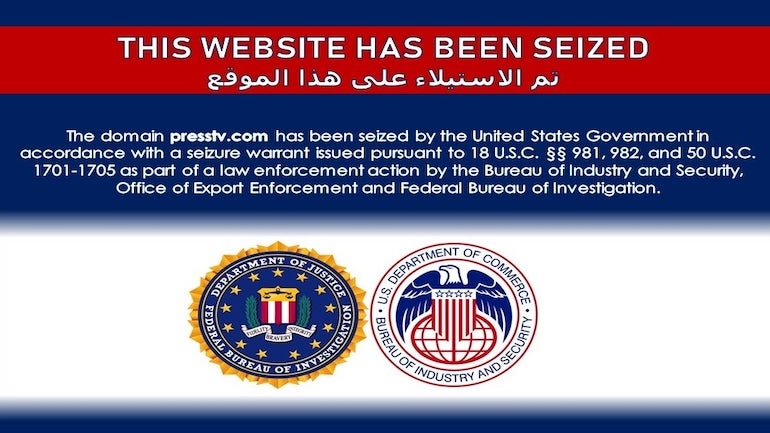
Since this report on PressTV, the channel is no longer available. A notice says it has been “seized” by the US Government.