
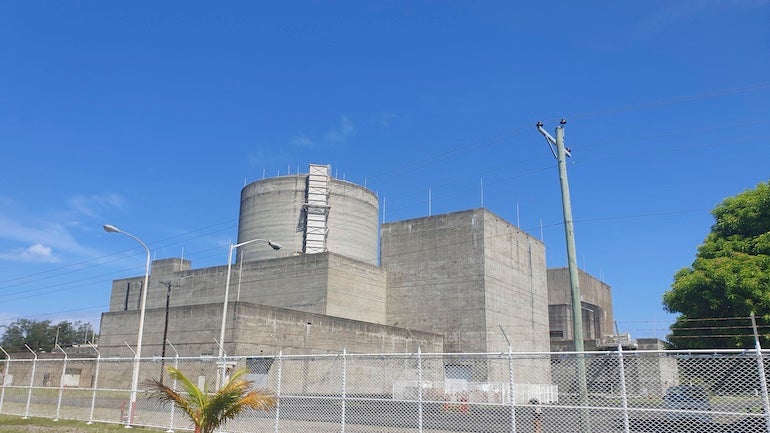
Several major international small modular reactor (SMR) developers and state corporations are currently lobbying and pursuing projects to capture a share of the emerging nuclear energy market in the Philippines. However, the competition has solidified into a head-to-head race between consolidated state-funded South Korean commercial execution and US Government-backed financing for individual companies. Driven by the country’s target to operate its first nuclear plants by 2032, SMR companies are also partnering with local conglomerates and government agencies. This follows a major restructuring of Philippines nuclear policy in the wake of the unfortunate legacy of its mothballed Bataan nuclear power plant (BNPP).
Current nuclear policy is governed by a state-backed push to integrate commercial nuclear power into the national grid under a central goal to achieve 1,200MWe of operational nuclear capacity by 2032. This expands to 2,400MWe by 2035 and 4,800MWe by 2050.
The legal foundation for the policy is Republic Act 12305, signed into law by President Ferdinand Marcos Jr in September 2025. Known as the Philippine National Nuclear Energy Safety Act, this created PhilATOM, an independent, quasi-judicial regulatory authority with exclusive jurisdiction over all radiation safety and infrastructure protocols. Immediately following this, in October 2025, the US Department of Energy (DoE) issued a framework decree granting ‘Pioneer Status’ to the nation’s first nuclear developer.
To attract private investment, this policy bypasses the Competitive Selection Process, enabling the first builder to avoid standard public energy auction rules. This allows direct power contracts with distribution entities such as the Manila Electric Company (Meralco), the largest private electric power distribution utility in the Philippines. The grid operator must buy the pioneer’s baseload electrons ahead of other power providers. The DoE, the Department of Finance and the Maharlika Investment Corporation finalised specific state-backed financing structures and localised participation models. The Energy Regulatory Commission will ensure that any power supply contracts signed by the Pioneer NPP have a minimum fixed term of 25 years, which is automatically extendable for another 25 years to provide a total of 50 years of guaranteed market revenue. The plant is automatically designated as an Energy Project of National Significance. This legally obliges every local and national government bureau to bypass standard red tape and fast-track all environmental, architectural and operational permits. The policy explicitly states that these structural perks apply “regardless of the nuclear technology deployed”. This open-door policy is exactly why international competitors are actively competing for the pioneer slot.
In February 2026, the government completed its harmonised, whole-of-government licensing and permitting road map to erase bureaucratic delays. The framework locks in a rigid, seven-phase regulatory pipeline from initial business zoning to final grid synchronisation and core fuel loading. Energy Secretary Sharon Garin subsequently announced that the Philippine Government will begin officially accepting NPP licence applications, signalling a transition from exploratory policy-making into active procurement and technology vetting. To counter public anxiety and manage risk, the administration enforces a strict vendor limitation: any SMR or large-scale design pitched by international entities must have logged at least two continuous years of safe commercial operation in its country of origin before local regulators will approve a construction licence. By early 2027, the National Transmission Corporation and the National Grid Corporation of the Philippines are scheduled to complete comprehensive structural audits to ensure the national grid can seamlessly absorb an initial 600MWe–1,200MWe of initial nuclear capacity from the pioneer facility, which is expected to deliver its first power to the grid between 2032 and 2035, with long-term plans to scale the nation’s nuclear fleet to 4,800MWe by 2050.
A difficult history
The Philippines first began exploring nuclear capabilities in 1958 when the US supplied a small 1MW open-pool general-purpose reactor under the Atoms for Peace programme. Commissioned in 1963, the Philippine Research Reactor-1 (PRR-1) was designed entirely for scientific experiments, medical radioisotope production and academic training.
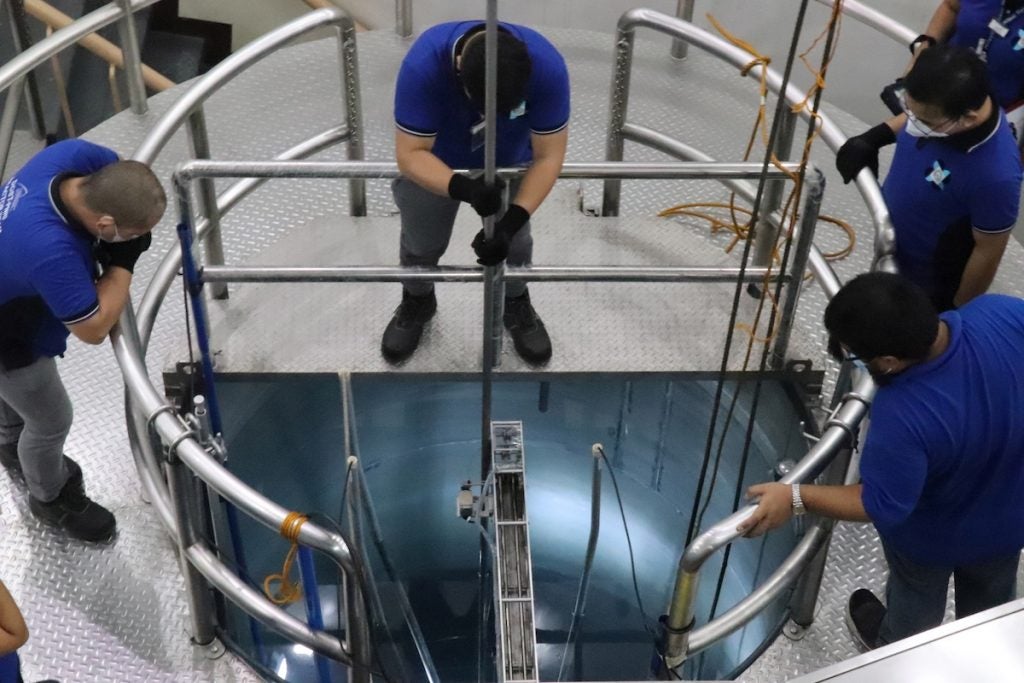
Operated by the Philippines Atomic Energy Commission, the facility is located at the Philippine Nuclear Research Institute (PNRI) compound inside the University of the Philippines Diliman campus in Quezon City. In 1984, the government contracted US General Atomics to convert and upgrade it into a 3MW TRIGA Mark III reactor, using a unique uranium-zirconium hydride alloy fuel.
Plans for a full-scale commercial NPP emerged during the 1973 global oil crisis. President Ferdinand Marcos Sr used his Martial Law powers to decree the immediate construction of an NPP at Napot Point in Morong, Bataan. Marcos overruled his own advisory panel, which favoured a detailed $700m (43.72bn pesos) bid from General Electric, to award the contract to Westinghouse Electric for a less detailed $500m proposal. It was later revealed that Westinghouse paid millions of dollars in “commissions” to Herminio Disini, a relative of the Marcos family, to broker the deal.
Due to severe inflation, systemic corruption and delays, the cost of the 621MWe reactor rose from $500m to $2.3bn, accounting for a significant portion of the entire foreign debt at the time. Construction was severely disrupted by external events and rising local opposition. Following the partial nuclear meltdown at the Three Mile Island facility in the US, Marcos was forced to order an independent safety audit and freeze construction.
The audit uncovered more than 4,000 structural safety defects. Investigators found chaotic, uninsulated internal wiring, unstable high-pressure pipe brackets and faulty valves. Critics accused Westinghouse of changing design paperwork rather than physically fixing the hardware. Protests intensified after volcanologists and geologists pointed out that the plant was built directly on the seismically active slopes of Mount Natib and near Mount Pinatubo, which erupted catastrophically in 1991 after being dormant for 500 years. By 1985, the plant was physically complete, but escalating public protests and political instability prevented Marcos from loading the nuclear fuel. In February 1986, the People Power Revolution overthrew the Marcos regime and President Corazon Aquino inherited the controversial facility. Two months later, the Chornobyl disaster occurred in Ukraine, cementing public fear of nuclear energy.
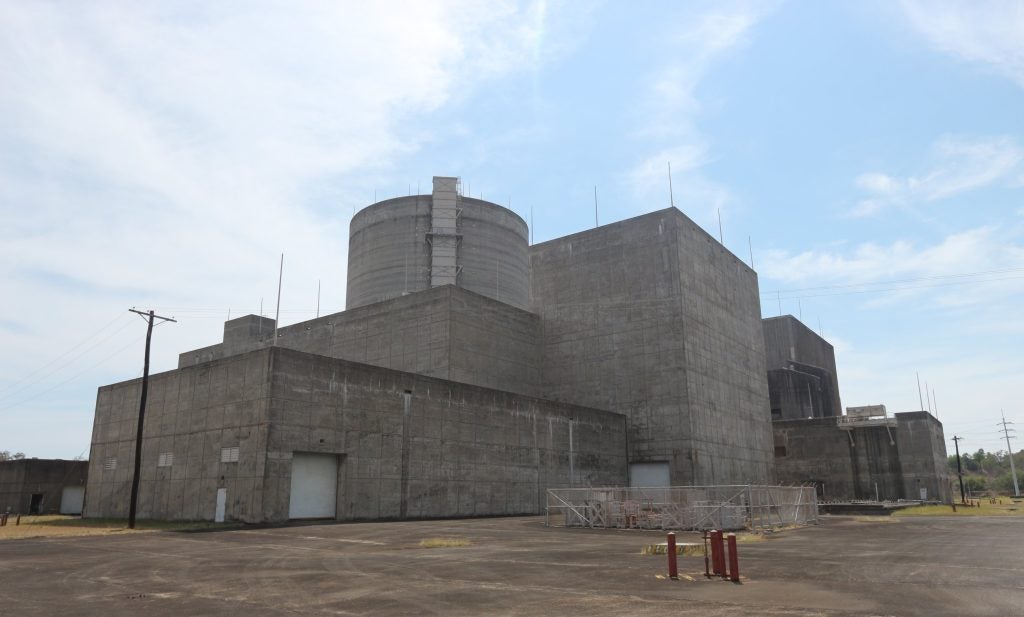
Citing unresolvable safety hazards and the rampant corruption tied to its origin, the Aquino administration mothballed the plant indefinitely. Despite never generating power, the Philippine Government was legally bound to honour the international loans allocating taxpayer money to clear the debt until it was paid off in 2007. Since then, the National Power Corporation has spent an estimated $40m–50m a year just on keeping the machinery preserved and air-conditioned. The historical timeline of the BNPP has come full circle under President Ferdinand Marcos Jr, who is seeking to revive his father’s unfinished project, in parallel with the new policy initiative, to solve the country’s modern power grid crisis. The proposed revival faces two major hurdles: a complex legal tug-of-war between local and national laws, and its structural and geological safety issues. While the national government holds the ultimate legal authority to decide the fate of the Bataan plant, there is also the possibility that the independent regulator, PhilATOM, could block the Bataan revival due to the strict safety criteria written directly into RA 12305, which mandates that nuclear sites cannot be located in areas classified as high-risk for natural hazards.
Rather than committing state funds to a rebuild, the DoE is looking to international scientific screening. The DoE signed a memorandum of understanding (MoU) with Korea Hydro & Nuclear Power (KHNP) in October 2024 to execute an exhaustive technical feasibility assessment on the BNPP structure. Under the MoU, KHNP agreed to fully fund the multi-phase technical and economic assessment, which began in Bataan in January 2025. According to the PNRI, this critical engineering assessment has been completed and submitted to the government’s nuclear energy interagency committee for formal review. If the independent technical assessment officially rules out the physical rehabilitation of Bataan due to safety, cost or geological risks, the MoU grants KHNP specific fallback options to protect its commercial foothold. Rather than terminating the partnership, the agreement pivots KHNP from a refurbishment contractor into a preferred greenfield developer. These options include direct transition to SMR and micro-reactor deployment.
The MoU explicitly structures the Bataan site as a premium nuclear asset, not just a single building. If the plant is scrapped, KHNP has the right of first refusal to propose building a new cluster of SMRs or micro-modular reactors on the same pre-zoned land. This allows them to reuse Bataan’s existing coastal cooling lines and grid sub-stations without restarting the local zoning process from scratch.
If SMR technology is not ready to meet near-term energy demands, the MoU allows KHNP to pitch a completely new, large-scale greenfield nuclear plant next to the old facility. They can propose constructing their modern, fully certified APR1000 or APR1400 light-water reactors (LWRs). The agreement also allows KHNP to transfer its technical data and field teams away from Bataan entirely. They can pivot to conduct secondary feasibility studies on other government-vetted nuclear zones across the Philippines.
The DoE’s Nuclear Energy Programme Inter-Agency Committee initially announcing a baseline list of 15 potential locations in July 2021, which was refined and updated down to seven candidate sites across five provinces by August 2026. The five provinces comprise Bataan with two prospective locations (including the vicinity of the legacy NPP site); Palawan with two off-grid island locations; Masbate with one targeted island site; Pangasinan with one northern Luzon grid-ready site; and Camarines Norte with one southern Luzon coastal site.
South Korea’s pitch
By maintaining its active MoU status with the DoE, KHNP secures a front-row seat to bid for Pioneer NPP Status. This keeps South Korea positioned to secure long-term power supply contracts that bypass competitive bidding and guarantee fixed revenues for up to 50 years.

In August 2025, Meralco signed a MoU with South Korea’s DL E&C to launch a fast-tracked feasibility study and site assessment for a 320MWe SMR, and the following November, President Marcos Jr met with DL Group executives to review early parameters. In March, Meralco launched its human resource development pipeline, sending local scholars to the Kepco International Nuclear Graduate School (KINGS) in South Korea to build a workforce trained specifically for these systems. Feasibility studies and local site sequencing are currently under way.
In South Korea’s nuclear export model, the government organises state corporations and private builders into a single consortium known as Team Korea. KHNP is the state-owned nuclear utility that owns the reactor technology, handles core engineering and acts as the licensed plant operator. DL E&C is the private engineering, procurement and construction company that physically builds the plant facilities, layouts and infrastructure. When Meralco and the DoE look to South Korea, they contract both companies to handle separate parts of the same long-term road map. This combined state-and-private model gives South Korea an operational advantage over more fragmented international bidders.
In addition, the Export-Import Bank of Korea (Korea Eximbank) intends to finance Philippine nuclear projects by deploying a highly integrated, state-backed financial strategy. Rather than leaving private utilities like Meralco to raise capital, the bank uses its sovereign balance sheet to absorb risk, lower borrow costs and secure contracts for Team Korea vendors such as KHNP and DL E&C. The financing framework operates through a trilateral agreement signed in March between Korea Eximbank, KHNP and Meralco. The bank offers direct, long-term credit lines and low-interest project financing to Meralco and local consortia, provided they select South Korean technology and hardware.
South Korea’s domestic SMR deployment strategy has shifted explicitly in view of the two-year safe-operation rule enforced by PhilATOM. To bypass delays associated with older designs, South Korea is focusing on the innovative small modular reactor (i-SMR) – a 170MWe integral pressurised water reactor. The i-SMR consortium (led by KHNP and KAERI) expects final standard design approval by 2028. In June, the South Korean Government officially designated Gijang County in Busan as the candidate site for Korea’s first domestic SMR, locking in a commercial operational target of 2035. Because the 2035 timeline means South Korea cannot clear the two-year safe-operation rule, KHNP and DL E&C are also pitching localised variants of the larger, fully operational APR1400.
The US pitch
The governments of the Philippines and the US formalised an Agreement for Cooperation in Peaceful Uses of Nuclear Energy, commonly known as a 123 Agreement, during the Asia-Pacific Economic Cooperation Summit in November 2023. This agreement, which went into effect in July 2024 following US congressional approval, established a legal framework for the export of nuclear materials, equipment and technology from the US to the Philippines.
While South Korea leads on a singular project, the US has secured a deep institutional and financial foothold within the Philippines utility framework using a strategic consortium approach. The US Trade & Development Agency (USTDA) in February deployed a $2.7m technical assistance grant directly to Meralco PowerGen Corp to fund a comprehensive SMR Adoption Study to shortlist US technology providers. Under the strict federal rules of the USTDA request for proposals, the contract cannot go directly to SMR vendors. Instead, it mandates a neutral, third-party US engineering consultant to evaluate leading US SMR technologies (such as GE Hitachi, Westinghouse and NuScale) against the Philippines-specific geographic conditions and deliver a final, implementation road map to Meralco.
In addition, the US State Department announced it would provide a $1.5m nuclear reactor control room simulator to the Philippines under the Foundational Infrastructure for Responsible Use of Small Modular Reactor Technology (FIRST) programme. The simulator, based on NuScale Power’s VOYGR SMR design, will be installed at a technical institution within the strategic Luzon Economic Corridor.
The system operates in tandem with a broader $2.5m public-private partnership led by Fulbright Philippines, the Technical Education and Skills Development Authority and AboitizPower. This allied academic network will use the simulator to design specialised vocational and higher education curricula. By placing the region’s first US-modelled control simulator in Luzon, the US is positioning the Philippines to act as a regional training hub for SMR technology across Southeast Asia.
A USTDA-funded reverse trade mission will bring 10–15 Philippine private sector and government officials to the US for a first-hand look at cutting-edge US reactors, supply chains and training facilities “to build partnerships that facilitate the deployment of trusted US civil nuclear technology to critical infrastructure in the Philippines”. New funding through the FIRST programme will establish partnerships between Philippine universities and Texas A&M University and King’s College London to support the development and integration of new SMR curricula into engineering programmes in the Philippines.
Earlier SMR forays into the Philippines were not so successful. In 2023–2024, NuScale partnered with Philippine infrastructure company Prime Infra to scope out a multi-billion-dollar investment structure, identifying potential site configurations. However, this lost momentum after NuScale and the Utah Associated Municipal Power Systems mutually agreed to terminate the Carbon Free Power Project in Idaho due to financial difficulties. Faced with NuScale’s domestic setbacks and a $6.5bn–7.5bn price tag for the proposed 462MWe Philippine layout, Prime Infra paused its active capital allocation for the project. However, Prime Infra remains a key private industrial player watching the evolving US-South Korea SMR race. The Ultra Safe Nuclear Corporation (UNSC) signed a formal agreement with Meralco in November 2023 for a pre-feasibility study on UNSC’s 15MWe high-temperature, gas-cooled micro-modular reactor intended to power remote, off-grid island communities. Hit by severe funding shortages and internal liquidity crises, USNC officially filed for Chapter 11 bankruptcy in October 2024. This served as a major turning point for Philippine utility planners, reinforcing their conservative strategy toward early stage technology. Meralco shifted its focus to massive, financially resilient engineering heavyweights such as South Korea’s DL E&C and established US players backed directly by the $2.7m USTDA grant framework.
Future prospects
The power struggle continues. While the USTDA study may ultimately recommend an alternative to NuScale, such as BWXT, Holtec or Westinghouse, the US has to some extent tied itself to the NuScale technology through the Luzon simulator. Meanwhile, Meralco has already sent its first batch of Filipino scholars to South Korea’s KINGS academy for training. By training PNRI regulators and Meralco engineers on NuScale systems, the US is positioning its technology as the default regulatory standard for local licensing. Meanwhile, South Korea offers highly predictable, low-cost nth-of-a-kind timely hardware construction and can access standardised domestic parts ecosystems.
The race will ultimately be decided by a strict regulatory gatekeeper. Under Philippine law, no developer can receive an official licence to load fuel and operate commercially until their specific reactor design has operated safely for two consecutive years in its country of origin. So, whichever SMR company achieves full commercial operation on its home grid first will gain a decisive advantage. That company will be the first legally allowed to claim the highly lucrative Pioneer NPP status.


