
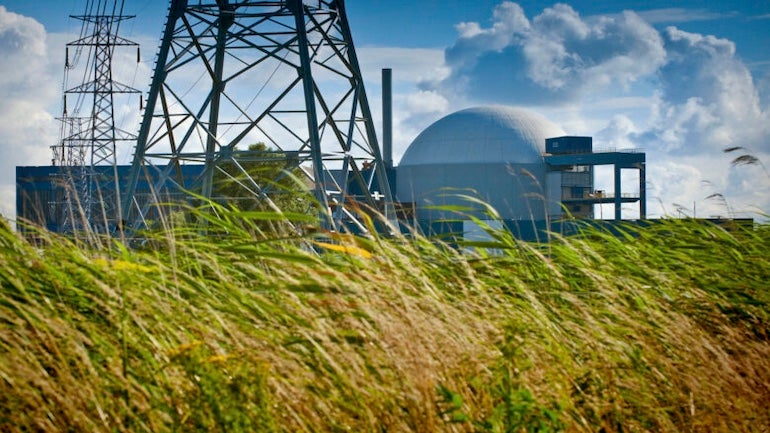
The Dutch Senate has approved an amendment to the Nuclear Energy Act, legally paving the way for a potential lifespan extension of the Borssele NPP beyond its previously scheduled 2033 closure. The legislative amendment removes the politically mandated 31 December 2033 expiration date from Section 15a of the Act. Instead, the legal framework will now allow the plant’s operator, Elektriciteits-Produktiemaatschappij Zuid-Nederland (EPZ) to formally apply for a licence extension based on safety and technical merit.
The single unit Borssele NPP, the only operating nuclear plant in the Netherlands, is a 485 MWe pressurised water reactor that has been in operation since 1973. It accounts for about 3% of total electricity generation. The plant had previously received approval to extend the operational period to 2033, and the plant’s intention – as requested by the Dutch government – is to extend the operation until 2054.
EPZ is currently conducting technical feasibility studies and intends to submit a formal licence application to the Authority for Nuclear Safety and Radiation Protection (ANVS – De Autoriteit Nucleaire Veiligheid en Stralingsbescherming) in 2027. The government hopes to extend the operation of plant by 10 to 20 years.
“The approval of the Senate marks an important milestone in the process towards an extension of operating hours. Now that this legal obstacle is being removed, we can continue the preparations for the permit application. This allows us to substantiate that the nuclear power plant will continue to contribute safely, reliably and responsibly to the Dutch energy supply in the future said EPZ CEO Marco Muilenburg.
Coinciding with the legislative approval, the Dutch government announced it had reached an agreement to acquire 70% of the shares in EPZ. The state is purchasing these shares from the Province of Zeeland and local municipalities, which had indicated they did not want to remain financial stakeholders in a lifetime extension. The remaining 30% continues to be held by the German energy firm RWE.
The government is paying €115.7m ($131.6m) for the shares, according to the Dutch Ministry of Economic Affairs and Climate Policy. In addition, the government is providing EPZ, as the future shareholder, with €119m in equity capital. The aim is to ensure the company’s financial stability and to cover running costs. The transfer is still subject to the approval of parliament and the existing shareholders. The province of Zeeland and the municipalities involved do not wish to participate in an extension of the operating licence.
Dutch nuclear energy strategy has undergone a major expansion. While the lifetime extension of the Borssele facility acts as a stopgap, the central government has committed to a multi-billion-euro expansion designed to scale up domestic nuclear capacity.
The coalition government installed in February expanded plans, extending its long-term plan from two units to at least four conventional large-scale reactors, with a roadmap of around 7 GWe of nuclear capacity by 2050. The state also launched an SMR development programme, allocating initial funds to back feasibility and private licensability studies. Rolls-Royce SMRs are being considered to power data centres and industrial clusters.
The government has designated Borssele as its preferred location. It offers the ideal layout to host the new units alongside the existing facility, although modifications (like moving a coastal dyke and infrastructure) will be required. Secondary alternative sites still under environmental review include Tweede Maasvlakte (near Rotterdam), Eemshaven, and Terneuzen.
Each reactor will have a capacity between 1,000 MWe and 1,650 MWe. Together, they are projected to generate around 24 TWh of electricity annually, covering 9-13% of total power generation. Total construction costs are estimated at €20-30bn. Though initially targeted for 2035, thorough site assessments and complex planning completion is realistically anticipated for the late 2030s.
To manage a project of this scale, the Ministry of Climate and Green Growth established a state-run entity, the Nuclear Energy Organisation Netherlands (NEO NL), which functions as a federal body responsible for every phase of the project – preparation, selection of constructor syndicates, supply chain logistics, and eventual deployment and operation.
After South Korea’s KHNP withdrew from the process under US pressure, Westinghouse 9offering its AP1000 and EDF (offering its 1,650 MWe EPR) became the sole remaining contenders to construct the new Generation III+ reactors. The design contracts are structured into a 12-to-18-month evaluation window that runs across two distinct phases to bypass local planning delays.
Phase 1a underway as of late 2026, will see both companies evaluating how their reactor blueprints align generically with Dutch legislation, regulatory safety boundaries, and technical standards. Phase 1b will begin once the Cabinet releases its draft Preferred Site Decision (expected in the first half of 2027). Those under environmental review include Terneuzen (Zeeland) and two candidate locations at Eemshaven (Groningen), alongside the preferred site at Borssele. The vendors will then customise their engineering bids to fit the exact geography and water-cooling infrastructure of the chosen site.
The design studies do not constitute a final choice. Instead, they are being funded by the state to drastically lower technical and financial investment risks. Once the FEED 1 studies conclude around late 2027, NEO NL will issue a formal construction tender using the data collected, ultimately selecting one primary supplier to build the new fleet.


