
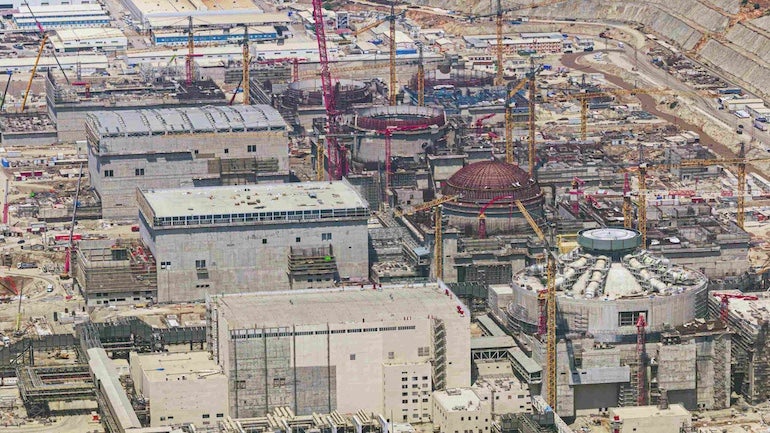
Power generation from unit 1 of the Akkuyu NPP under construction in in Türkiye is expected this year, Turkish Energy Minister Alparslan Bayraktar told TRT Haber TV. “Work to start the first reactor continues at full speed. We aim to complete this and start test electricity production by the end of the year.” He added that some 2,000 tests were being conducted in preparation for the launch.
Rosatom reported that a trial vacuum build-up operation is underway at unit 1. This is a standard pre-commissioning test in power plants to ensure the turbine’s steam condenser is entirely airtight and capable of maintaining a deep vacuum before active steam is introduced. The operation confirmed the readiness of the main turbine installation systems for the next stage of commissioning work.
Because steam turbines rely on a massive pressure drop to spin efficiently, any air leaking into the system will destroy that pressure drop and drastically reduce the plant’s power output. During this six-hour operation, engineers performed a number of technical steps. All external vents, valves, and access manholes on the massive condenser shell were tightly shut. Large, specialised vacuum pumps or air ejectors were turned on to suck the atmospheric air completely out of the system.
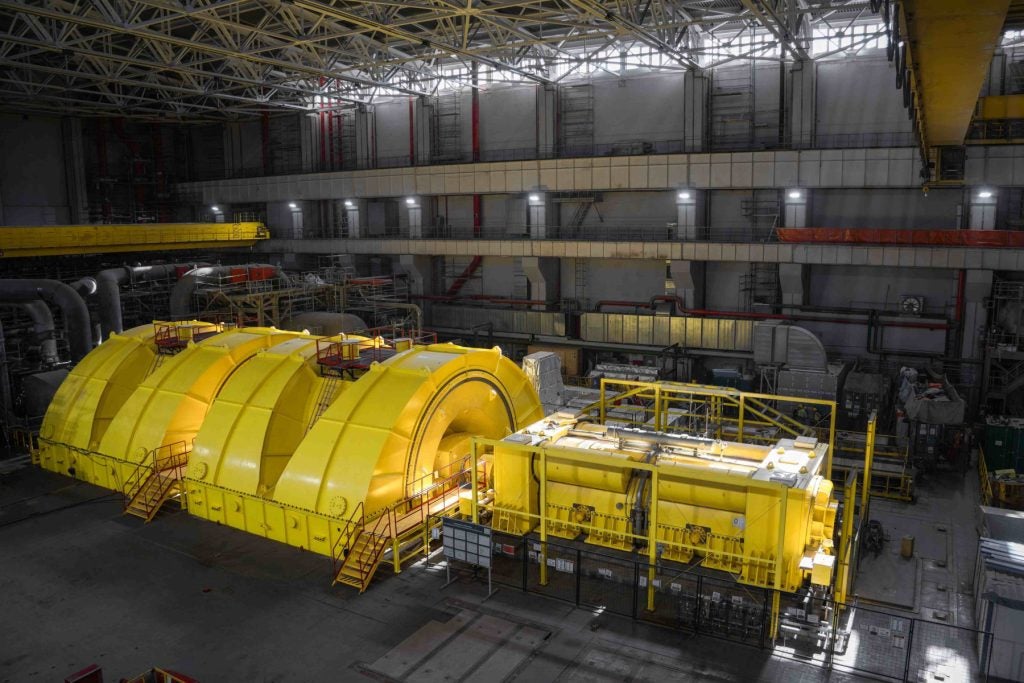
The main turbine was kept slowly rotating via its barring gear (a turning motor) to ensure the rotor blades and internal seals behaved normally under vacuum conditions. Once the target negative pressure was reached, engineers monitored the system to see if the vacuum levels held steady, confirming zero air ingress (leaks) from the thousands of joint welds and gaskets.
This test cannot be done in isolation; it requires a range of secondary support systems to function properly. Achieving a successful vacuum test proved that all the following systems were fully functional and integrated:
- The vacuum system – the dedicated pumps responsible for pulling the air out.
- Turbine gland seals – steam-sealing mechanisms along the turbine shaft that prevent outside air from rushing in along the rotating parts.
- lubrication & hydraulic jacking – systems that lift and oil the massive turbine rotors so they can spin smoothly on the barring gear.
- Thermomechanical monitoring – the sensors tracking metal expansion and bearing temperatures as the internal pressure drops.
With the airtightness of the condenser verified, the station can confidently move to the next major phase – the gas tightness test of the generator and hot functional testing using steam.
“Commissioning – is a sequence of interconnected control operations, each of which opens the way for the next one,” said Sergei Butskikh, Director General of project company Akkuyu Nukleer. “A successful set of vacuum in the turbine condenser showed that the main systems of the turbine unit are operating in design mode and are ready to receive steam from steam generators. This is an important result that confirms the high degree of readiness of the turbine for upcoming launch operations.”
The plant will eventually host four Russian-designed VVER-1200 reactors. The pouring of first concrete for unit 1 took place in April 2018, for unit 2 in June 2020, for unit 3 in March 2021, and for unit 4 in July 2022. Rosatom is constructing the reactors according to a build-own-operate model. Work continues at the facilities of all four units and auxiliary structures as well as a new town for plant operators.


