Recent geopolitical tensions have revived the debate around the need to impose requirements for EU local content in nuclear projects. National and local politicians, who are often the main driving forces behind nuclear projects, want to appear as pushing hard to ensure maximum returns for the local economy, thereby justifying to the taxpayer the billions spent on building nuclear power plants. Yet is sourcing locally or at the EU level always compatible with these politicians’ other key objective of building reactors on time and on budget?
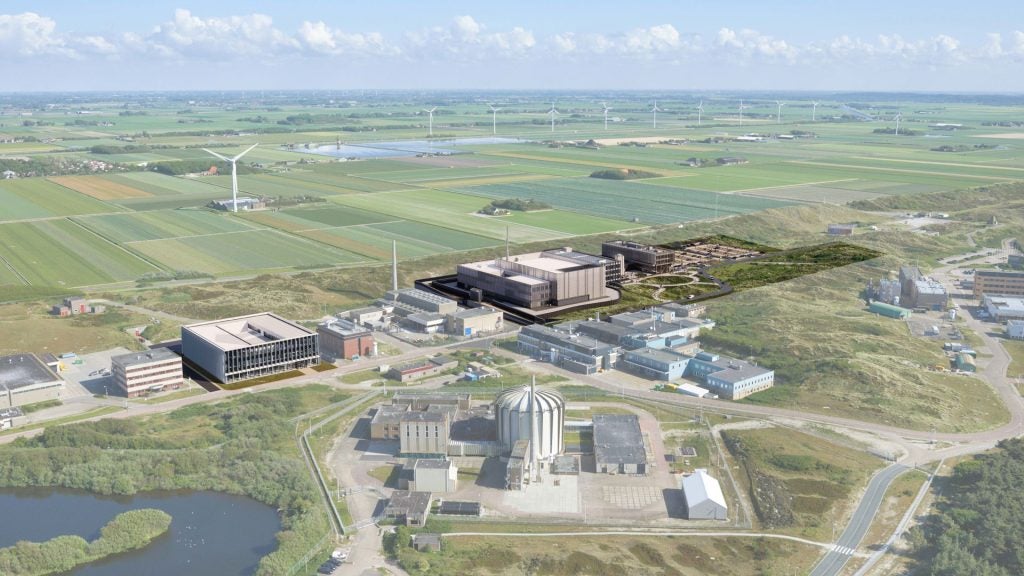
The Netherlands is in the process of setting up its nuclear development programme, looking at large reactors and increasingly at SMR opportunities too. Its ambition is to build up to four large reactors by 2040. Having received the EU Commission’s approval for up to €222m of state aid in December 2025, it formally established Nuclear Energy Organisation Netherlands (NEO NL) in early 2026. This entity will oversee the tender for at least the first two reactors and is responsible for the construction, operation, and eventual decommissioning of these units.
The authorities have concluded that the government will need to finance the construction of the first two reactors, which it will be able to do given the Netherlands’ good debt-to-GDP ratio.
Local content: a political requirement
Whilst considerations such as cost and ability to deliver on time are at the top of decision-makers’ list of concerns, local content will be no less of a priority.
Hans Koster, project manager at Impuls Zeeland considers that local content is ultimately a political decision, and the government will decide how much localisation it wants to require.
At the NexSMR conference organised by Floriske Deutman in January 2026, a panel debated the importance of local content. Several participants argued that local content was a requirement forced upon developers by politicians wishing to please their electorate and warned that too much focus on local content could create delays. Their argument is that local content should not be pursued at the expense of project delivery.
Some criticised politicians’ focus on local content, arguing that if you force local content, the supplier typically makes less profit, it costs more for the customer, and the cost of energy goes up.
One participant criticised the government for its short-term vision, with job creation lasting for a maximum of 15 years. They also considered that vendors tend to over-commit on local content and very few actually deliver on that promise.
Instead of focusing on rigid targets, they recommended looking at nuclear development regionally, not country by country – in a similar structure to that of the aerospace industry. Under this scenario a particular region could become a hub of excellence in one or more areas of technology and collaborate with the industry for decades. The aim would be to create real economic value for a country by building world-class capability in a specific technology area. Local content requirements have not yet been publicly expressed by the authorities in the Netherlands. Senior government officials explained the government wanted to refrain from establishing too strict criteria in the procurement process in order to keep the process in balance with other project objectives. They indicate that there are trade-offs between local content requirements, price, risk and speed: “to keep competition reasonable, healthy and complete, we have to stay as open as possible so the vendors can tell us what they can offer within those trade-offs”.
The ANVS as regulatory authority in the Netherlands has the mandate to supervise if a reactor and all its components fulfill the safety requirements. Rick Bulk, head of the licensing team from the ANVS has stated that nothing from a regulatory perspective requires the supply chain to be European and that whilst having a non-EU supply chain would complicate the ANVS work, it would not make it impossible.
The authorities’ strategy so far has been to map the capabilities of Dutch companies which could be involved in non-nuclear construction and help them reach out to potential vendors, through the organisation of events such as Made for Nuclear which took place in November 2025. As Ben Engel, quartermaster for the province of Brabant explains, “we are trying to create a more structured, less chaotic matchmaking process between vendors and Dutch companies”.
Involvement of local companies is also high on the priority list of regional authorities. For instance, Tractebel has been tasked by the province of Zeeland and Impuls Zeeland with identifying how local companies could be involved. According to Hans Koster, Zeeland wants to give local companies the best opportunity to go through the nuclear qualification process. Senior government officials explained that authorities have also invested in the human capital agenda, putting money into the University of Delft, a hub for nuclear knowledge. According to Mart Van Bracht, director of Program System Integration for Top Sector Energy, training is a key concern, the average age in the sector currently being around 55. Training courses, such as radiation protection, are taught mostly by people over 65, often retired.
What has the Dutch supply chain to offer?
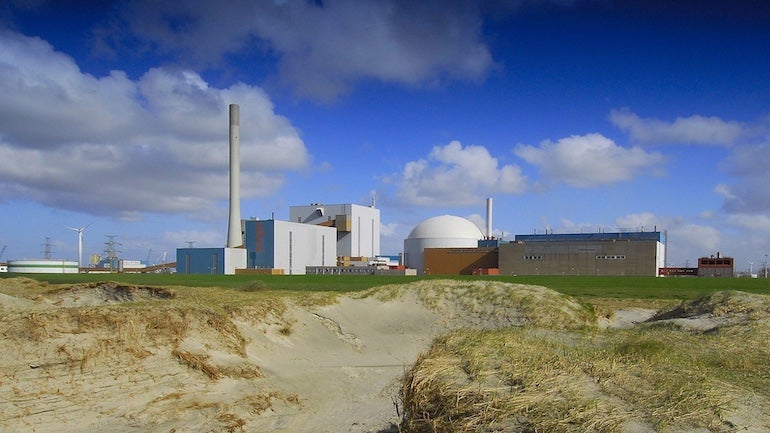
With the last and only Dutch nuclear plant, Borssele, having been built in the 1970s, the Netherlands’ local industry has limited experience working on nuclear projects.
Nonetheless, Ben Engel estimates that there are around 100 companies in the Netherlands that are qualified to contribute to nuclear projects. The companies often mentioned include BAM, Mobilis, Heijmans, ASML, NXP, Prodrive Technologies, or Sioux Technologies.
According to Tractebel Managing Director in the Netherlands Deepak Narasimhamurthy, the Netherlands has the potential to offer to Tier 2 and lower tier nuclear power plant components as against Tier 1, which require high-end qualifications. But for civil works, infrastructure and owner-scope activities (earthworks, roads, rail, housing), including spinoff and spillovers, local firms can absolutely deliver.”
For Baars, director of government affairs at Urenco, said with regard to the large nuclear power plants, that the government could focus on creating local high value jobs, for instance, instrumentation & control, cybersecurity, or IT.
Instead of insisting on a 60% local content target, more focus should be put on ensuring that the Dutch value chain not only delivers domestically, but also across Europe and possibly globally. Tractebel’s Narasimhamurthy believes localisation is key, but not at the expense of timely delivery or budget. According to him, the key is ensuring a balance between the two programme objectives.
Financially, pushing local content too aggressively could inflate overall project costs by 10–20%, according to recurring industry estimates, due to reduced supplier margins and extended qualification processes. Yet a pragmatic target of 30–50% on civil works, infrastructure and owner-scope activities is widely viewed as compatible with NEO NL’s objectives: containing cost overruns while maximising economic value for the Netherlands. The challenge remains striking the right balance between political priorities and project delivery realities.
Ensuring that nuclear projects do not suffer significant delays and cost overruns is also necessary to build confidence in nuclear energy in the Netherlands argues Joaquina Zappey, managing director of Nuvia.
Whether these arguments will convince decision makers and politicians to rethink the traditional approach to local content, which often sets percentage targets, is unclear. Although they can sometimes be cast aside by industry players, topics such as job creation, benefits for the local industry and long-term socio-economic development will rightly continue to be a key concern for democratically elected Dutch representatives.
Politicians and regional authorities argue that local content requirements go beyond short-term electoral appeal. In addition to direct construction jobs (estimated at several thousand over 10–15 years), well-targeted localisation can deliver lasting benefits such as building exportable expertise in research and innovation, high tech components and specialised services – areas where the Netherlands already holds a competitive edge, as highlighted by Urenco’s Baars.
Investment in human capital through Delft University and Top Sector Energy programmes would also help rejuvenate an ageing workforce (average age around 55) and create a sustainable skills base capable of serving projects across Europe. A regional “Airbus-like” model, frequently mentioned within NEO NL, would allow specialisation – the Netherlands focusing on high-tech non-nuclear scopes, France on the nuclear island – while reinforcing European strategic autonomy amid geopolitical tensions. Industry estimates suggest that a balanced target of 20–40% local content on non-critical scopes could limit cost increases to 5–10%, while boosting public confidence and justifying the scale of public investment to taxpayers.
Vendors’ local content strategy for large reactors
EDF and Westinghouse are the two remaining contenders aiming to build the first two new nuclear units, following the withdrawal of KHNP in March 2025. Their local content strategy and delivery model could not stand further apart though.
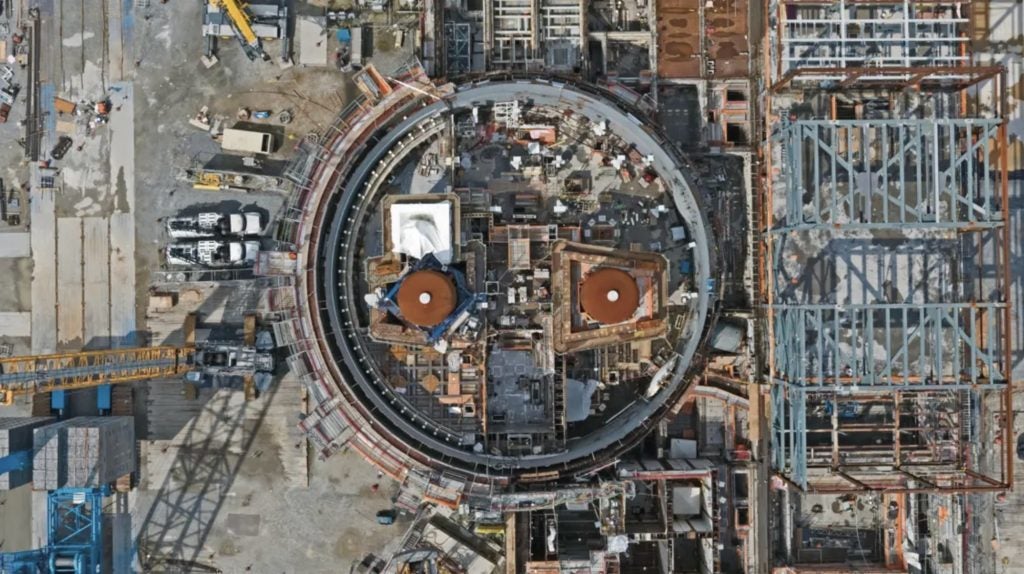
Tractebel’s Narasimhamurthy said that during the Made for Nuclear Event, technology vendors demonstrated interest and willingness to ensure localisation and that any Dutch company can approach them and potentially be integrated in broader European supply chains.
Baars considers that both EDF and Westinghouse understand that local involvement matter politically, saying: “We can do more to activate local companies by providing clear project timelines”.
Westinghouse has announced it would partner with Hyundai during the Made for Nuclear event. Many see this as a move to counter criticism of delays and cost overruns, which caused the company to file for bankruptcy in 2017. Hyundai promises to build “on time and on budget” and many Dutch stakeholders have talked of being impressed by the strength of Korean supply chain, arguing that “they can deliver what they say they can deliver”. Others have pointed to Hyundai’s poor track record in recent energy projects in Poland.
EDF’s supply chain is perceived as picking up pace, and upgrading capabilities, for example at le Creusot. Its recent and ongoing projects in France and in UK have been noticed by some for involving companies from across the European continent. A decision maker responsible for the development of a nuclear programme in Europe stated at the 2025 WNE event: “We smile when Westinghouse makes promises about local content, but with EDF this partnership is already reality, it has worked with our companies on numerous occasions.”
Westinghouse counters by emphasising the proven delivery strength of its partnership with Hyundai E&C, which has consistently achieved “on time and on budget” performance on APR-1400 projects in South Korea and the United Arab Emirates. Several Dutch stakeholders attending the Made for Nuclear event praised the robustness and reliability of the Korean supply chain, viewing it as a key advantage in an industry plagued by delays. The AP1000 design itself has matured significantly following completion of the final Vogtle units in 2023–2024, substantially reducing first-of-a-kind risks.
Geopolitically, some within the Dutch government value the diversification offered by a US-based vendor, avoiding over-reliance on France while still enabling strong European supply-chain integration. Although Westinghouse has yet to provide detailed timelines for local involvement, its more open, Hyundai-supported model is seen by some as better suited to integrating Dutch SMEs into flexible international chains, in contrast to EDF’s historically more centralised approach around Framatome.
Officials from KGG are aware not only of differences between the vendors’ offer for local content but also their delivery model: “Westinghouse’s business model is to construct nuclear plants and hand them over, while EDF has historically had a much more active involvement during operation.”
For Martin Scheepers, senior consultant at TNO, whether the government (NEO NL) will be capable of operating the plant after construction is a big unknown, meaning that it needs to think carefully about which delivery model it favours. For example the goal may be to build a long-term partnership which includes the possibility of the vendor operating the reactors.
Ultimately, the Dutch nuclear programme stands at a crossroads: how much localisation to demand without jeopardising the core goals of delivering reactors on time and within budget. While rigid percentage targets risk inflating costs and delaying schedules – as several industry voices have warned – a balanced, pragmatic approach could deliver meaningful economic benefits for Dutch firms, skills development and long-term value creation. NEO NL’s upcoming tender will be the litmus test. By staying flexible on local content criteria for as long as possible, as the authorities intend, the government maximises vendor competition and real-world offers. Yet political pressures for visible job creation and economic returns will remain intense.
The final choices – vendor, localisation level, delivery model – will not only shape the success of the first two reactors. They will also influence public confidence in nuclear as a reliable, affordable pillar of the Netherlands’ energy future through 2040 and beyond while also contributing to broader European energy resilience in an uncertain geopolitical context.