
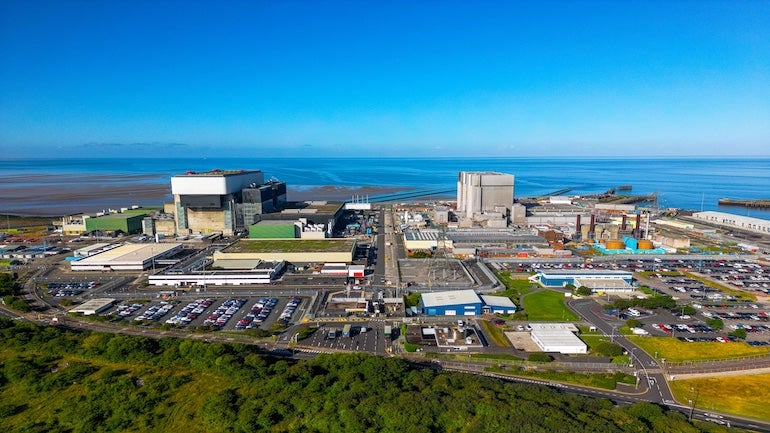
Nuclear programmes are increasingly being delivered in parallel rather than sequence. Life-extension, new build, defuelling, SMRs and advanced fuel initiatives now draw on the same pools of engineering expertise, manufacturing capacity and regulatory attention. As activity scales across multiple areas, the question for the industry is as much about individual technologies as the underlying systems that sustain delivery over time.
The term “ecosystem” is increasingly used to describe the industrial environments that support sustained delivery. In practical terms, it refers to the concentration of operating assets, licensed facilities, engineering services and qualified supply chains that allow capability to be retained and redeployed as programmes evolve.
Ecosystems as platforms for delivery
In the nuclear sector, ecosystems can be about proximity or clustering, but they are also about continuity. Where nuclear work is sustained across operating cycles, manufacturing programmes and engineering services, capability can be refined, transferred and scaled.
At the generation end of the lifecycle, operating nuclear stations continue to play a central role in ecosystem formation. Beyond electricity production, they provide a continuously active environment for outage management, inspection, lifetime assessment and safety case development.
Lancashire, a county in the north-west of England with a strong nuclear heritage, offers a useful illustration of how such ecosystems function, and how opportunity is amplified when operating assets, fuel-cycle capability, engineering services and specialist suppliers coexist within a coherent geography.
The recent launch of the Innovate Lancashire Nuclear Report further reinforces this position, setting out the region’s strategic role in supporting nuclear ambitions through its integrated ecosystem of assets, skills and supply chain capability.
In Lancashire, EDF’s Heysham AGR stations exemplify this function. Ongoing life-extension activity sustains a population of nuclear-literate engineers, technicians and contractors whose experience extends well beyond a single site or reactor class.
For the wider ecosystem, the value lies in the transferability of that experience into new build programmes, major modifications and, eventually, defuelling and decommissioning.
From an international perspective, this illustrates how operating assets contribute to future readiness. They anchor skills locally while maintaining relevance to emerging programme demands elsewhere.
Matthew Lay, Head of EDF’s Nuclear Skills Alliance, says: “Heysham is a great example of how continued investment in our existing fleet builds the skills the UK will need for the future. The expertise developed here doesn’t just keep the stations operating safely and efficiently today, it actively strengthens the talent pipeline for the years to come.
“By maintaining these capabilities locally, we’re ensuring the UK is ready for the next phase of its nuclear renaissance. Looking ahead, this foundation of operational excellence will be essential as the UK moves forward with new nuclear projects and mobilises the workforce required to make them a reality.”
Supply chain lynchpins
Fuel fabrication sits at the intersection of manufacturing discipline, materials science and regulatory confidence. Capability in this area develops slowly and is highly cumulative. Where it exists, it provides optionality, not only for existing fleets, but for the qualification and deployment of new fuel forms associated with advanced reactors.
For international programmes exploring diversification of supply and long-term fuel strategies, ecosystems that include front-end capability; conversion, enrichment and fuel manufacture, offer a tangible advantage. They allow development, demonstration and production activities to remain connected, rather than fragmented across jurisdictions.
Lancashire hosts the UK’s only commercial nuclear fuel manufacturing facility at Springfields, operated by Westinghouse at a site celebrating its 80th anniversary this year, making it the oldest nuclear fuel site in the world. The presence of an established, licensed fuel site within a broader industrial ecosystem adds a different dimension of opportunity.
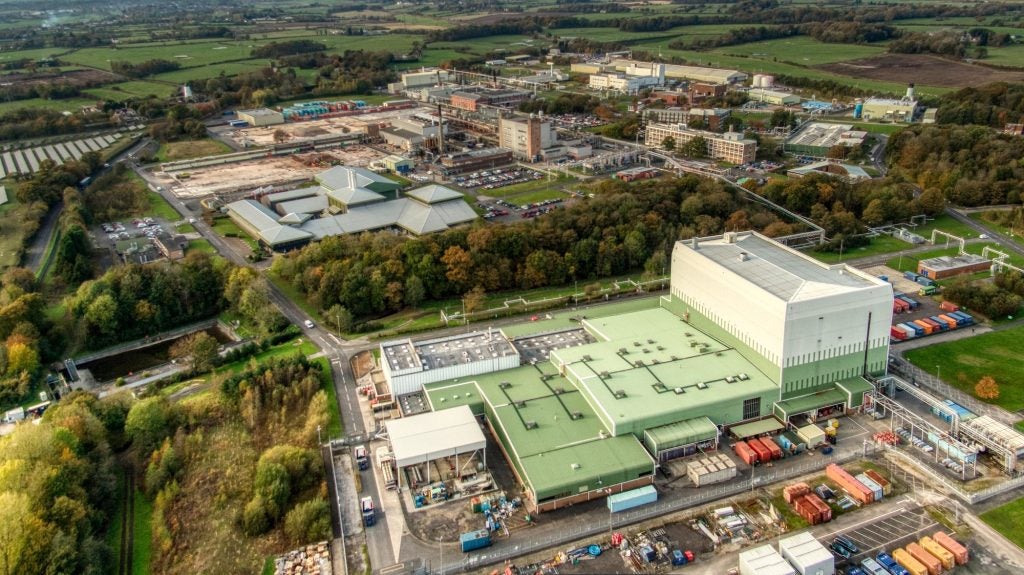
Within the ecosystem, engineering services form a critical connective layer between operators, designers and manufacturers. For regional ecosystems, the presence of large-scale engineering services capacity provides both surge capability and continuity, allowing experienced personnel and established processes to be redeployed as programme demands evolve.
Assystem’s UK headquarters in Blackburn help anchor a significant concentration of nuclear engineering capability in Lancashire, supporting programmes that span new build, life-extension and emerging reactor initiatives. The company’s role reflects the importance of systems integration, safety assurance and programme controls expertise in translating strategic intent into deliverable scope.
Assystem UK Managing Director, Simon Barber, says: “In a thriving nuclear ecosystem engineering expertise is the vital link connecting industry demand with the skills needed to meet it. The region’s long-standing heritage in nuclear power, shaped by the Heysham power station, the Springfields fuel manufacturing site, as well as a key decommissioning hub with Sellafield, makes Lancashire a prime location for Assystem to position its UK headquarters.”
SMEs and the expansion of capability
Between operators and fuel-cycle assets lies the layer that translates ambition into execution: engineering services and specialist manufacturing. Lancashire’s ecosystem includes both, from large engineering services organisations with national and international reach, to independent manufacturers delivering high-integrity nuclear components and systems.
This layer is often where opportunity is realised most directly. Engineering services provide the systems integration, assurance and programme controls that enable scale, while specialist manufacturers turn design intent into qualified hardware. Where these capabilities are embedded locally, they can respond more fluidly as programme requirements shift.
For the industry as a whole, this highlights the importance of maintaining depth, not just breadth, in supply chains. Ecosystems with a well-developed middle layer are better positioned to support multiple programmes simultaneously, without excessive reliance on a narrow set of global suppliers.
No ecosystem operates at scale without a broad SME base. In nuclear, the most effective SMEs are often those operating along a qualification gradient: firms that may not be exclusively nuclear, but which repeatedly engage with nuclear clients and standards.
Like Technologies is one representative of this layer within Lancashire, supplying electronics, software and control-system expertise relevant to safety-critical environments. The company illustrates how SMEs extend ecosystem capacity by absorbing nuclear assurance practices over time. Their engagement with skills development and education further reinforces the pipeline, supporting the gradual expansion of nuclear-capable capability without diluting standards.
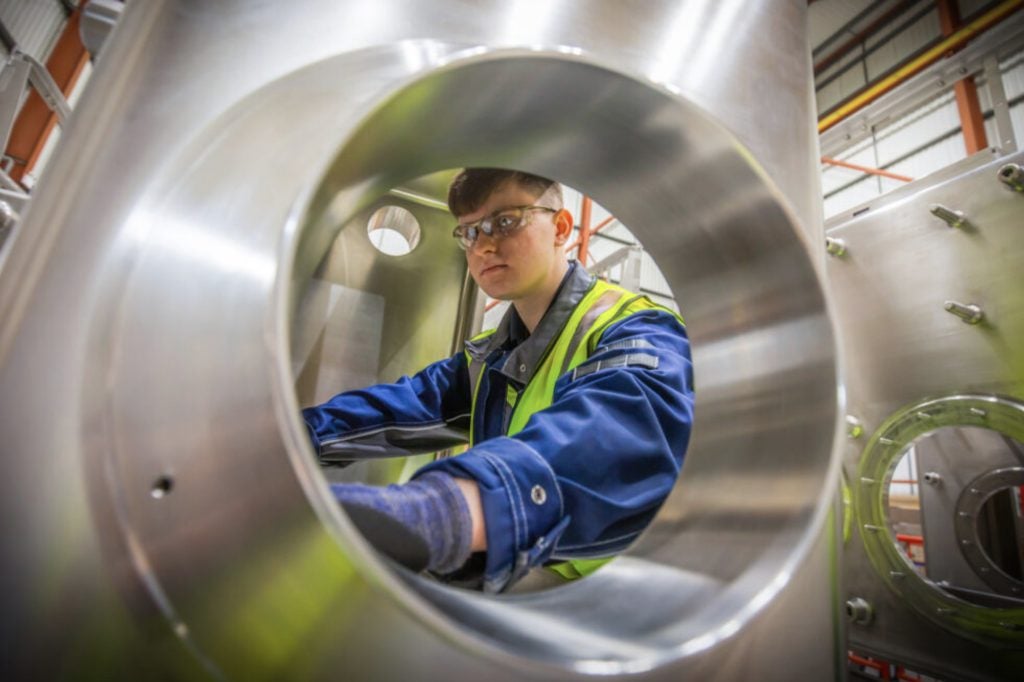
Like Technologies Managing Director, Kate Houlden, explains: “We are very passionate about our place within the sector, especially when it comes to representing the opportunities that the industry’s SMEs provide to younger people developing careers in nuclear.
“We work closely with local education establishments to provide work placements and workshops. These kinds of practical exposures are especially valuable from the SME side of the supply chain, which is essential in ensuring young talent is aware of the bigger picture and how organisations work together.”
Specialist manufacturing and engineering firms also play a distinct role within nuclear ecosystems, particularly where work involves bespoke, high-integrity components and systems. NIS, based in Chorley, operates across civil and defence nuclear programmes, combining accredited manufacturing capability with nuclear engineering expertise. It further illustrates how independent suppliers contribute depth and resilience to the supply chain, supporting complex work packages that demand rigorous quality, configuration control and security awareness. Such firms enable ecosystems to respond flexibly to varied programme requirements while maintaining nuclear-grade standards.
NIS Managing Director, Steve Rothwell, says: “Lancashire’s nuclear ecosystem offers a depth of capability that gives the UK a genuine strategic advantage. The concentration of skilled people, specialist suppliers and nuclear partners enables us to tackle complex, high-integrity work with confidence and agility.
“What sets this region apart is the continuity – skills are retained, experience is shared and capability accumulates over time. That maturity allows businesses like ours not only to meet today’s demands, but to contribute meaningfully to the long-term resilience and readiness of the national nuclear programme.”
Opportunity through continuity
What makes ecosystems particularly valuable at this moment is the concurrency of nuclear activity. Life-extension, new build, SMRs and advanced fuel programmes are no longer sequential. They overlap, drawing on shared pools of expertise and infrastructure.
Ecosystems allow that overlap to be navigated productively. They support the re-use of experience, the retention of skilled personnel, and the steady maturation of supply chains. Rather than resetting between projects, capability accumulates.
This accumulation can occur within a defined geography like Lancashire. The county’s recently launched ‘Growth Plan’, which identifies nuclear as a driver of clean growth, reflects a recognition of this existing strength rather than a speculative ambition. For the global industry, the lesson is strategic: where ecosystems are already in place, the opportunity to move faster, and with greater assurance, is materially enhanced.
Nuclear’s next phase will be shaped not only by reactor designs or financing models, but by the places that can support sustained delivery over time. Ecosystems are where that readiness resides.


