
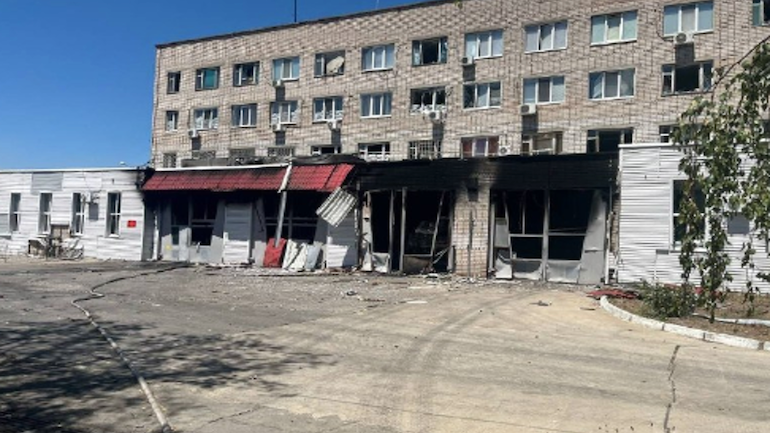
The International Atomic Energy Agency (IAEA) team based at the Zaporizhia NPP (ZNPP) has confirmed significant damage to a fire station in the nearby city of Energodar that plays an important role in supporting the plant’s emergency response capability, IAEA Director General Rafael Mariano Grossi said.
The IAEA team was informed that the Energodar fire station was struck by drone attacks on 30 June. During a visit to the site on 1 July, the team observed damage to the building and several fire-fighting vehicles, which has significantly reduced the station’s operational capacity. Minor injuries were also reported.
The facility provides important back-up support to the ZNPP’s own fire brigade in the event of a large-scale emergency at Europe’s largest nuclear power plant. “Any attack that undermines nuclear safety and emergency preparedness is unacceptable,” Grossi said.
Meanwhile, the IAEA team at the ZNPP continue to monitor maintenance and repair activities affecting safety-related equipment at the site, including those on valves associated with the essential service water system and the cooling system of a unit transformer. The transformer supplies electricity needed for essential nuclear safety functions, including reactor and spent fuel pool cooling. The team confirmed that all repair work was completed promptly and the affected equipment was restored to service.
“The repeated need for repairs to key plant equipment is a clear reminder of the fragile nuclear safety and security situation at the plant, and of the need to keep all essential systems fully operational at all times,” Director General Grossi said.
In addition, while repairs to the 750 kilovolt (kV) Dneprovskaya power line on the ZNPP side of the frontline have been completed, the line remains unavailable because the associated substation, located more than 100 kilometres northwest of the plant, is still not operational. As a result, the ZNPP continues to rely on the single 330 kV Ferosplavna-1 back-up power line for the external electricity it needs to support nuclear safety functions.
ZNPP reported on its Telegram channel that the line had been disconnected for two hours on 3 July requiring the use of diesel generators to ensure essential cooling to the reactors. ZNPP also confirmed that IAEA experts had been shown the consequences of the drone attack on the Energodar fire and rescue unit.
“As a result of the dumping of explosive objects from unmanned aerial vehicles… the fire department building was damaged, as well as fire tanker trucks were disabled. Fortunately, there are no casualties among the personnel…. The IAEA representatives examined the damage and were informed about the circumstances of the incident.”


