
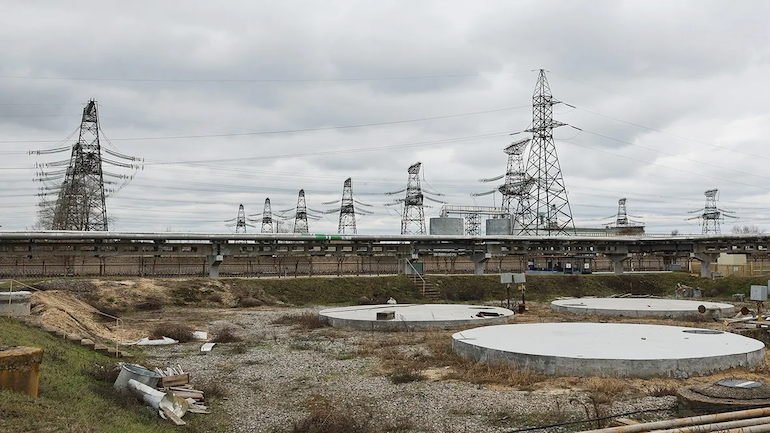
Off-site power was restored to the Zaporizhia NPP (ZNPP) on 6 June after a 15-hour outage, when the site had to rely on emergency diesel generators for electricity to cool its six shutdown reactors. The 330 kV Ferrosplavnaya power line had been disconnected due to reported attacks on two electrical substations located on the other side of the Dnepro River.
ZNPP’s only other functioning power line – the 750 kV Dneprovskaya line has been disconnected for more than two months. The International Atomic Energy Agency (IAEA) said it was the 18th loss of off-site power during the war and one of the longest, highlighting the extreme fragility of the electrical grid and the urgency of proceeding with planned power line repairs under the protection of an IAEA-brokered ceasefire.
ZNPP said the backup diesel generators, which ensured the station’s safety during the period of external power outages, performed their function as expected and were put into standby mode. All systems and equipment at the plant are functioning normally. The station’s personnel are constantly monitoring safety parameters and radiation background at the station site and in the monitoring area is within natural limits and does not exceed the established standards.
The previous day, a local ceasefire came into effect brokered by IAEA after months of negotiation to enable repairs to the Dneprovskaya line. However, during engineering work to de-mine the area before work could begin ZNPP said a drone dropped a munition on members of the Russian Ministry of Defence’s de-mining team. As a result of the attack, five servicemen were injured to varying degrees. All the victims received timely medical assistance. This incident occurred during the first hours of the ceasefire.
IAEA reported the next say that to strengthen and help maintain the ceasefire after the incident that injured several Russian military personnel, an Agency team had begun monitoring mine-clearing work that is required before the power line repairs can begin. “The repairs of the ZNPP’s main 750 kV power line are expected to get under way in coming days after de-mining of the frontline area has been completed,” IAEA said.
In the previous five localised ceasefires negotiated by the IAEA to ensure nuclear safety at the ZNPP, the Agency’s teams have monitored the repairs but not the preceding de-mining work.
At a press conference in Vienna Grossi said that it took two months to agree on this ceasefire. “Agreeing on these ceasefires is difficult. It requires agreement on various aspects, such as technical, military, and political issues. This time, it took two months.”
Russian Foreign Ministry spokeswoman Maria Zakharova said that a serious disaster at the Zaporizhia NPP is just one step away. She emphasised that each new attack on the ZNPP is becoming more extensive and reckless. The intensity of the attacks is increasing, and now not only the surrounding areas and the station’s personnel are in danger, but also the main equipment and nuclear materials. On 30 May, a combat drone struck had the turbine hall of unit 6 of the ZNPP.


