
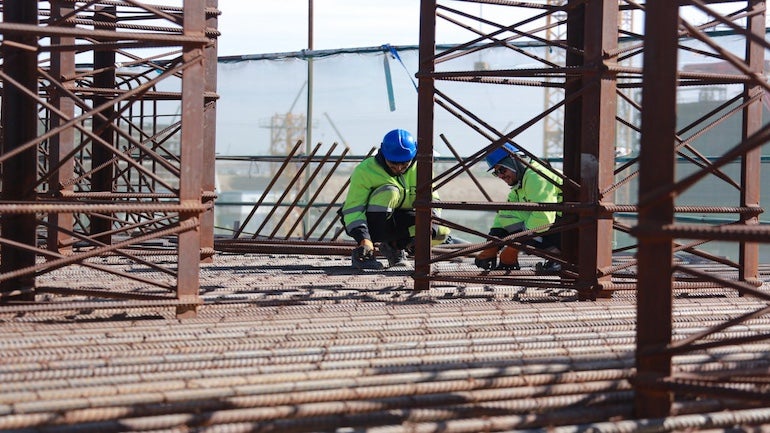
Russia’s TITAN-2 (part of Rosatom), general contractor for the El Dabaa NPP in Egypt, has begun reinforcing the foundation slab of the fresh nuclear fuel storage building for unit 3. This will require 1,200 tonnes of metal and 4,176 cubic metres of concrete.
El Dabaa NPP will comprise four units with generation III+ VVER-1200 pressurised water reactors. The NPP is being constructed in accordance with contracts that entered into force in 2017. The $30bn project is mainly financed through a $25bn Russian loan. Rosatom will supply nuclear fuel throughout the lifecycle of the plant, arrange for the training of the Egyptian personnel, and assist in the operation and maintenance of the plant for the first 10 years. The reference plant for El Dabaa is the Leningrad-II NPP. Construction of all four units is planned for completion by 2028-2029 and Egypt expects that the NPP will reach full capacity by 2030. Work is underway on all four units.
Vladimir Klepikovsky, Director of the Cairo branch of TITAN-2, noted: “The active start of construction work at the beginning of 2026 confirms that the El-Dabaa project, which is the flagship of Russian-Egyptian cooperation, is confidently moving forward. Every day we take a step towards the construction of Egypt’s first NPP.”
The fresh nuclear fuel storage building is intended for receiving, temporary storage and preparation of fuel for subsequent loading into the reactor. TITAN-2 specialists have completed the preparatory work and are starting to install the reinforcement frame.
“We were able to optimise the inspection process when installing the foundation slab,” said Ramil Kaniyazov, Director for the construction of the unit 3 nuclear island at TITAN-2. “Thanks to close and productive interaction with representatives of the customer and the general contractor, the number of reinforcement inspections was reduced from seven to two. This will significantly affect both the timing of construction and installation work.”
Company’s specialists will begin installing embedded parts, installing a closed ground loop and installing formwork. The final stage will be the concreting of the foundation slab.


