
Argentina’s nuclear utility, Nucleoeléctrica Argentina SA (NA-SA) has said testing is underway at the Spent Fuel Dry Storage Project (ASECG II – Almacenamiento en Seco de Elementos Combustibles Gastados II). The tests are part of the verification process prior to the start-up of the system. Among the equipment being tested is the gantry crane, which was delivered to the site at the end of 2025. The crane will be used to transport containers within the facility.
ASECG II will have the capacity to store up to 50,000 used fuel elements within the plant premises, under permanent control and in accordance with the safety standards applicable to the nuclear sector.
Argentina has three NPPs – Embalse in Córdoba province, operational since 1983, and the Atucha Nuclear Complex, which encompasses Atucha I&II near the town of Lima in Buenos Aires province. All three are pressurised heavy water reactors (PHWRs) and together produce 10% of Argentina’s electricity.
Used fuel from the reactors is initially stored in pools of demineralised water located in radiologically controlled areas within the nuclear buildings. In these pools, the elements remain cooled and safely contained underwater. At Atucha II the pools will reach their maximum capacity by December 2027.
Shifting used fuel to dry storage ensures the plant can continue generating electricity. It safeguards the plant’s newly granted 10-year operating licence renewal (valid to May 2036). The system features a built-in passive ventilation design. This cools the stored material safely without requiring electrical power or human intervention.
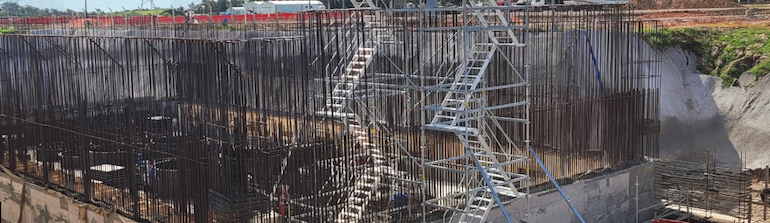
Main civil works, including a heavy-duty, high-strength concrete base, are finished. Work continues on shielded lids, metal supports, and specialised containers. The facility follows the deployment of a similar dry storage facility for Atucha I completed in 2022. Both projects reinforce Argentina’s specialised domestic supply chain for managing heavy-water reactor technologies. The joint investment in the two facilities is valued at $700m.
The project involves participation of the national industry. Its engineering was developed in Argentina, and its execution involves Argentine suppliers in the manufacturing of equipment and components.


