
While TerraPower is perhaps most widely known for its Natrium advanced nuclear reactor, its isotopes affiliate is attempting to build a breakthrough in the civil nuclear space. It is aiming to create a long-term supply chain for next-generation radiopharmaceuticals. Speaking to Nuclear Engineering International, TerraPower Isotopes vice president Ben Goodrich outlines the company’s ambition to build the first commercially sustainable private-sector supply chain for actinium-225 (Ac-225). This alpha-emitting isotope is increasingly viewed as one of the most promising radionuclides for targeted cancer therapies, and interest in Ac-225 has accelerated massively as clinical trials demonstrate encouraging results.
Goodrich explains the drivers behind this commercial venture: “The results that we’ve been seeing are very positive and so that is driving that need.” However, he comments that the market for these types of therapies extends far beyond supplying the current sweep of clinical programmes: “It is such an opportunity. It’s a challenge worthy of rising to, especially when you categorise it in terms of a global need to build another pillar in cancer treatments.”
Unlike conventional radiotherapy, these treatments use biological targeting molecules to deliver alpha-emitting isotopes directly to cancer cells, potentially destroying tumours while minimising damage to surrounding healthy tissue. Ac-225 is used to potentially treat diseases such as prostate, breast, colon and neuroendocrine cancers, as well as melanoma and lymphoma.
Furthermore, Ac-225 has several important logistical advantages. Many medical isotopes suffer from extremely short half-lives, creating severe logistical constraints. But according to Goodrich, Ac-225 occupies an unusually favourable position.
Its half-life of just under ten days is long enough to permit international transport and pharmaceutical manufacturing while remaining short enough to deliver therapeutic benefit. This balance allows manufacturers additional time to formulate final radiopharmaceutical products before treatment reaches patients. “It is short enough to be therapeutically relevant, but long enough to be logistically feasible,” he says.
Sourcing key medical isotopes
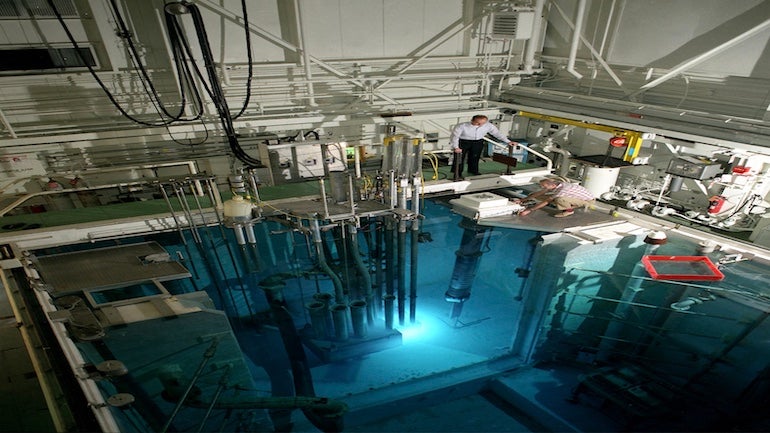
Initially, TerraPower Isotopes is sourcing its Ac-225 from legacy Cold War materials from the US and which are held at the Oak Ridge National Laboratory site in Tennessee. The Oak Ridge Office of Environmental Management’s (OREM) and contractor Isotek are working to eliminate the inventory of uranium-233 (U-233), which was originally created in the 1950s and 1960s for potential use in reactors but has proved to be unviable. It has, however, proven to be a valuable source of Ac-225. Over decades, U-233 decays to thorium-229 (Th-229) and, under an agreement with TerraPower Isotopes, Isotek recovers Th-229 from these legacy materials and supplies that material to TerraPower Isotopes. Further alpha emission decay then produces the short-lived Ac-225 isotope, which the company extracts for use as a radiopharmaceutical.
Goodrich says demand is now being driven simultaneously by ongoing clinical success and expectations of future commercial deployment. “The chemistry is necessary to make it a viable product, but as you grow a product into a new industry, it’s often a chicken-and-egg dilemma of how much is needed versus how much can be supplied,” he says. “Going into the future, how do we make sure that we’re scaling to the need that’s being created through these drug trials.”
Historically, many medical isotopes have been produced primarily by government-funded research reactors. While successful, that model has often created vulnerabilities whenever facilities undergo maintenance or refuelling outages.
“Patients don’t stop getting sick while a reactor is being refuelled or is under maintenance,” says Goodrich. To overcome these limitations, TerraPower Isotopes aims to introduce a complementary commercial approach. “What TerraPower Isotopes is bringing, along with our partners, is the first supply chain in radiopharmaceuticals relative to the radioisotope to be sustained by private companies,” he adds.
Rather than focusing solely on production capacity, the company has deliberately designed its manufacturing strategy around regular commercial deliveries. As Goodrich notes: “We’ve built it with the intentionality of weekly shipments, or multiple shipments in a week, for those patients, long term.” The objective is to provide pharmaceutical developers with confidence that isotope availability will not become a limiting factor as targeted alpha therapies move toward commercial use.
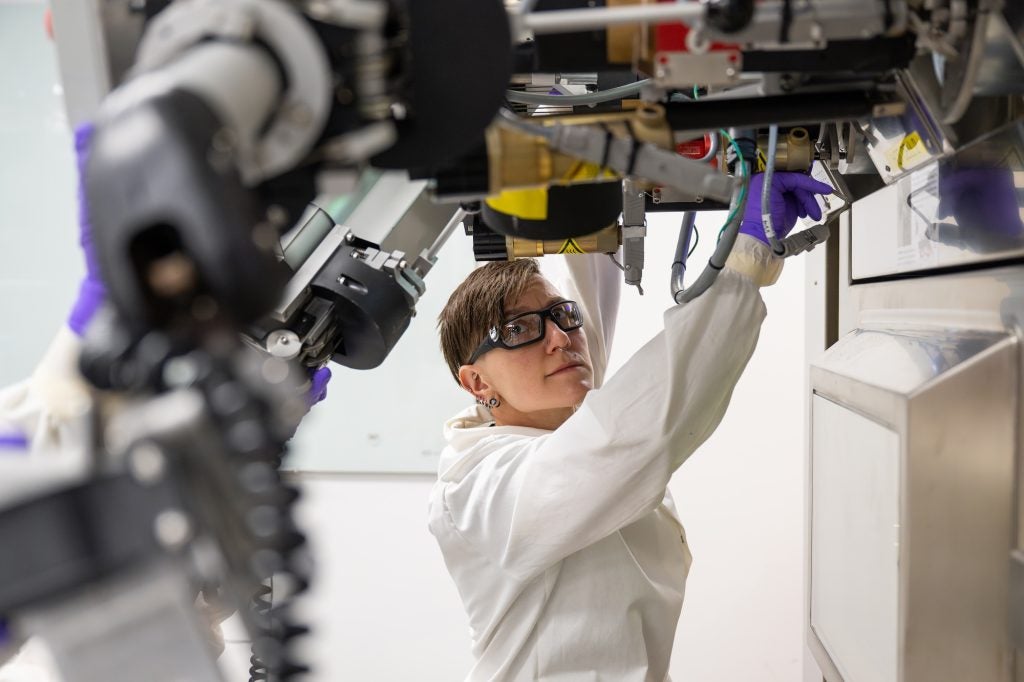
For the last 18 months or so, the company has been producing Ac-225 at commercial scale through weekly production runs. It is now being used in multiple human clinical trials with various drug developers. Goodrich describes the process as transforming historical nuclear materials and a waste management issue into life-saving medicines, saying: “It’s a really neat story, thinking about that material that’s been sitting for so long that we can actually repurpose it for something so good as treating cancer.”
Although the underlying chemistry had been demonstrated previously through work by the US Department of Energy and European research partners, it had never progressed beyond laboratory scale. TerraPower Isotopes invested in taking that scientific proof-of-concept and transforming it into an industrial manufacturing platform. As Goodrich explains: “The early research done by the government enabled a commercial company to come in, and the government de-risked enough for us to make these very large investments.”
According to Goodrich, the real technical achievement lies in making the process commercially viable while preserving the exceptionally scarce thorium resource. “Some commercial manufacturing processes have recycle rates of 80%, 85% or 90%, and those are very good. But we need to have 99.99% recycle rates,” he says.
Achieving those recovery levels required significant process engineering beyond the original laboratory demonstrations. However, Goodrich argues that even this breakthrough represents only one element of the challenge: “The breakthrough is actually building the entire infrastructure supply chain around that.”
For TerraPower Isotopes, success depends on integrating chemistry, manufacturing, logistics and commercial partnerships into a reliable industrial ecosystem capable of serving future pharmaceutical markets.
For example, the company recently announced an expanded relationship with PanTera, alongside cooperation with other supply-chain partners, to increase Ac-225 production capacity in Belgium. The Institut des Radioéléments (IRE) will host and operate PanTera’s new Ac-225 production line, and TerraPower Isotopes will provide additional starting material for the expanded production efforts. PanTera is a joint venture by IBA and the Belgian Nuclear Research Centre (SCK CEN) and is building a production centre in Mol, Belgium, which is expected to be operational in 2028 with commercial supplies starting in 2029.
With the new line and by expanding production, PanTera’s total Ac-225 capacity will more than double. The company’s technology relies on the irradiation of radium-226 (Ra-226) with a high-energy gamma beam to generate Ac-225.
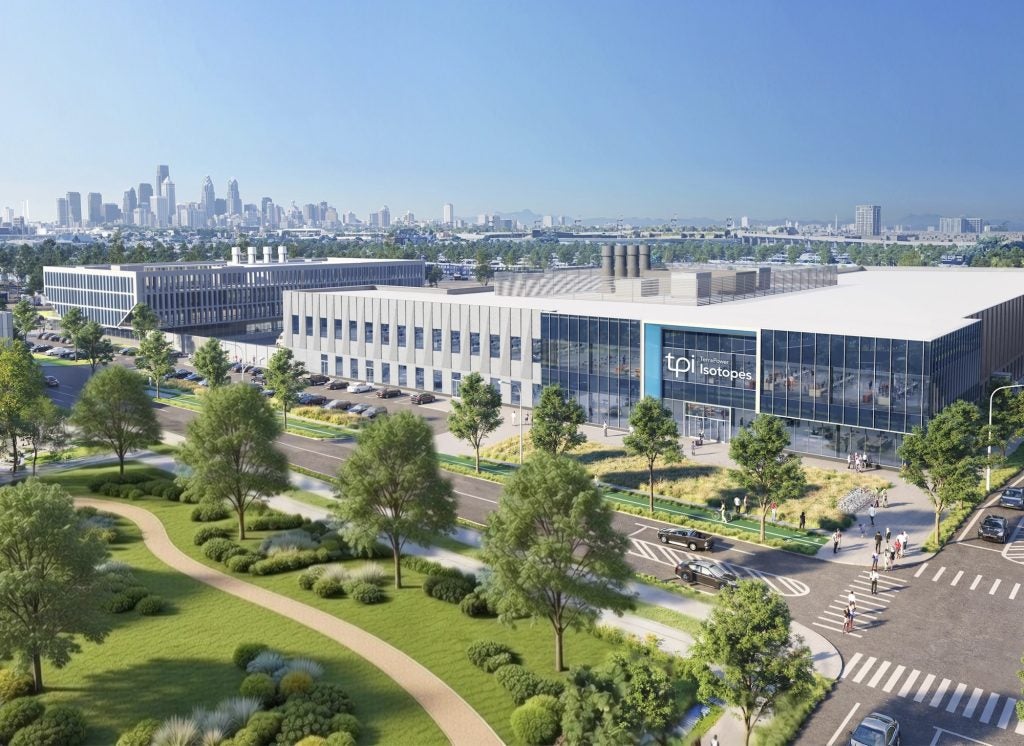
TerraPower Isotopes’ primary production facilities are in Everett, Washington, which the company is actively expanding, but is now also building a new flagship cGMP manufacturing facility in the Bellwether District of Philadelphia, Pennsylvania. When commissioned, also anticipated for 2029, this $450m facility will dramatically accelerate its manufacturing scale, increasing annual isotope production capacity by 20-fold.
However, with its international partnerships already extending production capability into Europe, Goodrich stresses that these kinds of partnerships are designed to accelerate market development rather than compete over limited production. For example, the Belgian operation now performs weekly utilisation of TerraPower Isotopes’ thorium feedstock, reflecting the increasingly international nature of the emerging isotope supply chain.
“We have a relationship that benefits the customers most of all, where we’re aligned on growing the supply chain for actinium-225 in a way that is sustainable and will be there when the customers need it,” explains Goodrich.
Building a long-term isotope supply chain
While the current iteration of collaborative development will help to establish the basis of Ac-225 therapies, considering the long-term future, there is a major issue that must be addressed. The U-233 material currently stored at ORNL is estimated to produce around 40g of thorium in total; this will mean some 100 times more Ac-225 will be available annually than is currently available worldwide. However, Th-229 only comes from U-233, and most of the world’s supply is stored at ORNL. Once this material is used over the next four years, no more Th-229 will be available. The company estimates its current platform can ultimately support production of around 80 curies of Ac-225 annually. While significant today, Goodrich believes future medical demand will require much greater capacity, saying: “We’re only going to get so much of it. Five, six or ten years from now, we don’t think that will be enough.”
As a result, rather than relying solely on this limited isotope production route, TerraPower Isotopes has instead focused on building the infrastructure, partnerships and manufacturing capability needed to establish targeted alpha therapy as a permanent pillar of modern oncology.
Goodrich describes TerraPower Isotopes’ production roadmap as deliberately phased. The initial stage relies on Th-229 recovered from legacy materials, which is now being used in both the US and Europe. However, rather than attempting to dominate the market, TerraPower Isotopes actively supports complementary technologies, as Goodrich explains: “PanTera have their own technology. We simply enabled them with our technology early while they prove theirs out.” The second stage of Ac-225 development for TerraPower Isotopes is thus expected to incorporate radium-226 processing technologies currently being developed by partners, including PanTera.
“We think there’s a mid-scale that is very viable using radium-226,” says Goodrich. Longer term, additional production methods – including reactor-based approaches –remain under consideration. Given TerraPower’s wider expertise in advanced reactors, including the Natrium programme, reactor production naturally attracts interest, but Goodrich remains cautious: “We haven’t said yes or no relative to using reactors long term, but that’s certainly an option, of course, technology-wise.”
Instead, the company’s immediate priority remains building a stable commercial foundation before expanding production technologies. “We’re looking at this as not just a three-year pitch, but a ten or 20-year sustainment effort,” says Goodrich.
Although TerraPower Isotopes was intentionally named to reflect broader ambitions, the company is resisting the temptation to diversify too quickly.
“We’re naturally curious. That’s how we came across thorium-229 in the first place.” The company continues evaluating other isotope opportunities. “Of course, we continue to investigate other isotopes,” Goodrich adds. However, he believes maintaining focus is essential during the current phase of commercial development. “Right now, I think it’s just really important to focus on actinium-225.”
The Ac-225 advantage
For decades, the nuclear industry has highlighted electricity generation as its primary contribution. TerraPower Isotopes aims to bring about a different nuclear application, where the power of the atom directly enables advanced medical treatments.
The company’s approach combines legacy nuclear materials, sophisticated radiochemistry, commercial manufacturing and international partnerships into what it hopes will become a resilient global isotope supply chain.
Whether future production ultimately comes from recovered thorium, radium-based technologies or advanced reactors may prove less important than establishing a sustainable industrial ecosystem capable of supporting widespread clinical adoption.
Indeed, while several organisations are already pursuing Ac-225 production using a range of different technologies and approaches, more are expected as targeted alpha therapies mature. Rather than viewing this as a threat, TerraPower Isotopes welcomes additional producers. The reason is simple: future demand is expected to exceed supply for many years. “The demand and the need that is out there, should these drugs make it through clinical trials, will be constantly challenging the supply chain,” says Goodrich, adding: “Our focus is to work with whoever we can to develop a platform and a base of manufacturing so that actinium is sustainable.”
Ultimately, the objective is to move targeted alpha therapies earlier within cancer treatment pathways. As Goodrich concludes: “Our ambitions and intentions are to grow the supply chain of Ac-225 so that radiopharmaceuticals can be a larger and more influential part in healthcare. I want to see these radiopharmaceuticals being used not as third-line or salvage therapy but moving up in the standard of care because they’re so promising.”
For TerraPower Isotopes, the goal is not simply producing a scarce isotope but rather ensuring that one of nuclear technology’s most promising contributions remains available wherever and whenever patients need it.


