

Nuclear safety relies on spatial separation and robust barriers. A cable or pipe penetration seal in a separation barrier in a nuclear facility has to hold against more than one hazard at a time. Design guidance and national regulatory expectations now treat flooding, fire, gas release, explosion and electromagnetic interference as events that can occur together or in sequence. A penetration qualified only for fire can still fail the barrier. The workable answer is to specify penetration seals with verified performance across every credible hazard for that barrier, from one qualified system, rather than assembling single-purpose products around each service.
What do concurrent and consequential hazards mean for barrier design?
A concurrent hazard occurs alongside another. A consequential hazard is caused by the first one. Fukushima Daiichi on 11 March 2011 produced both: a seismic event, then inundation, then loss of power, then hydrogen accumulation. Each stage removed a defence that the next stage would have needed.
The regulatory response has been to widen what a design basis has to consider. The UK Office for Nuclear Regulation’s Safety Assessment Principles, for example, require that the potential for a hazard to affect safety accounts for effects that challenge several safety functions and locations at once, including consequential hazards from adjacent facilities. For anyone specifying passive protection, the practical consequence is simple. Single-hazard qualification is no longer a complete argument. Learn more
Why do penetrations decide how a separation barrier performs?
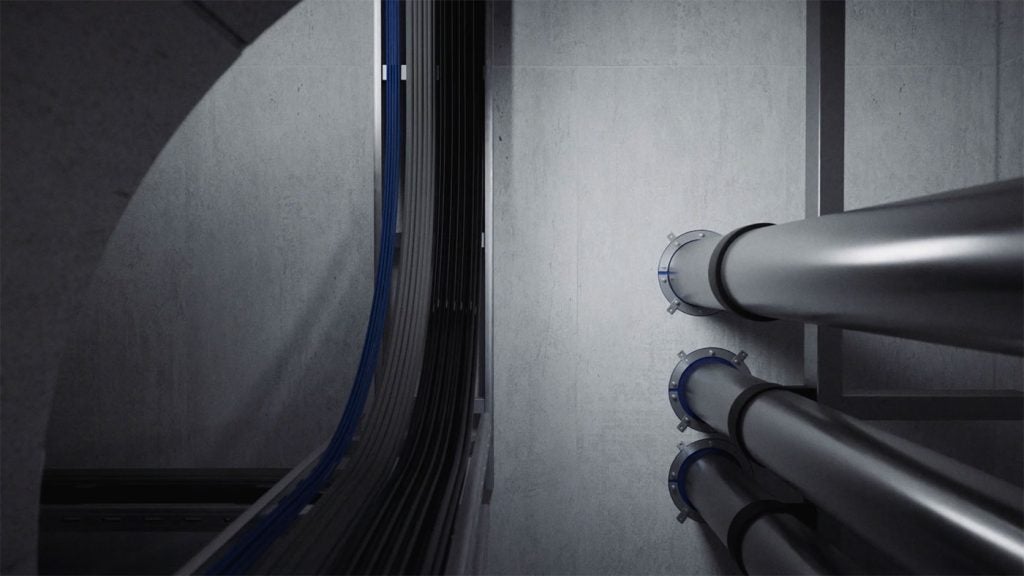
Redundancy and diversification only hold if a hazard cannot propagate between divisions. That containment job falls to barriers, and the penetrations through them are the discontinuities in an otherwise continuous wall, floor or deck.
Design guidance is consistent on two points: keep the number of penetrations between compartments serving different redundant divisions as low as practicable, and seal the ones that remain in a qualified manner. Both points push in the same direction. A sealing system with a high fill ratio lets more cables pass through fewer openings, which reduces the number of qualified interfaces the safety case has to defend and the number of items an inspector has to walk.
What does flood protection require of a penetration seal?
More than watertightness under static head. Internal flooding guidance addresses hydrostatic load on the structures in contact with the water, including doors, walls, floors and penetrations, and warns that unaccounted load can lead to barrier failure. Cable trays are expected to be designed so they do not propagate flood water, with watertight penetrations named as one of the design features that achieve this.
Two material requirements follow. The seal has to resist degradation over decades, and it has to sit somewhere it can actually be inspected and maintained. Roxtec modular cable and pipe penetration seals include transit frames supplied in stainless steel, aluminum or composite, and EPDM rubber developed to withstand ageing and heat. The seals are certified against both constant and catastrophic water pressure.
Humidity is the quieter version of the same problem. Air-tight transits help hold a stable indoor climate in rooms with sensitive equipment and reduce the conditions that allow partial discharge activity to develop on switchgear.
How is fire performance verified for cable transits?
By type approval against named standards, issued on the basis of tests at accredited independent laboratories. Roxtec cable and pipe seals are tested and approved to EN 1366-3 for penetration seals, UL 1479 and the IMO 2010 FTP Code, with fire ratings from E15 to EI240, F and FT, and A0 to A60 or higher. Transits are approved for A, B, H and J class fire rated sections, and the system is jet fire rated to ISO 22899-1:2021.
Reaction to fire matters as much as integrity. Roxtec seals with steel frames are tested by the single burning item method and rated B-s1, d0 to EN 13501-1. The B classification indicates no flashover, which is the safest reaction to fire achievable for a combustible material.
Roxtec runs its own fire test laboratory for development work, indicative testing and third party witnessed tests. Across the product range the company holds more than 300 registered product certificates and more than 500 registered tests and approvals. For a licensee, that body of evidence is what shortens the qualification argument.
What about gas, explosion and arc energy?
Gas-tight transits give control of gas, steam, smoke and particles, which supports the segregation of combustible materials and the habitability requirements placed on main and supplementary control rooms.
Explosion protection works on two fronts. Separation prevents flammable material from reaching compartments that protect items important to safety. Mechanical resistance handles the loads if an event does occur. Roxtec cable seals are developed to withstand blast load and peak pressure, and Ex rated variants are available where hazardous area classification applies.
High energy arcing faults impose loads comparable to an explosion, in temperature, pressure and ejected material. Roxtec seals limit the effects of an arc flash, and the system is tested and approved to help switchgear pass internal arc type tests. The same seals exclude the humidity, dust and vermin that commonly initiate arcing in the first place.
How do EMI and EMP requirements change the specification?
Electromagnetic interference is treated as both an internal hazard, from induction or radiation off installed equipment, and an external one, from lightning, solar activity or radiating equipment beyond the site boundary. Shielding, grounding and the separation of instrumentation cabling from power cabling are the recognised mitigations, and each of them meets the wall at the penetration.
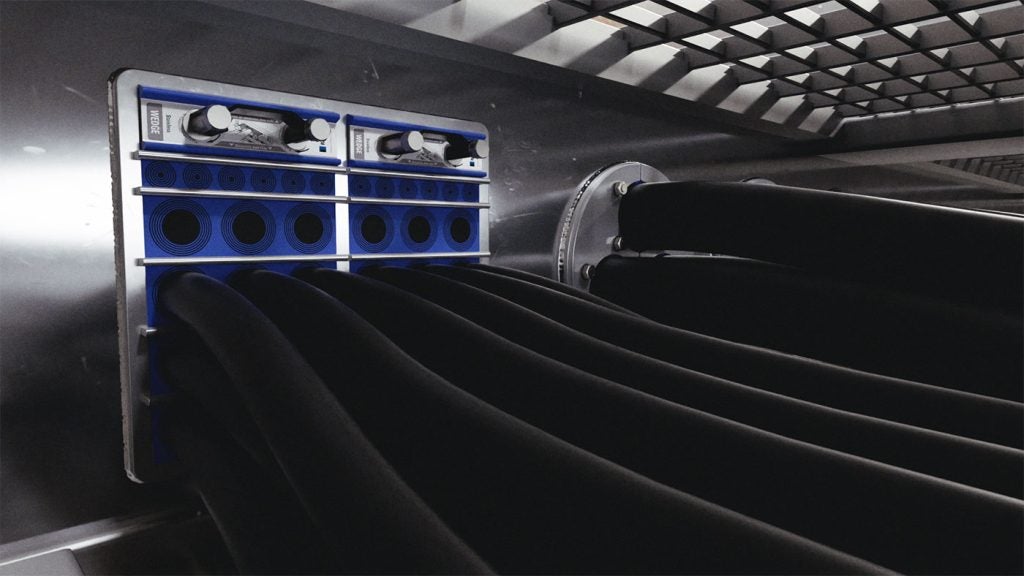
Roxtec ES seals provide electromagnetic shielding for sensitive electrical and electronic equipment. Roxtec BG™ seals combine sealing with bonding and grounding in a single transit, giving a low impedance connection to the cable armour, with tested bonding efficiency above 99%. In cabinets and enclosures, the multi-cable approach reduces installation time by around 50% compared with traditional cable glands and frees up to 70% of the space that glands would occupy.
Does anything change for small modular reactors?
The hazard set does not change, but the build process does. Factory serial production rewards components that install the same way every time, with no drying or curing time before they perform and no hot work where it can be avoided.
Adaptability matters for a second reason. Multidiameter™, based on sealing modules with removable layers, lets one module size fit a range of cable outer dimensions and leaves unused seals in the frame that can be adapted when cables are added later. Transits can be opened and reinstated, so a change during commissioning or a modification twenty years into operation does not mean cutting out a qualified barrier and requalifying it. Learn more about Roxtec in SMRs
The specification question worth asking
For each barrier in the plant, list the hazards the safety case expects it to withstand, then check the penetration seal against that full list rather than against the hazard that prompted the barrier. Where a single qualified system covers fire, water, gas, blast and electromagnetic requirements, the number of interfaces, suppliers and inspection regimes falls with it. That is a smaller argument to make to a regulator, and a smaller one to maintain for sixty years.
Download the full technical paper on Roxtec.com


