
Finland’s Radiation and Nuclear Safety Authority (STUK – Säteilyturvakeskus) has issued a favourable safety review for radioactive waste management company Posiva Oy’s deep geological repository, officially confirming it meets all national safety requirements and clearing the primary technical barrier to obtaining an operating licence. This historic decision marks the first time globally that a deep geological repository for high-level spent nuclear fuel has successfully advanced to the operating licence phase.
In a statement issued to the Ministry of Economic Affairs & Employment (MEAE) on Posiva’s application for a licence to operate the facility, STUK said the safety requirements required for granting the licence had been met in line with the Nuclear Energy Act and Decree.
“This is a significant step in the final disposal of used nuclear fuel that has been prepared during more than 40 years. STUK has been assessing and overseeing the safety of final disposal for several decades. Based on the overall assessment we have now made, we can conclude that the safety requirements for granting the operating permit are met,” said STUK Director General Petteri Tiippana.
The Government has the final decision on whether to grant the operating licence based on preparatory work by MEAE and STUK. STUK also has to confirm in a separate decision that the encapsulation and final disposal facility meets all safety requirements set for the start of operation.
MEAE has already taken decisions as a result of which Posiva has joined the financial provision system for the costs of nuclear waste management under the National Nuclear Waste Management Fund. The ministry also notified the European Commission (EC) of the final disposal project in accordance with Article 37 of the Euratom Treaty. In its official statement on 14 December 2023 the ED concluded that the deep geological repository and encapsulation plant at Olkiluoto would not cause significant radioactive contamination or adverse health impacts to any other European Union member state.
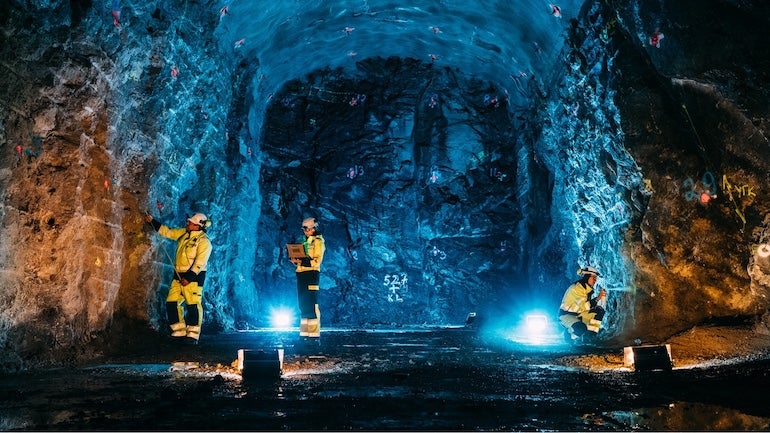
The final disposal facility is located at the Onkalo repository on Olkiluoto Island in Eurajoki, western Finland. It consists of an above-ground encapsulation plant and an underground final disposal facility. Used fuel from Teollisuuden Voima Oyj’s (TVO’s) Olkiluoto NPP and Fortum Power and Heat Oy’s Loviisa NPP will be sent to the encapsulation facility in a transfer or transport cask. Before encapsulation, the fuel will have been stored at the NPPs in water pools at interim storage facilities for 20–50 years.
At the encapsulation facility, the fuel is dried and packed into tightly sealed copper canisters. The canisters are moved into an underground final disposal facility, where they are placed in final disposal holes drilled in the rock at a depth of about 430 metres. A bentonite buffer is installed around the canisters, and the tunnels are filled using expansive clay material. The facility relies on a multi-barrier containment framework engineered to safely isolate hazardous radioactive materials for at least 100,000 years.
In 2015, the Government granted Posiva a licence for the construction of the encapsulation plant and final disposal facility. Construction of the final disposal facility started in late 2016 and of the encapsulation plant in summer 2019. Posiva applied to the Government in 2021 for an operating licence valid from March 2024 until the end of 2070.
“The safe disposal of used fuel has been a key challenge since nuclear power began to be exploited in electricity generation in the 1950s. Now the solution is closer to implementation than ever before, said Posiva CEO Ilkka Poikolainen. “Posiva’s job is to ensure that the current generation bears its responsibility for its own used nuclear fuel. The final investment offers a long-term and safe solution to this.”
Before issuing its statement, STUK assessed the safety of the encapsulation and final disposal facilities during the operational phase and over the long-term. The long-term safety assessment examined the development of the final disposal system and its environment over very long periods and how the release and transmission of radioactive substances into the environment would be prevented and slowed down STUK also assessed the readiness of Posiva’s organisation to launch operation of the facilities.
“Demonstrating safety has been the starting point for the assessment throughout,” said Antti Tynkkynen, Project Manager for the Posiva regulatory control project. “We have reviewed a great amount of technical data and safety analyses and monitored Posiva’s operations in many ways.” Since 2000, STUK and its external experts have contributed a total of more than 250 man-years to project supervision and safety licence assessment.
Posiva maintains an ambitious goal to achieve full operational readiness to begin final disposal by the end of 2026. MEAE said it “considers that a proposal for the decision on the operating licence could be prepared and submitted to the government in the autumn”.
As part of the ongoing safety oversight, STUK requires Posiva to conduct its first periodic safety evaluation within 10 years of receiving the licence.


