
As new nuclear construction gains renewed momentum in the US and worldwide, engineering, procurement and construction (EPC) contractors face a contracting landscape that differs in material ways from other energy projects. Nuclear projects involve unique regulatory, liability, and risk-allocation issues that require careful attention at the contract drafting and negotiation stage. Three key EPC contracting issues routinely arise in nuclear energy projects in the US, but early strategic positioning can significantly reduce long-term risk exposure.
Change in law provisions
Change in law clauses are heavily negotiated in nuclear EPC contracts because such projects are uniquely exposed to new regulatory requirements that may emerge during the lengthy construction phase. EPC contractors often cannot reliably factor in the risk of future regulatory changes into a fixed-price contract, because nuclear EPC projects may involve “first-of-a-kind” technologies, meaning that there is no prior design or existing equipment that can be used to assess risk. Nearly all project elements therefore need to be designed and manufactured for the first time.
In practice, regulators have difficulty evaluating and permitting “first-of-a-kind” nuclear technologies and may issue new regulatory requirements, which can lead to project delays and cost increases. In the US, the Nuclear Regulatory Commission (NRC) issues hundreds of guidance documents, amendments, and licensing revisions every year, along with dozens of final rules that significantly impact nuclear technologies.
It is difficult for a nuclear EPC contractor at the time of contracting to anticipate the impact of a new NRC rule, regulation, guidance, or change in interpretation that may subsequently emerge during the project execution phase.
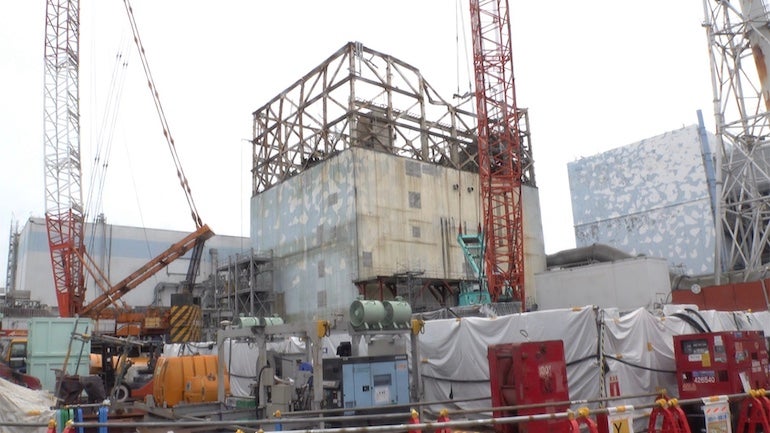
Adding to this unpredictability is the impact that global events may have on the NRC regulatory regime in the US. For example, after a 9.0-magnitude earthquake and an associated tsunami struck Japan on 11 March 2011, four of six reactors at the Fukushima Daiichi nuclear plant lost power. Three of these reactors eventually overheated causing leaks of radioactive gas and hydrogen explosions, which then released more radioactive material. In the aftermath of this disaster, the NRC issued orders in 2012 and 2013 requiring US reactors to obtain, install and protect additional equipment, as well as improve venting systems. The NRC also required all US reactors to re-analyse their flooding and earthquake preparedness and risk assessments. Accordingly, although the Fukushima Daiichi accident occurred thousands of miles away from US shores, it created knock-on regulatory impacts in the US for ongoing nuclear construction projects and operations.
Due to the potential project delays and cost overruns that result from new NRC regulations, EPC contractors with the know-how to implement “first-of-a-kind” nuclear projects are increasingly demanding cost-plus or target price models with negotiated pain share and gain share mechanisms into their EPC contracts instead of a fixed-price turnkey EPC contract. Contractors are also tailoring change in law clauses to provide clear entitlement to schedule relief and cost recovery to account for new or amended regulatory requirements.
Disputes commonly arise where change in law language is ambiguous as to whether new NRC guidance, licensing conditions or interpretive shifts qualify as compensable changes in law. Contractors should therefore focus on the inclusion of contractual provisions that capture both formal rulemaking and less formal regulatory actions or changes in interpretation, and that provide for both cost and schedule relief.
Liability allocation and nuclear indemnity under the Price-Anderson Act
Nuclear EPC contracts must be carefully aligned with the Price-Anderson Nuclear Industries Indemnity Act (PAA). The PAA establishes a system of mandatory financial protection and government-backed indemnification for public claims against reactor owners or licensees and operators resulting from a nuclear incident.
Under the PAA, reactor owners/licensees and certain contractors/operators must maintain specified levels of nuclear liability insurance, and public claims arising from a nuclear incident are channelled exclusively through the PAA regime and subject to an aggregate liability cap. EPC contractors should ensure that the insurance requirements in their EPC contracts conform to PAA requirements.
However, separate from insurance, EPC contracting parties are free to negotiate private contractual remedies and limitations on liability. As recognised by the US Supreme Court in Duke Power Company versus Carolina Environmental Study Group, 438 US 59 (1978), the PAA’s purpose is to ensure compensation to the public while encouraging private participation in nuclear energy development. The act does not prevent parties to contracts in the nuclear energy industry from allocating contractual risk between themselves. Accordingly, contractual indemnities, warranties, and liability caps in nuclear EPC contracts remain enforceable (or unenforceable) according to ordinary contract law, independent of the statutory cap on liability for claims from the public under the PAA.
In practice, EPC contracting parties often choose to limit contractual exposure as between themselves. Market practice in the nuclear EPC space reflects this, with contracts containing highly negotiated carve-outs from liability caps for nuclear safety, wilful misconduct, and regulatory violations as between contractor and owner. Nuclear EPC contractors should therefore recognise that they are permitted to limit their contractual exposure and that they are not precluded by the PAA when seeking to do so in contract drafting. They should also focus on negotiating bespoke arrangements allocating risk between themselves and owners, including negotiating liability caps or excluding specific categories of damages (as discussed below).
Liquidated damages, consequential damages, and overall liability caps
Nuclear projects are at high risk for delays and performance or output shortfalls, and underperformance can translate into substantial additional costs, lost tax credits, and replacement power expenses. As a result, liquidated damages regimes in nuclear EPC contracts are more complex than in other power generation projects. Another issue is whether delay or performance liquidated damages are included within, or are recoverable in addition to, an EPC contractor’s limitation of total liability. There is no single convention in the nuclear market, and contract language varies.
Nuclear EPC contracts may include split caps, with separate limits applicable to delay-related liquidated damages and performance-related or output-related liquidated damages. While the specific split caps may vary, EPC contractors may seek a lower cap for performance-related or output-related liquidated damages, because performance or output results often depend on original equipment manufacturer technology outside the EPC contractor’s full control. Regardless of the specific split cap negotiated, EPC contractors should negotiate a single, overall limitation of total liability (applicable to delay-related liquidated damages and performance, or output-related liquidated damages in aggregate). Contractors should also ensure that the EPC agreements with which they are associated provide that such damages are the owner’s sole remedy for issues related to output or delays and performance.
As nuclear construction accelerates, EPC contractors that proactively address these issues during contract formation will be better positioned to manage regulatory volatility, align liability with insurability, and avoid catastrophic exposure.


