
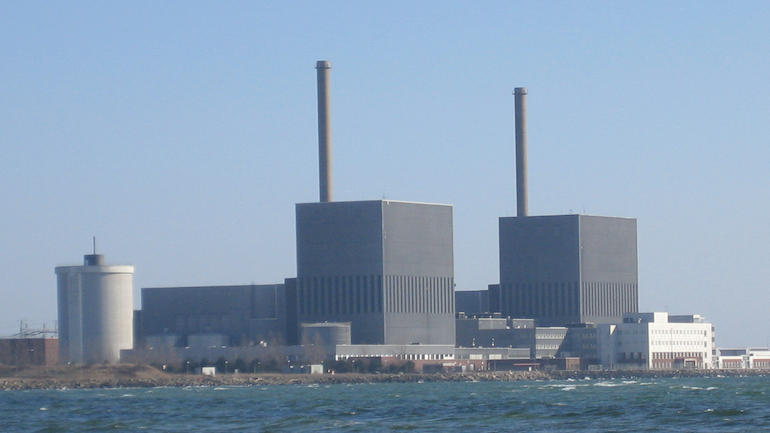
Nordic Baseload Power has formally submitted the fourth application for state aid to the Swedish government to build a new nuclear power facility at Barsebäck in Kävlinge, located just outside Malmö. The application proposes the construction of two full-scale boiling water reactors to generate 2,500 MWe. Nordic Baseload Power aims to secure the required permits by 2029 and targets having the first reactor operational well before 2035.
“Sweden needs more stable electricity production. It is therefore positive that the interest in investing in new nuclear power continues to be great,” said Financial Markets Minister Niklas Wykman.
The application will now be prepared at the Ministry of Finance by the secretariat for financing new nuclear power. In addition to the preparation of the application itself, the process also includes negotiations between the government and the company on the terms and scope of the support. An ongoing dialogue with the European Commission’s Directorate-General for Competition (DG-COMP) then leads to a formal examination of whether the aid is compatible with EU state aid rules.
The first of the three previous applications for state aid came from Videberg Kraft AB, a project company owned by Vattenfall AB in December 2025 for either five GE Vernova Hitachi BWRX-300 reactors or three Rolls-Royce SMRs to provide about 1,500 MW capacity at Ringhals on the Värö Peninsula.
Earlier in June, Blykalla submitted an application for government financing for a power plant in Norrsundet, Gävle, in east central Sweden, comprising six lead-cooled fast SEALER reactors with a total generating capacity of up to 330 MWe. Shortly after this, Studsvik submitted an application for state support for up to 1,400 MWe from small modular reactors, in southern Sweden at Valdemarsvik and Nyköping.
Sweden’s new legal and policy framework was initiated in June 2023 when the target shifted from “100% renewable” to “100% fossil-free” electricity. The following November, a national roadmap was announced to build up to 10 new large-scale equivalent reactors by 2045. In August 2025 the State Aid Act launched a SEK220bn ($21bn) financing facility underwriting around 5,000 MWe enabling companies to apply for state aid.
The state support is given in the form of state loans and price hedging agreements, so-called bidirectional difference contracts. The latter means that a contract is drawn up between an operator of a power generation plant and the state, which provides both a minimum compensation protection from the state and a limit for overcompensation to the company. The state can provide loans for the construction and test operation of new nuclear power reactors, and for planning and other preparatory measures. Bidirectional difference contracts may be entered into for ongoing operation of new nuclear power reactors.
The chosen location of the fourth application, however, is highly significant and historically sensitive. Barsebäck previously housed two nuclear reactors commissioned in the mid-1970s. Following intense, decades-long political pressure and safety concerns from neighbouring Denmark, the Swedish government shut them down in 1999 and 2005. The site sits roughly 23 kilometres across the narrow strait from the Danish capital, Copenhagen, in the densely populated Greater Copenhagen region.
In January, the Municipality of Kävlinge and Nordic Nuclear Energy (NNE) – part of the same group as Nordic Baseload Power – signed a joint letter of intent for the possible establishment of a boiling water reactor in the Barsebäck NPP area. Annsofie Thuresson, Chair of the Municipal Executive Board noted that Kävlinge Municipality is in a unique position given an existing local development plan allowing additional nuclear power production at Barsebäck. However, Barsebäck is one of several sites being considered by NNE.


