
A hole was discovered in the lower part of the third reactor of the Japan’s Fukushima Daiichi NPP. The results of an inspection of the using a miniature drone were published on the website of the station operator Tokyo Electric Power Company Holdings (Tepco).
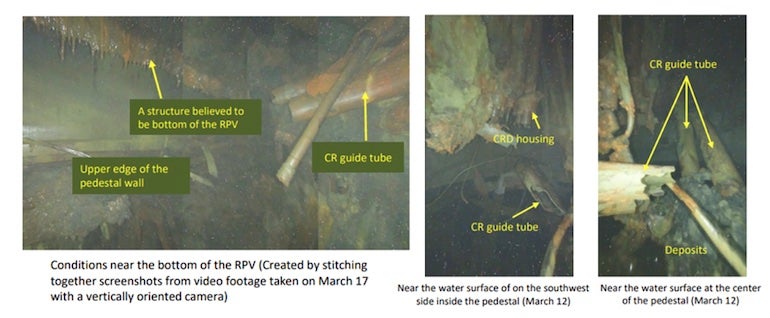
The steel reactor vessel has a diameter of 5.5 metres with a bottom thickness is 14 cm. The bottom is believed to have melted due to the high temperature during the accident following the 2011 earthquake and tsunami that resulted in the melt-down of three reactors. Video footage released by Tepco shows deposits of that appear to be melted nuclear fuel.
As a result of the survey, one of the possible methods for removing debris mixed with molten nuclear fuel using special equipment was confirmed. According to preliminary estimates, there are about 880 tonnes of such debris on the station premises. Full-scale extraction of molten nuclear fuel from unit 3 can begin only after 2037.
A video of the inspection was taken by micro-drones measuring 12 by 13 cm each weighing 95 grams. They were equipped with high-definition cameras and LED lights to capture clear visuals in the dark, debris-filled environment. Due to the extreme radiation and battery constraints, each flight lasts roughly 5-10 minutes. Tepco planned a total of 21 flights over the two-week mission.
Beyond video, the drones collected radiation measurements and structural data used to generate a 3D map of the reactor’s interior. The drones were inserted through a narrow penetration hole using a “glove box” system to maintain airtightness and prevent radioactive leaks.
Tepco in 2025 retrieved small, melted fuel samples from the unit 2 reactor but without detailed video footage. Sending drones as close as possible to the pressure vessel’s bottom was the key goal of the latest investigation, according to Tepco.
During numerous flight missions the remote-controlled micro-drones carefully flew around debris, broken equipment and other obstacles to video inside the primary containment chamber, including the bottom of the pressure vessel. This revealed tubes with ruptures and other damaged structures that used to be inside the pressure vessel, as well as brown and grey objects hanging like huge icicles.
According to Tepco spokesperson Masaki Kuwajima, officials confirmed that there was a hole at the bottom of the vessel and that the hanging objects, lumps and deposits are believed to be melted fuel debris. The drones also collected radiation measurements and data to produce a detailed three-dimensional map of the inside of the reactor. “We have obtained valuable data that can be used for our future internal investigations and to develop melted fuel debris removal strategy,” he said.


